


Alexandria
Alexandria, Egypt’s Mediterranean Conversation
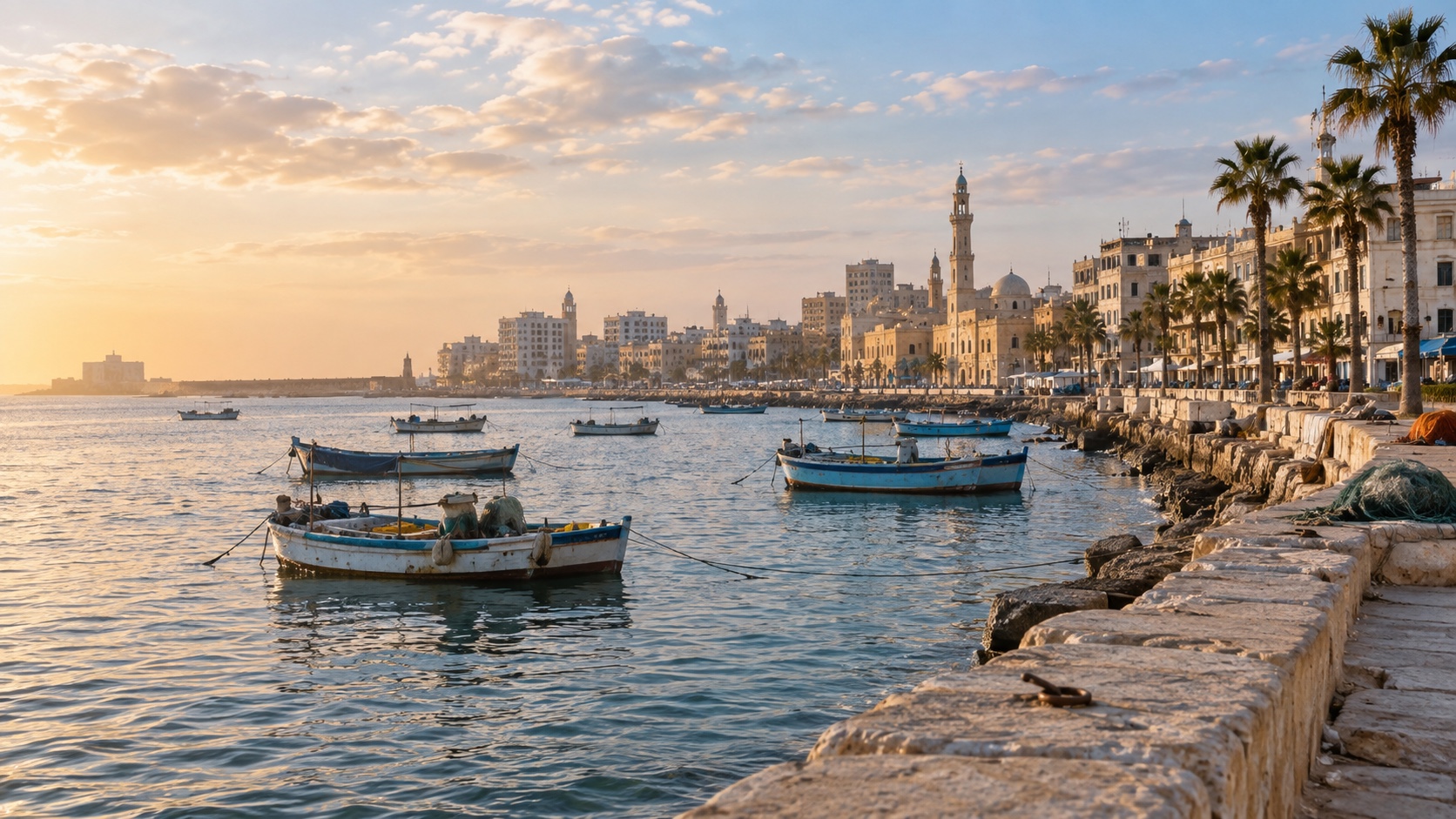
Alexandria feels different from the rest of Egypt because the sea is always in the room. The corniche, fishing boats, pale stone, cafés, and long views give the city a Mediterranean character, while the layers beneath it reach back through Greek, Roman, Arab, and modern Egyptian history.
Two nights is enough to make a thoughtful introduction, though the city rewards travellers who arrive without trying to force every monument into one afternoon. Alexandria works through a sequence of small impressions: a museum in the morning, seafood by the water, a walk along the harbour, and the city’s evening energy as the light leaves the bay.
Know before you go
- Fly into: Borg El Arab Airport is the closest commercial gateway. Many international itineraries arrive through Cairo, followed by a private road transfer.
- Trip length: Two nights for the city itself. Add a night if you want slower museum time or a more relaxed arrival from Cairo.
- Best months: October through April is generally the most comfortable period for walking and sightseeing. July and August can be hot, busy, and humid beside the water.
- Getting around: Distances between sights are manageable, but traffic is part of the experience. A private car and guide make the day far easier to shape.
- Money: Egypt uses the Egyptian pound. Carry small notes for cafés, local purchases, and tips, even when the hotel and larger restaurants accept cards.
- What to reserve: A well-located hotel, a private guide, airport or Cairo transfers, and restaurant recommendations that fit the group’s appetite for seafood and local cooking.
Stay close to the water
The waterfront gives Alexandria its clearest sense of place. A hotel with a view toward the Mediterranean makes the city easier to read, especially at the beginning and end of the day. The point is not to spend the whole stay looking out from a window. It is to have the sea as a steady reference while the city unfolds around it.
Give the library and the old harbour their own time
The Bibliotheca Alexandrina is a modern building with a serious cultural role, and it deserves more than a quick photograph. Around the harbour, the Citadel of Qaitbay and the city’s older waterfront show how closely Alexandria has always lived with the sea. A guide can connect the visible remains without flattening the history into a single story.
Eat the city’s coastal side
Alexandria is a good place to make meals part of the route. Fresh fish, prawns, calamari, rice, salads, and simple preparations reveal the city’s relationship with the Mediterranean better than an over-planned restaurant crawl. Ask for the day’s catch and leave enough room for a long lunch.
Use Alexandria as a counterpoint to Cairo
Cairo has scale, movement, and monumental history. Alexandria gives the Egypt itinerary a different register: open water, local pace, and a city that feels outward-looking. A private transfer between the two is worthwhile because it turns the change of atmosphere into part of the journey rather than a tiring logistical gap.
Walk when the light softens
Alexandria is at its most legible in the late afternoon. The waterfront cools, the cafés fill, and the buildings take on the warm colour of the sea. Keep this part of the day free. It is often when the city feels most like itself.
Planning brief
Alexandria suits travellers who want Egypt with a Mediterranean edge, layered history, seafood, and a city stay that feels distinct from the Nile Valley.
- Best suited to: history lovers, food travellers, repeat visitors to Egypt, couples, and families who want a change of pace after Cairo.
- Settle early: arrival route, hotel position, private guiding, traffic timing, and the balance between museums, monuments, and the sea.
- Useful pairing: Cairo, Giza, the Nile Valley, Siwa Oasis, or a wider Egypt journey built around history and food.
Let the sea change the shape of Egypt
Alexandria is most rewarding when it is given enough room to breathe. Tell us how much history, food, and coastal time you want, and we will give the city a place in the Egypt itinerary that feels natural.
Our luxury leisure travel planning can arrange hotels, guiding, transfers, private touring, and the rest of Egypt.
How many nights do you need in Alexandria?
Two nights is a good introduction, with time for the library, the harbour, the city’s museums, and an unhurried seafood meal. Add a third night if you are arriving overland from Cairo or prefer a slower schedule.
Is Alexandria worth visiting on a first trip to Egypt?
Yes, especially if you want to see a different side of the country. Cairo carries the greatest concentration of ancient monuments, while Alexandria brings the Mediterranean, later history, and a more coastal urban rhythm.
What is the best way to get to Alexandria from Cairo?
A private road transfer is usually the simplest option for a tailored itinerary. It gives you door-to-door timing, space for luggage, and the option to stop when the route or the group calls for it.
What should you eat in Alexandria?
Start with the day’s seafood, then explore local dishes built around rice, grilled fish, prawns, calamari, salads, and bread. A trusted local recommendation is more useful than trying to follow a fixed list of restaurants.
CONTINUE EXPLORING