


Algiers
Algiers, White City by the Mediterranean
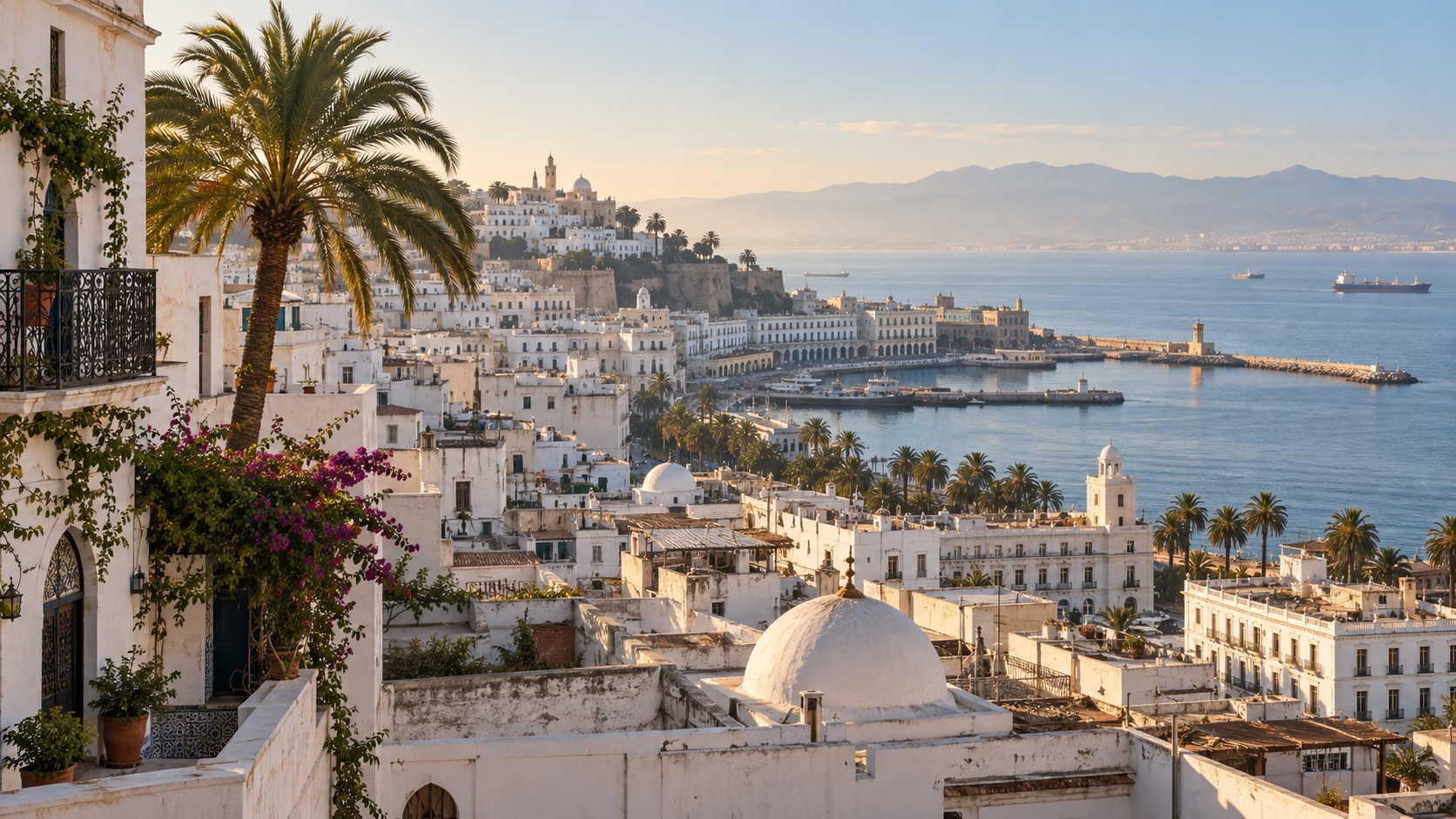
Algiers rises in pale terraces above the Mediterranean, with the Casbah at its heart and a long sweep of harbour beyond. The city carries Ottoman lanes, French-era boulevards, modern cafés, gardens, and the relaxed disorder of a working capital. It is a city to walk, look outward from, and understand in layers.
Three nights gives a first visit room to take shape. Spend one morning in the Casbah, another around the waterfront and museums, then use a private car for the wider city and a little time outside it. Algiers is more rewarding when it is approached as a living city rather than a collection of historic façades.
Know before you go
- Fly into: Houari Boumediene Airport is the main international gateway and sits outside the central city. A private airport transfer is the easiest arrival.
- Trip length: Three nights for the main city, with four or five useful for museums, food, and a day beyond Algiers.
- Best months: April through June and September through October are comfortable for walking and exploring. July and August can be hot, while winter brings more changeable weather.
- Getting around: Use a private guide and driver for the wider route. The Casbah is best explored on foot, with steep lanes and uneven surfaces.
- Money: Algeria uses the dinar. Carry practical cash for cafés, taxis, small shops, and tips, as card use can vary.
- What to reserve: A central hotel, a trusted Casbah guide, airport transfers, restaurant tables, and any museum or heritage visit that needs timing.
Begin in the Casbah
The Casbah is the city’s most important walk, but it is also a lived-in neighbourhood. Go with a local guide who knows how to move through its lanes respectfully and can connect the architecture to family life, faith, trade, and the city’s long relationship with the sea.
Keep the Mediterranean in view
Algiers is easier to read from above. Look for viewpoints, terraces, and roads that reveal the white city descending toward the water. The harbour and waterfront bring another pace, with fishing boats, broad light, and the sense that Algiers has always been connected to places beyond Algeria.
Notice the city between the monuments
French-era streets, public gardens, small galleries, bakeries, and neighbourhood cafés show how the capital continues to change. Leave room for the ordinary parts of the day. A coffee, a pastry, or an unplanned turn can reveal more than another formal stop.
Use one day beyond the centre
A wider route may include the Botanical Garden, coastal viewpoints, or a nearby historic site, depending on the group’s interests. One well-chosen excursion is better than trying to cover every direction. Keep the drive comfortable and make the meal part of the plan.
Give the city time at dusk
Algiers changes colour late in the day. The white buildings warm, the sea opens, and the city’s hills begin to show their shape. Protect this hour. It is when the capital feels least like an itinerary and most like a place where people live.
Planning brief
Algiers suits travellers who want Mediterranean light, layered urban history, strong food, and a city with a point of view that is still underexplored by many visitors.
- Best suited to: history lovers, photographers, food travellers, couples, and repeat visitors to North Africa.
- Settle early: central hotel, Casbah guide, driver, cash planning, restaurant priorities, and the wider city route.
- Useful pairing: Oran, Constantine, the Algerian coast, Morocco, Tunisia, or a longer Algeria itinerary.
Let Algiers unfold slowly
Algiers is at its best when the route has structure but the day has room. Tell us whether the group wants architecture, food, history, or the coast, and we will give the city a thoughtful place in the journey.
Our luxury leisure travel planning can arrange hotels, guides, drivers, restaurants, and the wider Algeria route.
How many nights should you spend in Algiers?
Three nights gives you time for the Casbah, the waterfront, museums, and a few good meals. Four or five nights works better if you want a day beyond the city or a slower food and architecture itinerary.
Is the Casbah of Algiers worth visiting?
Yes. The Casbah is central to understanding Algiers, but it is a lived-in neighbourhood rather than a formal museum. A trusted local guide makes the walk more respectful, more comfortable, and far more interesting.
What is the best time to visit Algiers?
April through June and September through October are comfortable for walking and outdoor visits. Summer is hotter, while winter can bring more changeable weather and shorter daylight.
Do you need a private driver in Algiers?
A private driver is useful for airport transfers, the wider city, and excursions beyond the centre. The Casbah itself is best explored on foot, with the route planned around its steep and narrow lanes.
CONTINUE EXPLORING