

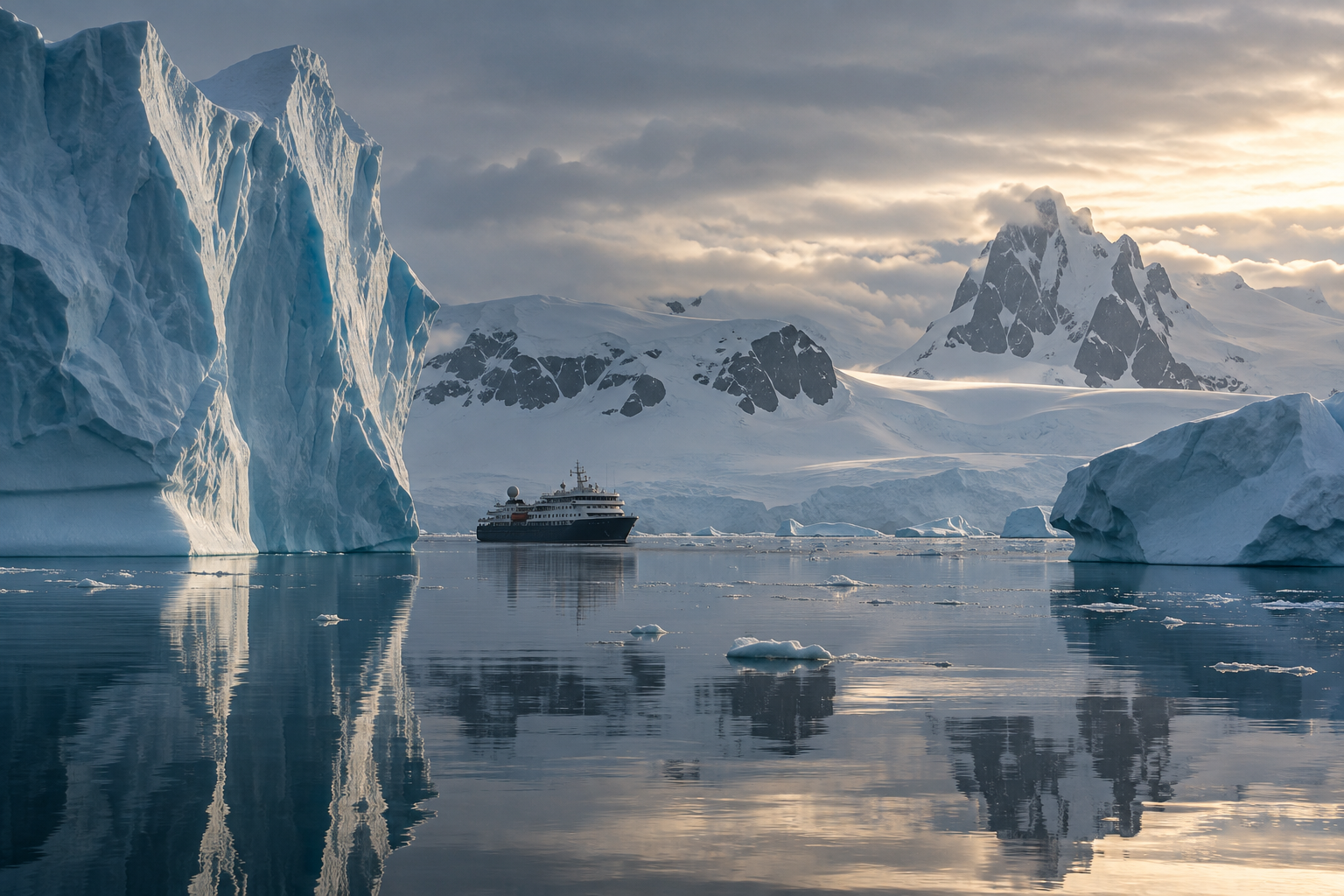

Antarctica
Antarctica is not a destination to control from a timetable. It is an expedition in the truest sense, with weather, sea conditions, ice, and wildlife determining the shape of each day. The right voyage gives you time to watch, listen, and understand why every landing needs care.
Know before you go
- Fly into: Ushuaia, Argentina, for most Antarctic Peninsula voyages. Some fly-cruise itineraries connect through Punta Arenas, Chile.
- Trip length: Ten to fourteen nights is a sensible expedition length once sea crossings and weather flexibility are included.
- Best months: The austral summer, roughly November through March, is the principal visitor season. Wildlife, light, and sea conditions shift across the months.
- Getting around: By expedition ship and small landing craft. Daily plans are set by the expedition team, not by a fixed sightseeing schedule.
- What to reserve: A ship with experienced naturalists, a cabin that suits the crossing, appropriate gear, and a pre- or post-expedition stay in Patagonia.
- Plan around: The Drake Passage, medical requirements, expedition rules, and the need to clean clothing and equipment before landings.
Choose the ship before the cabin
The vessel determines the feel of the journey. Smaller ships can create a more intimate expedition and may offer more flexibility, while larger ships bring more space and facilities. Look for a serious natural history program, clear environmental standards, and a crew that treats landings as a privilege.
Let the weather lead
An Antarctic day might begin with a landing, shift to a zodiac cruise, and end with a whale sighting from the deck. Plans change for good reasons. A generous itinerary protects the experience from one missed landing and gives the expedition team room to work safely.
Watch wildlife at its pace
Penguins, seals, and whales are the heart of the journey, but they are not performances. Stay within the distance set by the guides, keep voices low, and never move toward an animal. The most memorable sightings often happen when the group is still and patient.
Build in Patagonia
Ushuaia, the Beagle Channel, and Patagonia make a strong bookend to the voyage. A few nights before sailing can absorb delays and settle the body, while a post-trip stay in the Andes gives the return journey a warmer, more grounded final chapter.
Who this trip suits
Curious first time expedition travelers, photographers, wildlife lovers and families with older children.
When another plan may fit better
If rough seas are a serious concern, the Drake Passage is part of most routes and cannot be planned around. If you need a fixed daily schedule, the expedition team sets each day by the weather. And if your dates fall outside roughly November to March, there is no visitor season.
Planning brief
The shape we recommend: ten to fourteen nights is a sensible expedition length once sea crossings and weather flexibility are included.
- Settle early: ship size, cabin location, sea-day comfort, and the operator's environmental practice.
- Useful pairing: Patagonia, the Falklands, South Georgia, or a longer southern South America journey.
Make the route yours
Tell us whether you are drawn by wildlife, photography, science, remoteness, or the simple need to stand somewhere entirely unlike home.
Our luxury leisure travel planning can shape the stays, guides, transfers, and pacing around the way you want to travel.
How long should an Antarctica trip be?
Ten to fourteen nights is a useful starting point for the Antarctic Peninsula. It includes the crossing and leaves enough time for weather changes, landings, and time on deck.
When is the best month to visit Antarctica?
November through March is the main visitor season. Earlier months bring a sense of first light and fresh snow, mid-season often brings longer days, and later summer can offer different wildlife activity. The operator and route matter as much as the month.
Is the Drake Passage always rough?
No, but conditions are unpredictable. Choose a ship with comfortable shared spaces, plan a buffer around the voyage, and speak with your travel adviser about seasickness options before departure.
How do you travel responsibly in Antarctica?
Choose an experienced operator, follow every landing instruction, keep distance from wildlife, clean all clothing and equipment, and leave nothing behind. The expedition team's guidance is part of the journey.
CONTINUE EXPLORING