

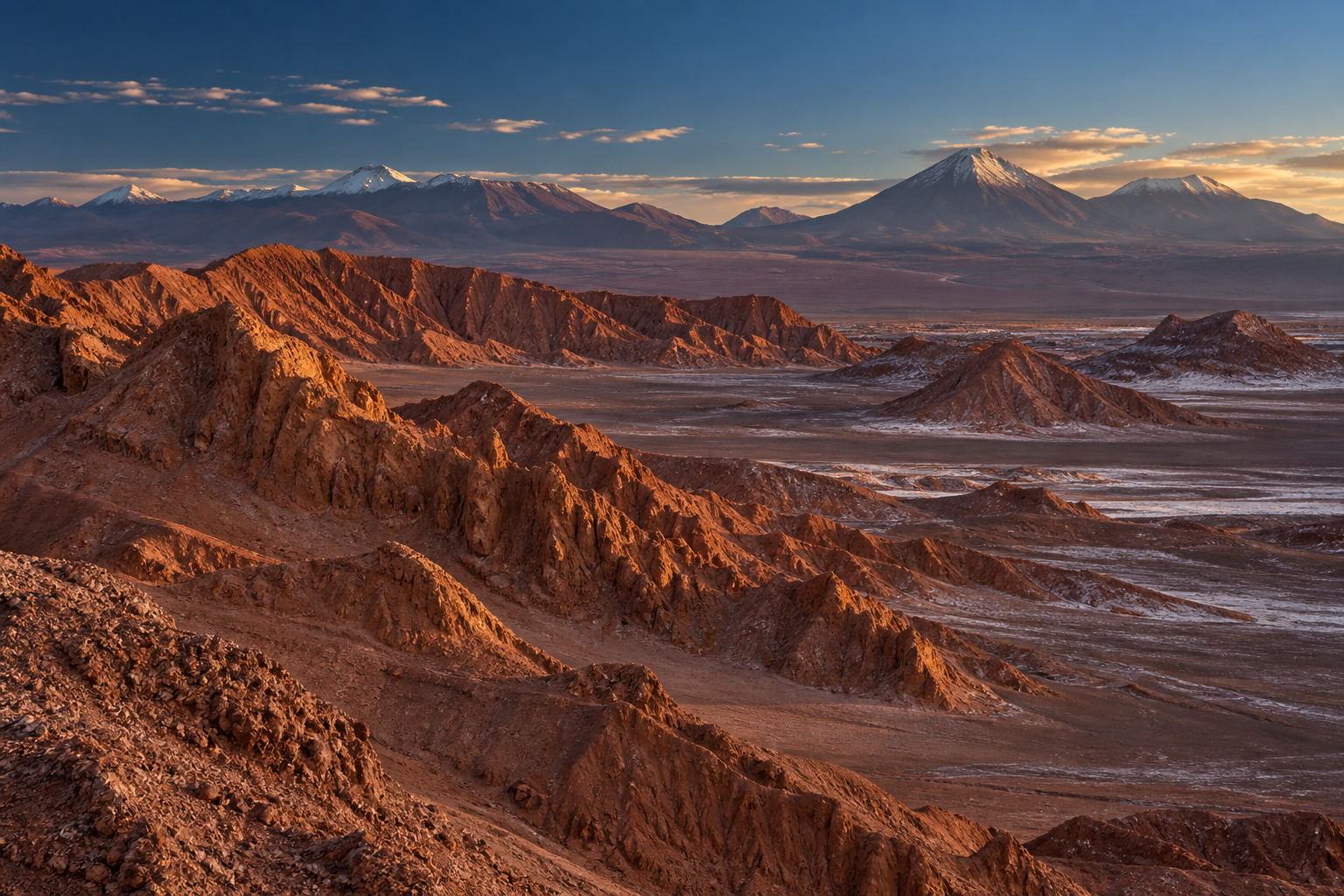

Atacama Desert
The Atacama is a landscape of extremes, but the best journey is measured in quiet details. Salt, stone, altitude, thermal water, desert light, and the stars all need time. Base yourself in San Pedro de Atacama, then build a route that climbs gradually and leaves space between the early starts.
Know before you go
- Fly into: Calama, then transfer to San Pedro de Atacama. The transfer is part of the first shift into the desert and altitude.
- Trip length: Four to six nights for the principal landscapes, altitude adjustment, and one slower day between excursions.
- Best months: The desert is visitable year-round. Winter brings cold nights and often crisp skies, while summer can bring a different weather pattern to the highlands.
- Getting around: Guided day trips are the sensible choice for altitude, remote roads, and early departures. Private touring gives more control over pace.
- What to reserve: A well-located base, a guide with high-altitude experience, stargazing, and any thermal or cultural visits that need advance planning.
- Plan around: Altitude, hydration, cold before sunrise, sun exposure, and the fact that some landscapes sit above 4,000 meters.
Let San Pedro be more than a base
San Pedro has adobe streets, local restaurants, galleries, and a relationship to the desert that is easy to miss when every day starts and ends in a vehicle. Keep a half day for the town, and choose a hotel that makes returning from the highlands feel restful.
Climb gradually
The salt flats, lagoons, and geysers sit at different altitudes. A thoughtful guide will sequence them rather than treating altitude as a footnote. The first day should be light, with more demanding excursions later if the group is responding well.
Follow the light
Valle de la Luna, red-rock formations, high lagoons, and steaming geysers each have a distinct hour when they feel most alive. Early morning can be very cold, while sunset is often gentler. The aim is not to see every site, but to see the right ones in the right light.
Stay for the stars
The Atacama night is part of the destination, not an add-on. Choose a proper astronomy experience that explains the sky and respects darkness. The contrast between the bright desert day and the still night is what makes the route feel complete.
Who this trip suits
Photographers, walkers and astronomy enthusiasts, and anyone who enjoys stark landscapes and a strong sense of place.
When another plan may fit better
If altitude is a medical concern, some landscapes here sit above 4,000 meters, so talk to your doctor first. If early starts are not for you, many of the best excursions leave before sunrise. And if you want green scenery and walking without altitude, Patagonia is the better part of Chile.
Planning brief
The shape we recommend: four to six nights for the principal landscapes, altitude adjustment, and one slower day between excursions.
- Settle early: altitude sequencing, hotel location, excursion style, and how many early mornings the group genuinely wants.
- Useful pairing: Santiago, Patagonia, Bolivia, or a wider Chilean route.
Make the route yours
Tell us whether your Atacama days should lean toward geology, stargazing, photography, culture, or the simple pleasure of wide open space.
Our luxury leisure travel planning can shape the stays, guides, transfers, and pacing around the way you want to travel.
How many days do you need in the Atacama Desert?
Four to six nights gives enough time for San Pedro, the principal desert landscapes, a gradual altitude plan, and a proper night under the stars. Shorter trips should choose fewer excursions.
How do you handle altitude in the Atacama?
Start with a quiet arrival day, hydrate, avoid over-scheduling, and sequence higher excursions after the body has had time to adjust. A guide should adapt the plan if anyone feels unwell.
When is the best time for stargazing?
The desert has exceptionally clear skies, but moon phase and weather affect the experience. Your adviser can time the stay and select an astronomy experience around the nights that offer the best conditions.
Can the Atacama be combined with Patagonia?
Yes, and the contrast is excellent. Atacama brings altitude, salt, and desert light, while Patagonia brings water, wind, and mountain scale. Allow enough nights in each for the journeys to feel distinct.
CONTINUE EXPLORING