


Brussels
Brussels Rewards a Little Context
Brussels is easy to underestimate. The Grand Place can look like a single beautiful square, the European Quarter can feel like a collection of office buildings, and the city’s famous chocolate and beer are often presented as if they were the whole story. Stay a little longer and the city becomes more interesting. Art Nouveau houses, serious museums, small restaurants, comic murals, and neighborhoods with their own pace sit close together without becoming a theme park.
The best Brussels days have a loose shape. Begin with one place that deserves your full attention, take lunch somewhere that does not need a view to be good, then leave room for the city to offer a second idea. A morning around the Royal Quarter and the Magritte Museum feels very different from an afternoon in the Sablon or the Marolles. The scale is forgiving, and that makes Brussels a useful first stop or a quietly rewarding long weekend.
Know before you go
- Fly into: Brussels Airport, code BRU. The airport station sits below the terminal, and direct trains reach Brussels-Central in about 11 minutes. A private car is more comfortable with luggage, but the train is usually the cleanest arrival.
- Trip length: Three nights is enough for the historic center, one museum day, and a meal-led neighborhood wander. Four nights gives the city time to breathe and leaves space for a day trip by train.
- Best months: April through June and September into early October bring the most agreeable balance of light, temperature, and demand. December works for the atmosphere, though the days are short and the center is busiest around the holidays.
- Getting around: The historic center, Royal Quarter, Sablon, and Marolles can be linked on foot. Use the STIB metro, tram, or taxi when the weather turns or when a day includes several separate neighborhoods.
- Languages: French and Dutch are the official languages of Brussels. English is widely spoken in hotels, museums, restaurants, and the international district.
- Money: Belgium uses the euro. Cards are normal in hotels, restaurants, and shops, while a small amount of cash is useful for markets and smaller counters.
- Dress: Brussels is polished without being formal. Comfortable shoes matter more than a strict dress code, especially if the day moves between cobbles, museums, and the Sablon’s sloping streets.
- What to reserve: Book the Magritte Museum, a sought-after restaurant, and any private chocolate or architecture visit ahead of time. Leave the rest of the day open.
The historic center is a beginning, not the whole city
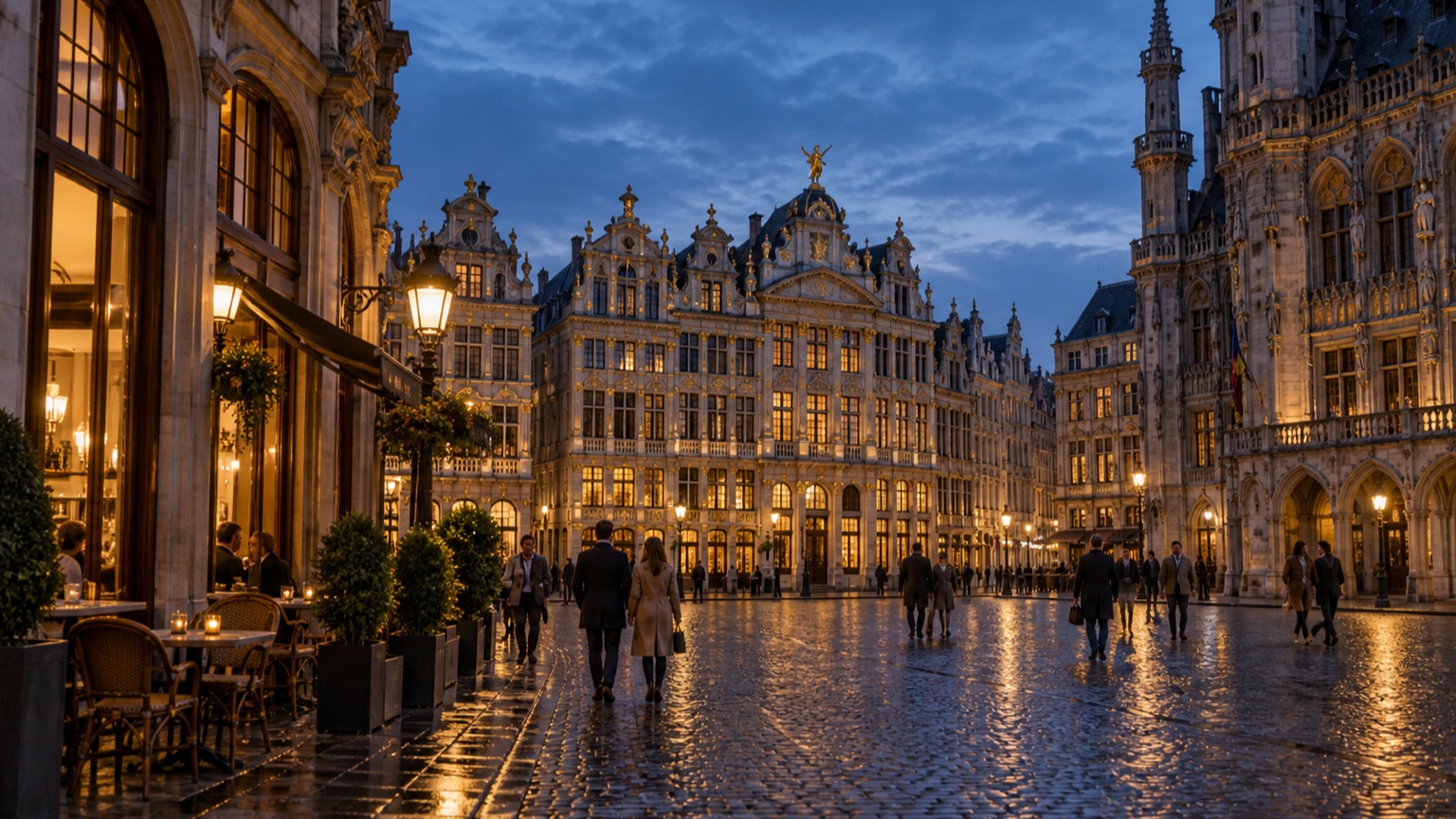
Start at the Grand Place early, before the square fills with day visitors. The town hall, guildhalls, and Maison du Roi deserve a slow look, but the better experience comes from noticing how quickly the streets change once you leave the square. A few minutes takes you toward the Bourse, Sainte-Catherine, and the old lanes where a good lunch can be more memorable than another landmark.
Brussels has a useful habit of putting grand architecture beside ordinary life. A chocolate shop might sit beside a neighborhood bar. A formal facade opens onto a narrow street where people are carrying groceries home. The city is at its best when the itinerary allows both sides to remain visible.
Make the Royal Quarter an art morning
The Royal Quarter is where a first Brussels visit gains depth. The Royal Museums of Fine Arts, the Magritte Museum, and the surrounding Place Royale can fill a thoughtful morning without asking you to cross the city. Magritte’s work is particularly well suited to Brussels. The museum gives the paintings room to be strange, funny, and precise, rather than reducing them to a few familiar images.
Continue downhill toward the Sablon. The neighborhood is known for antiques, chocolate, galleries, and an elegant square, but it is more enjoyable when treated as a place to pause rather than a shopping checklist. Choose one chocolatier, one small gallery or antique shop, and a table for coffee. That is enough.
Sablon and the Marolles show the city in contrast
The Sablon sits above the Marolles, and the short distance between them changes the mood. The upper neighborhood is composed and established. Below it, the Marolles has a more improvised rhythm, with vintage shops, working streets, and the daily life around Place du Jeu de Balle. Go in the morning if the flea market is part of the plan, then walk the edges rather than trying to cover every street.
This is also a good part of Brussels for an unplanned hour. The city’s strongest details are often at eye level: a tiled entrance, a painted sign, a narrow Art Nouveau window, or a bakery that has been serving the same block for years. A local guide with an architectural focus can make the walk much more rewarding, particularly for travelers who have already seen the major museums.
Where Brussels makes sense as a base
Choose the hotel by the way you want the evenings to feel. The Grand Place and central lanes put the first-time sights outside the door, though the area is lively and can feel busy after dark. The Sablon is calmer and more residential, with good access to museums and restaurants. Sainte-Catherine suits travelers who care about seafood, small bars, and a neighborhood atmosphere. The European Quarter is practical for business and useful for longer stays, but it is quieter at weekends.
Brussels also works well inside a larger rail itinerary. Paris is close enough for a clean contrast between two major capitals, while Amsterdam and London make natural additions for travelers who prefer trains to short flights. Keep at least two nights in Brussels if it is part of a multi-city route. One night turns the city into a transfer.
A Brussels day for people who prefer a little space
Begin with the Grand Place before breakfast. Spend the late morning in the Royal Quarter and choose one museum rather than trying to conquer the full collection. Have lunch in or near the Sablon, then walk down through the Marolles toward the center. Return to the hotel before dinner, and let the evening belong to the restaurant rather than another scheduled attraction.
For a second day, go farther out. Horta’s architecture, the neighborhoods around Ixelles, and the green spaces toward the south offer a different reading of Brussels. The right guide will shape the route around the buildings that genuinely interest you. A design-focused walk should not be combined with every major museum simply because both appear on a map.
Planning brief
Brussels is a strong choice when the trip needs culture and food without a punishing pace.
- Best suited to: couples, first-time Belgium travelers, art and architecture lovers, business travelers adding a few private days, and families who want a manageable European city.
- Settle early: hotel neighborhood, museum reservations, the restaurant list, and whether the trip includes a private architecture or chocolate guide.
- Arrival: use the direct airport train for a light arrival or arrange a driver when the party has substantial luggage, young children, or a tight onward connection.
- Useful pairing: add Bruges or Antwerp for a broader Belgium itinerary, or pair Brussels with Paris, Amsterdam, or London by rail.
Let Brussels stay a little unfinished
The city does not need a frantic checklist. See the square, choose the museum, eat well, and allow one neighborhood to surprise you. Tell us how many nights you have and whether the trip leans toward art, food, architecture, or a quiet base between larger cities.
Our luxury leisure travel planning can arrange the hotel, private guiding, restaurant sequence, rail connections, and the small practical details that make Brussels feel easy from the moment you arrive.
How many nights should we spend in Brussels?
Three nights is the right starting point for most first visits. That gives you the historic center, the Royal Quarter and Magritte Museum, the Sablon and Marolles, and several good meals without turning every day into a march. Four nights works well when Brussels is part of a wider Belgium itinerary or when you want time for Art Nouveau, Ixelles, or a day trip by train.
Which area is best for a luxury stay in Brussels?
The Sablon is the most balanced choice for many leisure travelers. It is close to the Royal Quarter and museums, has a more residential evening atmosphere than the Grand Place, and is walkable to the Marolles. Stay near the Grand Place when the first-time landmarks matter most, or around Sainte-Catherine if restaurants and a neighborhood feel are the priority.
Is Brussels easy to explore without a car?
Yes. The central neighborhoods are compact, the airport has a direct rail connection to the city, and the metro and trams cover the longer moves. A private driver is useful for airport luggage, families, business schedules, or a day focused on locations outside the center, but a rental car usually adds more friction than value.
What should we reserve before arriving?
Reserve the Magritte Museum, any restaurant with a small dining room, and private chocolate, food, or architecture visits that matter to the trip. The Grand Place and most neighborhood walks can remain flexible. If Brussels is part of a rail itinerary, book the long-distance train seats once the route is settled, especially on Friday and Sunday travel days.
CONTINUE EXPLORING