


Cairo
The Only City Where the Ancient World Is Still in the Suburbs
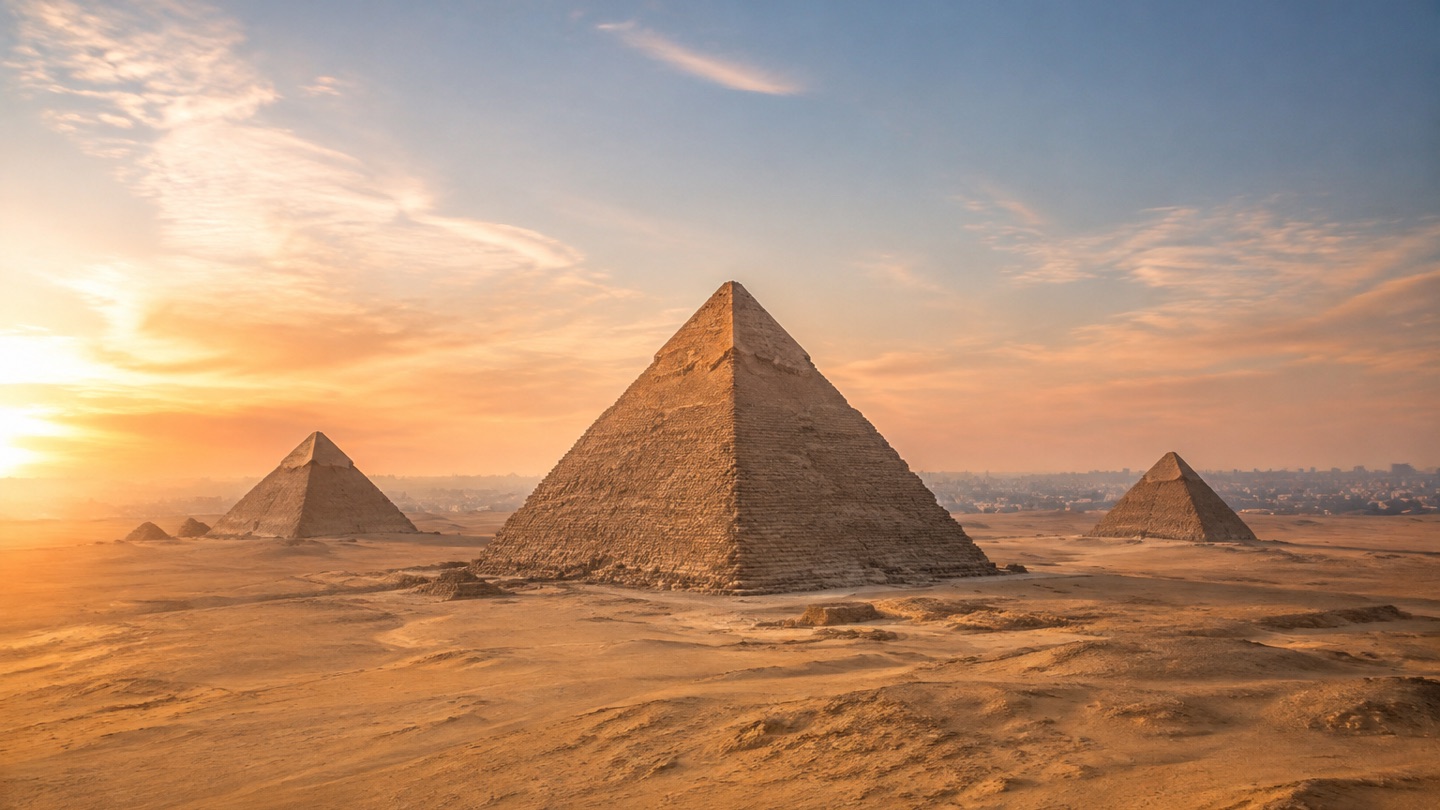
Nothing quite prepares you for the fact that the Pyramids of Giza sit at the edge of a living city of more than twenty million people, with apartment blocks and traffic running up to the boundary of the plateau. Egypt's capital is loud, enormous, chaotic and one of the most rewarding places on earth for anyone with an interest in the ancient world. It is also a city that punishes the unguided visitor more than almost any other. The difference between a Cairo trip that works and one that exhausts is entirely a matter of who is with you, what hours you keep and how the days are sequenced.
The planning decision: Cairo alone, or Cairo and the Nile
Almost nobody should fly to Egypt for Cairo by itself. The standard and correct shape is three or four nights in Cairo for Giza, Saqqara and the museums, then south to Luxor and Aswan, usually by a Nile cruise of three to seven nights or by flights and land stays. Abu Simbel is a further step south. The Red Sea coast at El Gouna or the Sinai adds beach days at the end. That larger shape determines everything: which nights in Cairo, which direction on the river, and how much internal flying. Settle the whole itinerary before booking the first hotel.
The cool season, and why summer is a real constraint
October through April is the season, and within it November through February is the most comfortable, with warm days and cool evenings that make walking a site for three hours genuinely pleasant. March and April are warm and can bring the khamsin winds that carry sand. May through September is severe heat, regularly past 100 degrees in Cairo and considerably hotter in Luxor and Aswan, which does not make travel impossible but does compress everything into early mornings and evenings and makes long site visits unwise, particularly with children or older travelers. Ramadan moves through the calendar each year and changes opening hours, restaurant service and the rhythm of the city, so we check your dates against it and plan accordingly rather than being surprised.
Where to base, and how the geography works
Giza, out by the plateau, puts the pyramids at your window and cuts the morning transfer to almost nothing, which matters enormously because the early hour at the site is the whole game. Zamalek, on an island in the Nile, is the leafy, embassy heavy, residential quarter and the most pleasant place to be in the evening. Garden City and the Corniche put you on the river near the museums. Cairo traffic is genuinely severe, and a crossing that takes twenty minutes at seven in the morning can take an hour and a half at five in the afternoon, so we cluster each day geographically. Cairo International handles international arrivals, and internal flights to Luxor and Aswan run about an hour.
Pyramid views, river views, and which is worth it
Marriott Mena House sits at the foot of the Giza plateau in a nineteenth century royal lodging with gardens and direct pyramid views from the right rooms, and for a first visit that view earns its price. Four Seasons Hotel Cairo at Nile Plaza and Four Seasons Hotel Cairo at The First Residence both sit on the river with the reliability and the pools that matter after a hot day. The St. Regis Cairo is newer on the Corniche. If you take the pyramid view, specify it explicitly at the room category level, because a garden facing room at the same property is a completely different experience.
When to begin
Six months for the cool season, and nine to twelve if Christmas, New Year or Easter are involved. The Nile cruise vessels at the top end are small, the good cabins are few and the best departures go early. The Grand Egyptian Museum has changed visitor patterns significantly, and timed entry and private guiding for it should be arranged well ahead. Egyptologist guides of real quality are a limited group and the best of them are booked months in advance, which is the single most important reservation in the whole trip.
Four experiences worth building the days around
- Giza at opening, on the plateau before the heat and the crowds, with an Egyptologist rather than a general guide, and the interior access decided in advance.
- The Grand Egyptian Museum given most of a day, with the Tutankhamun collection approached deliberately rather than at the end of a tired afternoon.
- Saqqara and Dahshur, where the Step Pyramid and the Bent Pyramid are quieter than Giza and often the more moving half day.
- Islamic Cairo and the Khan el Khalili with a guide, walked in the late afternoon when the light and the temperature both improve.
Who this trip suits
Cairo suits anyone with a serious interest in the ancient world, and it rewards preparation more than almost any destination. It suits families with children over about ten, who tend to find the pyramids genuinely thrilling. It suits multi generational groups when the pacing is built around the heat and the sites are cut to two a day rather than four. It suits travelers who want a trip with substance rather than a resort week.
When another plan may fit better
Travelers who want calm, order and predictability will find Cairo demanding, and a Nile cruise with fewer city nights is the softer version. Anyone unable to walk uneven ground for extended periods should tell us early, because several key sites are difficult. And if you want the region's culture with a resort rhythm attached, Marrakech or Dubai will serve you better.
Plan it with one accountable advisor
Give us the month and the party, and we will start with the Egyptologist and the Nile dates, then build Cairo, the internal flights and the room categories around them. Our luxury leisure travel planning holds the whole Egyptian itinerary together, and our group travel planning covers multi family and larger parties where pacing matters most.
Continue Exploring