

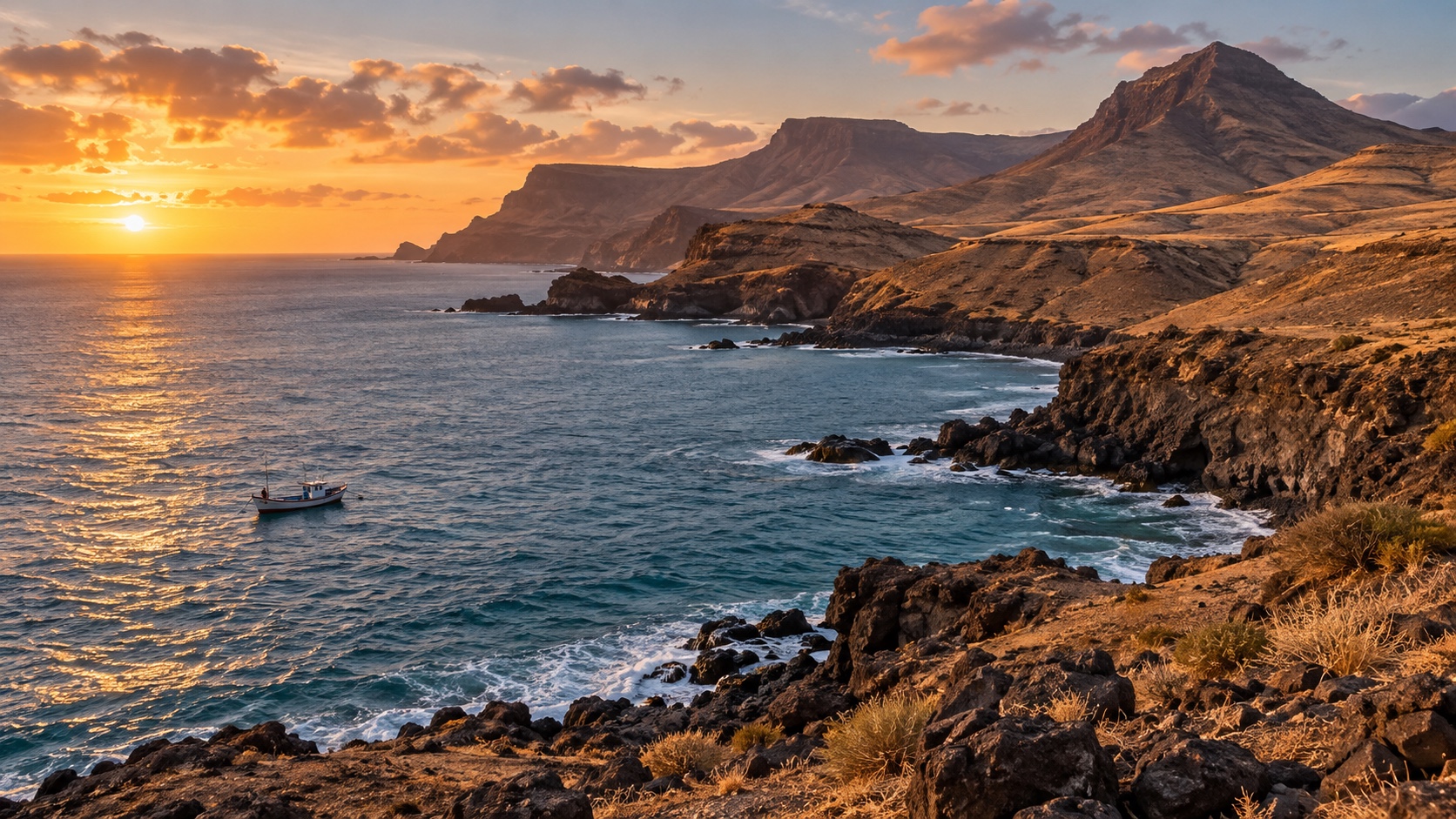

Cape Verde
Cape Verde, An Atlantic Route With Several Moods
Cape Verde is an Atlantic archipelago, and the mistake is treating it like one beach destination. The islands have different accents. Sal and Boa Vista offer broad beaches and open wind. São Vicente has music, design, and Mindelo’s social energy. Santo Antão is made for walking. Santiago carries the country’s history, while Fogo rises into a volcanic landscape all its own.
A first route needs five to seven nights at minimum, and longer is better if more than two islands matter. Choose the islands first, then work out the flights and ferries around them.
Know before you go
- Fly into: Sal, Praia on Santiago, and São Vicente are the main international gateways, depending on the route and season. Your arrival airport should match the first island you want to understand.
- Trip length: Five to seven nights for two islands. Add three nights for each additional island so the travel between them does not take over the trip.
- Best months: November to June is often the drier period. August to October can bring more variable rain, while wind and surf conditions change the feel of each coast throughout the year.
- Getting around: Domestic flights and ferries link the islands, but schedules and weather need breathing room. Private drivers are useful on the larger islands and for mountain routes.
- Money: Cape Verde uses the escudo. Cards are common in established hotels, while smaller restaurants, guides, and island shops may require cash.
- What to reserve: Inter-island connections, private drivers, mountain guides, the right island hotels, and any music, hiking, or water day that anchors the route.
Choose the islands first
A useful Cape Verde route gives each island a job. Sal or Boa Vista can provide a few easy beach days. São Vicente brings Mindelo, music, and a more social evening. Santo Antão is the choice for serious scenery and walks. Santiago adds Praia, Cidade Velha, and the country’s historical centre. Fogo is for volcanic landscapes and a slower, more distinctive stay.
Give the mountains their own time
Santo Antão changes the scale of the trip. Roads climb through steep valleys, terraces, and villages where the pleasure is in the route as much as the destination. Use a local guide, start early, and be honest about the walking. The island is generous, but it is not designed for a quick look from a car window.
Spend an evening in Mindelo
Mindelo is where Cape Verde’s musical and maritime character becomes easiest to feel. The town is good for a late meal, a drink with live music, and a few hours without a plan. Ask your hotel what is happening locally rather than relying on an old list of venues. The best evening may be the one you find through conversation.
Keep the coast moving
The beaches are beautiful, but Cape Verde is more interesting when the route follows the islands’ differences. A fishing harbour, a volcanic valley, a market, and a long Atlantic horizon tell you more than a week spent beside a single pool. Build in time for wind, weather, and the occasional delayed connection.
Planning brief
Cape Verde suits travellers who want Atlantic light, music, walking, local food, and a route that feels more textured than a standard beach holiday.
- Best suited to: couples, hikers, music lovers, active families, photographers, and beach travellers who want an island chain with real variation.
- Settle early: the island combination, flights or ferries, driver and guide support, hotel position, and the amount of walking the trip can comfortably hold.
- Useful pairing: Lisbon, the Canary Islands, Senegal, or a longer Atlantic island route.
Let the route have some weather in it
Cape Verde is better when the itinerary has structure but can absorb a changed ferry, a windy afternoon, or a mountain day that takes longer than expected. Tell us what you want the islands to do for you, and we will build a route with the right balance.
Our luxury leisure travel planning can arrange the island sequence, private drivers, guides, hotels, and connections across Cape Verde.
How many islands should you visit in Cape Verde?
Two islands is a sensible first route for five to seven nights. Add a third only when you have enough time to absorb the connections and give each island more than a rushed overnight.
Which Cape Verde island is best for beaches?
Sal and Boa Vista are the easiest choices for broad beaches and a straightforward coastal stay. São Vicente, Santo Antão, Santiago, and Fogo are stronger when culture, walking, history, or landscape matters more.
Is Cape Verde good for hiking?
Yes, especially on Santo Antão, where steep valleys, terraces, and village paths create some of the country’s best days. Use a local guide and plan for an early start, sun, and changing mountain weather.
How do you travel between the islands?
Domestic flights and ferries are both useful, but schedules and weather can change. We leave margin in the route and choose the connection that best fits the islands rather than forcing a tight sequence.
CONTINUE EXPLORING