


Comoros
Comoros, Volcanic Islands in the Indian Ocean
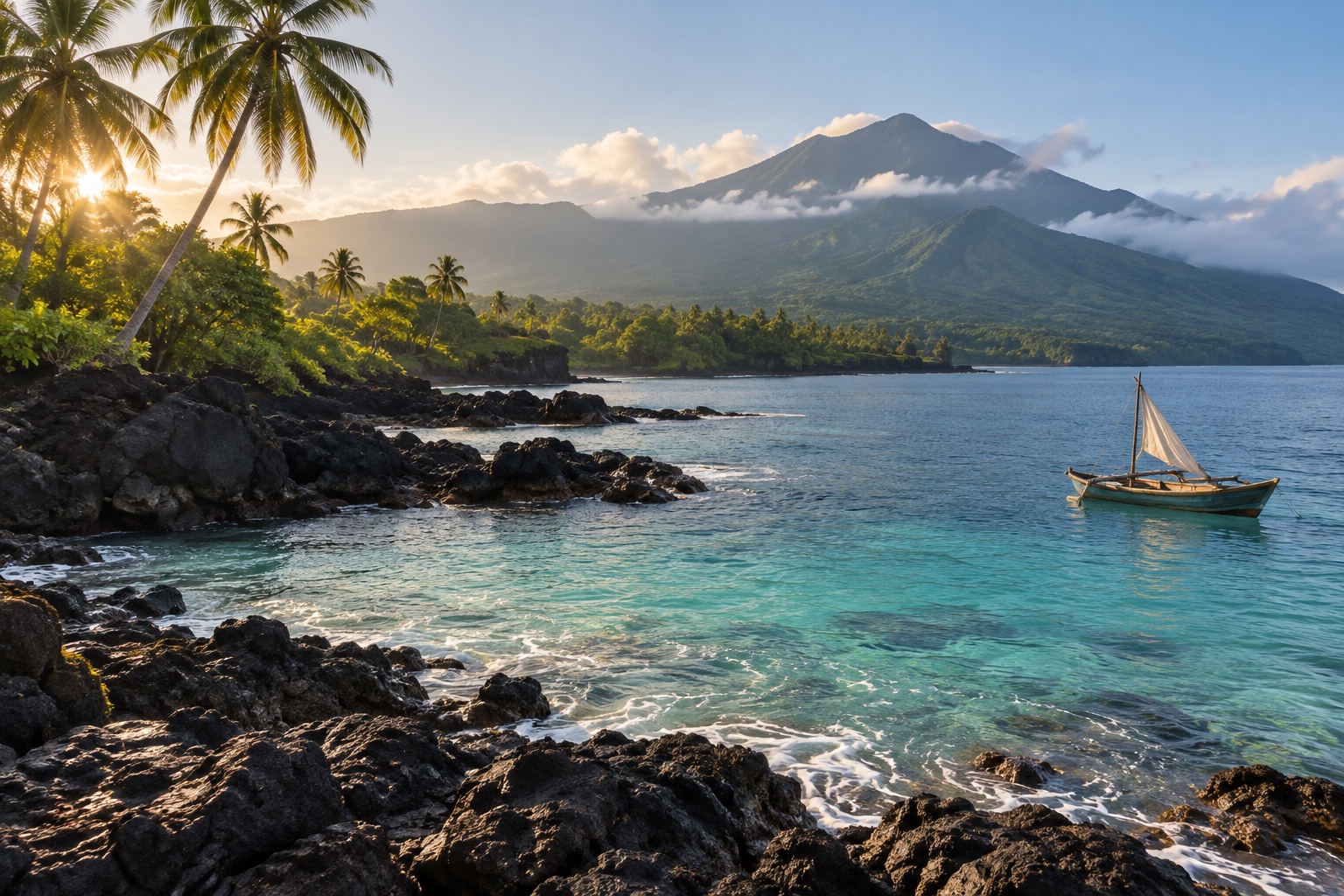
Comoros is an Indian Ocean archipelago of volcanic islands, green slopes, fishing villages, and warm water. It is a destination for travellers who value atmosphere over polish. The reward is the combination of ocean, forest, Arabic and African influence, and a pace that has not been built around mass tourism.
Four or five nights is a useful starting point for Grande Comore, though a broader island route needs more time and careful connections. Come with a flexible plan, a trusted local partner, and enough patience for weather and transport to have a say in the day.
Know before you go
- Fly into: Prince Said Ibrahim International Airport near Moroni on Grande Comore is the main international gateway. Arrange the arrival transfer and local support in advance.
- Trip length: Four or five nights for Grande Comore. Add time for island-to-island travel, marine experiences, or a more complete archipelago route.
- Best months: May through October is generally the drier period. November through April is warmer and wetter, with more variable sea and road conditions.
- Getting around: Use a private driver on land and arrange boats or internal connections through a trusted local partner. Allow generous margins between islands.
- Money: Comoros uses the Comorian franc. Cash planning is important because card facilities and reliable ATMs can be limited outside the main areas.
- What to reserve: A characterful hotel, airport transfer, local guide, island connections, and any boat or nature experience well ahead of arrival.
Begin with Grande Comore
Grande Comore gives the first visit a strong introduction, with Moroni’s waterfront, old lanes, volcanic terrain, and villages shaped by the sea. Take time to understand the island before trying to move on. The landscape is close, but the roads and weather can make a short distance feel long.
Read the island through the volcano
The islands are volcanic, and Grande Comore’s interior gives that geology a physical presence. Black rock, forest, lava fields, and high viewpoints create a different Indian Ocean landscape from the classic beach image. Use a local guide for routes, conditions, and the best way to approach the terrain.
Stay close to the water
Fishing and the sea remain central to life in Comoros. A boat day, a village visit, or a quiet shore can show more of the destination than a hotel-only stay. Choose experiences that are locally led and ask before photographing people, homes, and ceremonies.
Let the archipelago take time
Mohéli, Anjouan, and Grande Comore each have their own character, but island-to-island travel needs planning. Do not force all three into a short trip. One island experienced well is more satisfying than a string of rushed arrivals and departures.
Travel with respect for the place
Comoros has a strong Muslim culture and a tourism infrastructure that is still developing. Dress thoughtfully, follow local guidance, and choose a host who understands the community as well as the route. The trip improves when curiosity is matched by humility.
Planning brief
Comoros suits experienced Indian Ocean travellers, divers, photographers, and guests who want volcanic scenery, local life, and a destination that feels genuinely removed from the standard resort circuit.
- Best suited to: adventurous couples, experienced families, divers, photographers, and travellers who accept a less predictable route.
- Settle early: local guide, hotel, cash, airport transfer, island connections, boat conditions, and cultural expectations.
- Useful pairing: Madagascar, Mayotte, Réunion, Mauritius, or a wider Indian Ocean journey.
Go with time on your side
Comoros needs a little more preparation than a conventional island break, and that is part of its appeal. Tell us how remote the group wants to go and which island experiences matter most, and we will make the route as comfortable and respectful as possible.
Our luxury leisure travel planning can arrange hotels, local partners, drivers, boats, connections, and the wider Indian Ocean journey.
How many nights should you spend in Comoros?
Four or five nights is a sensible introduction to Grande Comore. Add more if you want to include Mohéli or Anjouan, since island-to-island connections need time and flexibility.
What is Comoros like for travellers?
Comoros is warm, volcanic, culturally rich, and less developed for tourism than many Indian Ocean destinations. It suits travellers who value local atmosphere and nature, and who are comfortable with a route that may need adjustment.
Do you need a guide in Comoros?
A trusted local guide is strongly recommended for transport, volcanic landscapes, village visits, and boat arrangements. Local knowledge also helps the group move through communities with the right level of respect.
When is the best time to visit Comoros?
May through October is generally the drier period and the easiest starting point for outdoor plans. The wetter months can be rewarding, but sea and road conditions may require more flexibility.
CONTINUE EXPLORING