


Corsica
Corsica is an island of contrasts: high mountains close to the sea, polished ports beside quiet villages, and beaches that can feel entirely different from one bay to the next. The route works best as a short road journey with two or three bases, not a single hotel and a series of long day drives.
Know before you go
- Fly into: Ajaccio, Bastia, Figari, or Calvi, depending on the direction of the route. Ferry arrivals also suit a slower road journey.
- Trip length: Seven to ten nights for a balanced coastal and inland route. A shorter stay should choose one side of the island.
- Best months: Late spring and early autumn offer warm days with a quieter feel. High summer suits beach time but needs more advance planning.
- Getting around: A rental car is the most flexible choice. Roads are scenic but winding, so distances take longer than the map suggests.
- What to reserve: Small hotels, a boat day, a mountain guide, beach access or sun beds where needed, and a few excellent meals.
- Plan around: Driving times, seasonal ferry and flight schedules, heat on exposed walks, and the temptation to overfill the route.
Choose a coast and an interior
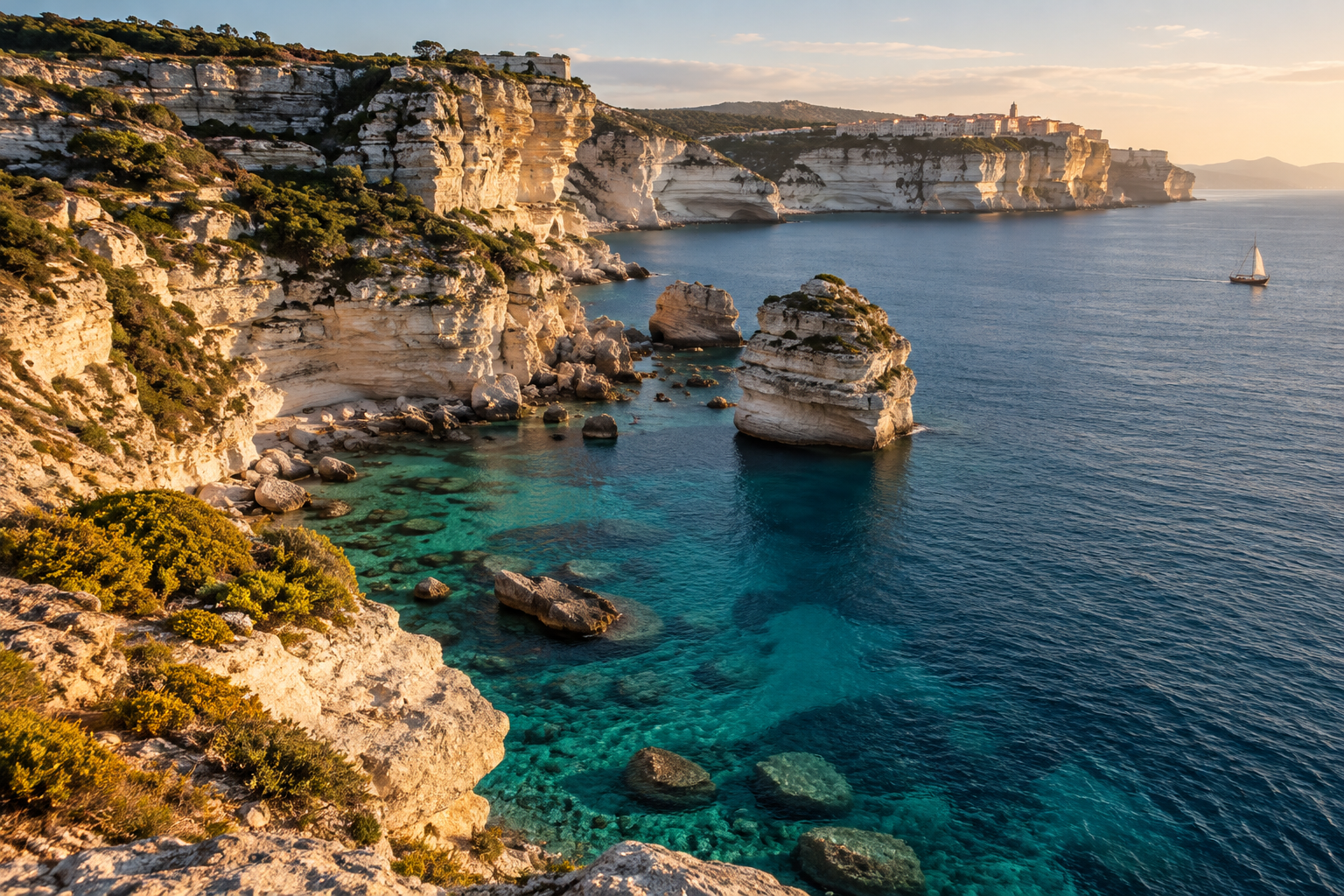
Bonifacio and the south bring limestone cliffs, clear water, and an atmospheric old town. The Balagne offers beaches, villages, and an easy mix of sea and inland roads. Cap Corse feels more remote, while the mountains give the island its deeper character. Two coastal bases and one inland stop can make a beautiful first route.
Keep the villages in the plan
Corsica's village squares, churches, markets, and mountain roads show a side of the island that beaches cannot. Stop for a coffee, a local cheese, a view, or a conversation. The best day often has one anchor and plenty of space around it.
Use the sea wisely
A private boat or small group outing can reveal coves and cliffs that are difficult to appreciate from the road. Choose operators who respect marine areas and keep the outing tied to the landscape rather than making it a loud all-day excursion.
Eat with a sense of place
Corsican charcuterie, chestnuts, cheeses, seafood, herbs, and local wines create a through line, but the island's food is most interesting when it stays connected to producers and villages. Ask where an ingredient comes from and let the answer shape the next stop.
Who this trip suits
Couples, families, food lovers and walkers, and anyone who wants a Mediterranean island with a strong local identity.
When another plan may fit better
If you do not want to drive winding roads, keep to one base or hire a driver. If you only have a few nights, choose one side of the island. And if high summer is your only window, book early and expect a livelier island than the photographs suggest.
Planning brief
The shape we recommend: seven to ten nights for a balanced coastal and inland route. A shorter stay should choose one side of the island.
- Settle early: airport or ferry routing, driving tolerance, coast selection, and whether the trip is beach-led or village-led.
- Useful pairing: the south of France, Sardinia, Provence, or a wider Mediterranean route.
Make the route yours
Tell us whether Corsica should be about sea days, village roads, food, walking, or a mix that keeps the island's contrasts intact.
Our luxury leisure travel planning can shape the stays, guides, transfers, and pacing around the way you want to travel.
How many nights do you need in Corsica?
Seven to ten nights allows two or three bases and enough time for both coast and inland villages. With fewer nights, choose one region rather than spending the trip crossing the island.
Do you need a car in Corsica?
A car is the most flexible way to reach villages, trailheads, and beaches, but roads are winding and journeys take time. A private driver can be worthwhile for a shorter or more food-focused trip.
When is the best time to visit Corsica?
Late spring and early autumn are often the most comfortable for combining coast, villages, and walks. July and August bring the strongest beach weather but need earlier reservations and a willingness to accept a livelier island.
Can Corsica be combined with Sardinia?
Yes, especially by ferry, but the islands have different characters. Corsica is more mountainous and village-led, while Sardinia can bring a broader beach and culinary route. Give both enough nights to feel distinct.
CONTINUE EXPLORING