

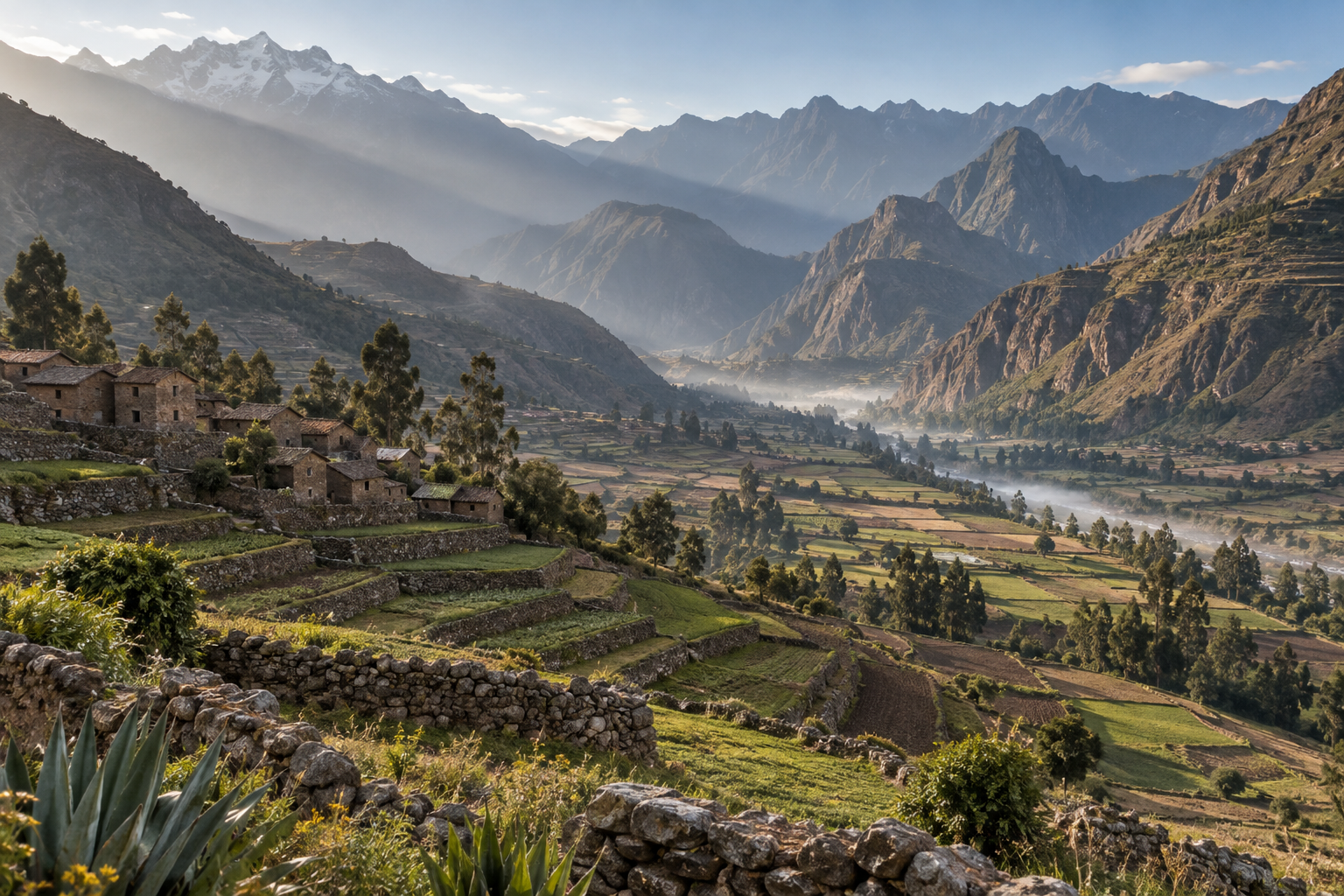

Cusco, Sacred Valley & Machu Picchu
Cusco, the Sacred Valley, and Machu Picchu belong in one journey, but they should not be rushed into one continuous sight-seeing circuit. The best route gives the body time to adjust, leaves room for market towns and mountain light, and treats Machu Picchu as one chapter in a longer story about the Andes.
Know before you go
- Fly into: Lima, then connect to Cusco. A first night in the Sacred Valley can make the move to altitude gentler.
- Trip length: Seven to ten nights for Cusco, the Sacred Valley, Machu Picchu, and one quieter mountain or food-focused day.
- Best months: May through September is generally drier. April and October can bring a good balance of clear days and fewer visitors, with weather still variable.
- Getting around: Private transfers and a guide for the valley, rail for Machu Picchu, and walking time in Cusco rather than a packed vehicle schedule.
- What to reserve: Rail and entry arrangements, a private guide, the first two nights at a sensible altitude, and a hotel with a calm place to recover.
- Plan around: Altitude, early starts, sun protection, and the access rules that shape visits to Machu Picchu.
Start lower in the Sacred Valley
The valley is a generous first chapter. Its farmland, archaeological sites, weaving traditions, and broad mountain views allow the body to settle before the higher streets of Cusco. A two night stay near Urubamba or Ollantaytambo gives the itinerary a quieter beginning and keeps the first days from becoming a test of stamina.
Give Cusco the time it deserves
Cusco is more than the gateway to Machu Picchu. Its stonework, courtyards, churches, galleries, and contemporary food scene reward an unhurried day. Visit the major sites with a knowledgeable guide, then leave a late afternoon open for a market, a museum, or simply walking the lanes when the light turns warm.
Make Machu Picchu a considered visit
The approach matters. Choose the rail journey and entry time around the group rather than chasing the earliest possible slot by default. A night in Aguas Calientes, or a carefully timed return to the valley, can keep the day humane and leave space to absorb the scale of the sanctuary.
Keep the route connected to place
The strongest experiences are often smaller: a textile workshop where the maker explains the pattern, a lunch built around local potatoes and corn, or a mountain walk that reveals how communities use the land. Choose guides who can connect archaeology to living culture, not simply recite dates.
Who this trip suits
Couples, families with older children, walkers, and first time visitors to Peru.
When another plan may fit better
If altitude is a medical concern, speak to your doctor before booking. If you only have three or four nights, the altitude and rail logistics make it rushed. And if the rainy months are your only dates, expect the weather to shape the days more than the plan does.
Planning brief
The shape we recommend: seven to ten nights for Cusco, the Sacred Valley, Machu Picchu, and one quieter mountain or food-focused day.
- Settle early: altitude pacing, the rail and entry plan, guide quality, and whether to add the coast or Lake Titicaca.
- Useful pairing: the Amazon, Lima's food scene, or a longer Peru route.
Make the route yours
Tell us whether this trip is led by archaeology, food, walking, photography, or a wish to see the Andes at a gentler pace.
Our luxury leisure travel planning can shape the stays, guides, transfers, and pacing around the way you want to travel.
How many nights do you need for Machu Picchu and Cusco?
Seven nights can work for Cusco, the Sacred Valley, and Machu Picchu. Ten nights gives the route enough space for altitude adjustment, a slower valley stay, and one additional experience without turning every day into a transfer.
Should you sleep in Cusco first?
Not always. Many travelers feel better beginning in the Sacred Valley, which sits lower than Cusco, then moving uphill after a couple of nights. The right order depends on arrival time, health, and how the group responds to altitude.
What is the best way to visit Machu Picchu?
Use a carefully timed entry and a guide who can explain the sanctuary in context. Rail is the practical choice for most journeys, while a multi-day trek suits travelers who want the approach itself to be the central experience.
Can this route include the Peruvian Amazon?
Yes. Add the Amazon after the Andean section and allow enough nights for the lodge to feel worthwhile. A flight connection can make the combination work without taking time away from Cusco and the Sacred Valley.
CONTINUE EXPLORING