


Etosha
Etosha, Namibia Around the White Pan
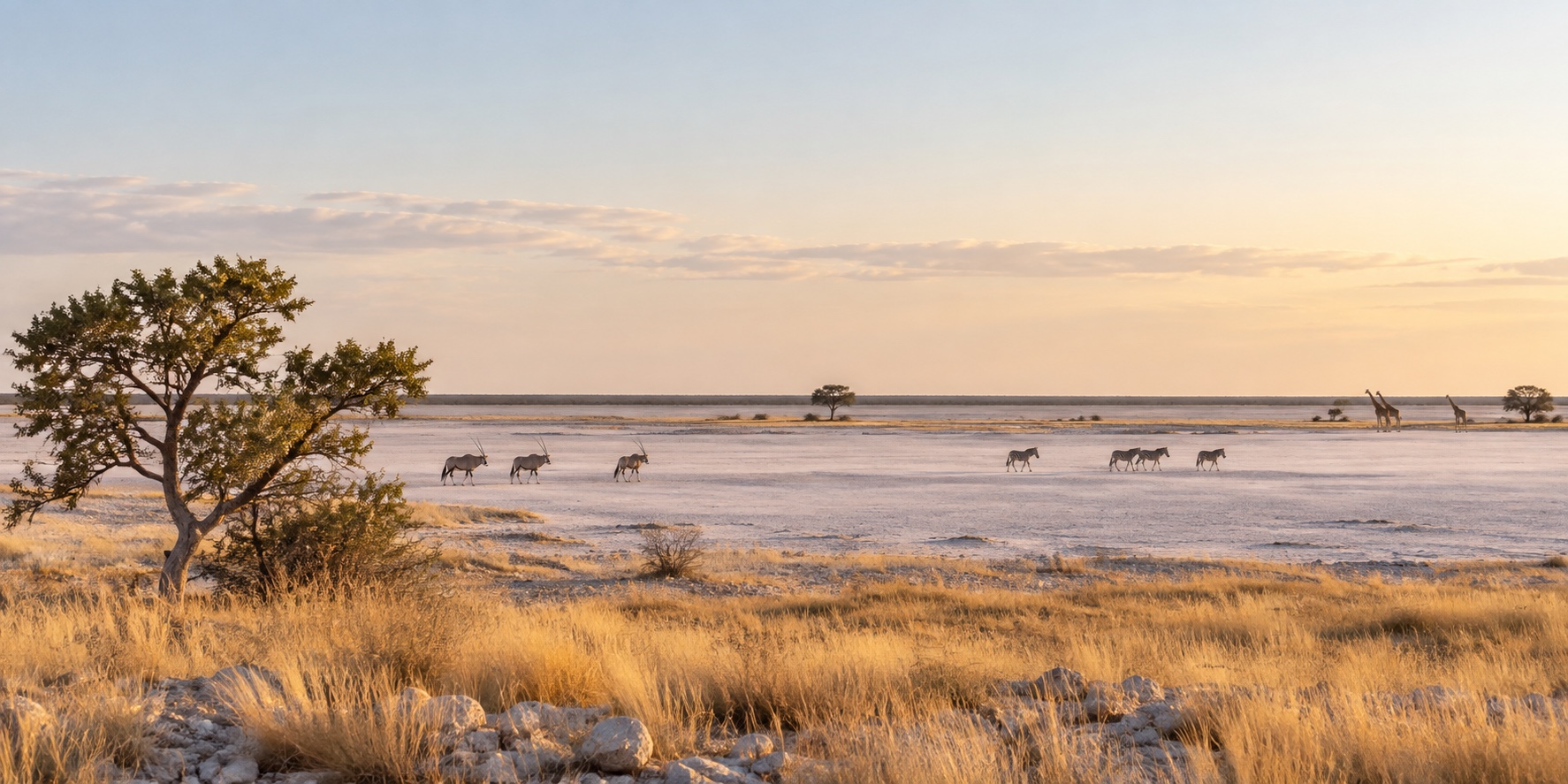
Etosha has a clarity that makes wildlife viewing feel almost graphic. The huge pale pan, dry grass, mopane, and open waterholes create long sightlines across the park, so an elephant, giraffe, lion, or rhino can appear against the horizon with very little visual noise around it.
Three nights is a good starting point, with four nights better for travellers who want to move through more than one part of the park. Etosha is easy to pair with the rest of Namibia, but it is worth leaving enough time for the quiet work of waiting at a waterhole.
Know before you go
- Fly into: Windhoek is the main international gateway. From there, continue by private road transfer, self-drive, or light aircraft depending on the route and camp style.
- Trip length: Three nights for a first look, with four or five nights useful if you want to explore different park areas and settle into the waterhole rhythm.
- Best months: May through October is the drier season, when wildlife is drawn more consistently toward water. The warmer months bring different light and a greener landscape.
- Getting around: Self-drive is possible on established routes, but a private guide adds knowledge and ease. Distances are long, so keep each day realistic.
- Money: Namibia uses the Namibian dollar, and the South African rand is also widely accepted. Cards work in many lodges, but cash is useful on the road.
- What to reserve: Lodges or camps inside or near the park, a private vehicle if needed, park access, and a route that avoids spending the whole day behind the wheel.
Build the route around water
Etosha is not a destination where every sighting comes from a chase. Waterholes create natural places to wait, particularly in the dry season. A good guide knows when to stay, when to move, and when the quietest viewpoint may be the most productive one.
Choose the right side of the park
Etosha is large enough for the camp location to change the experience. Moving between areas can add useful variety, but it also takes time. Decide whether the group wants shorter drives, broader exploration, or the chance to reach a particular waterhole at the right part of the day before fixing the route.
Look beyond the large animals
The pan and grasslands support a wider cast than the usual safari list. Birds, springbok, oryx, zebra, giraffe, jackal, and smaller desert-adapted life fill the spaces between the bigger sightings. The landscape encourages a patient eye, especially around dawn and the last hour of light.
Leave the park on its own terms
Etosha can be part of a long Namibia circuit, but it does not need to be hurried on the way to the next landscape. Give the final morning a proper game drive and plan the onward transfer with enough margin. Namibia’s distances are part of the itinerary, not a footnote.
Travel lightly through a fragile place
Keep to established roads, follow park guidance, and be careful with water and waste. The scale of the pan can make the environment look indestructible, but the life around its waterholes depends on a very particular balance.
Planning brief
Etosha suits first-time safari travellers, photographers, self-drive guests, and anyone who enjoys wildlife viewing in an open, visually spare landscape.
- Best suited to: couples, families with older children, photographers, self-drivers, and travellers building a classic Namibia route.
- Settle early: camp position, driving time, private guide, park access, waterhole priorities, and the wider Namibia connection.
- Useful pairing: Sossusvlei, Damaraland, Swakopmund, Skeleton Coast, or the Caprivi region.
Stay for the waterhole hour
Etosha works through patience, distance, and a good understanding of the day’s light. Tell us whether the group prefers a private safari, self-drive freedom, or a more comfortable lodge route, and we will shape the park around that preference.
Our luxury leisure travel planning can arrange lodges, guides, private vehicles, flights, and the rest of Namibia.
How many nights do you need in Etosha?
Three nights is a useful introduction, while four or five nights gives you more time to explore different areas and return to the waterholes. The best length depends on how much of the wider Namibia route still needs to fit around it.
What is the best time to visit Etosha?
May through October is generally the drier season, when animals tend to gather more consistently around water. The wetter months bring a greener landscape, young animals, and a different feel, so they should not be dismissed.
Can you self-drive in Etosha?
Yes, self-drive is possible on established routes, though distances and road conditions require a sensible plan. A private guide is valuable when the group wants deeper interpretation, easier timing, and help reading the landscape.
Which animals can you see in Etosha?
Etosha supports elephants, lions, rhino, giraffe, zebra, springbok, oryx, and many other species, along with more than 400 recorded bird species. Sightings vary, so leave room for the less expected encounters.
CONTINUE EXPLORING