


Frankfurt
Frankfurt Is More Interesting at Street Level
Frankfurt is often reduced to its airport and skyline. That misses the city’s better balance. The Main, the old center, Museumsufer, the Westend, and the Palmengarten sit close enough to make a satisfying short stay, while the business district gives the city a useful energy during the week. Frankfurt is not trying to perform old Europe all day. It is a working city with a strong cultural side.
Two nights can work for a focused stop, but three nights makes the city more generous. That extra night gives space for a museum, a long lunch, the river, and a neighborhood beyond the conference hotels.
Know before you go
- Fly into: Frankfurt Airport, code FRA. It is one of Europe’s major rail and air gateways, with direct connections toward the city and onward destinations.
- Trip length: Two nights for a business extension or stopover. Three nights for a complete first visit with museums, restaurants, and time by the Main.
- Best months: May through September for river walks and outdoor tables. Spring and autumn work well for museums and business travel. Winter is quieter outside holiday dates.
- Getting around: The center, river, and Museumsufer are easy on foot. S-Bahn, U-Bahn, trams, and taxis cover the wider city and airport route.
- What to reserve: The museum that suits the trip, a restaurant with a clear point of view, and any business or event transport that depends on a fixed schedule.
- Choose the hotel carefully: The Innenstadt is central, the Westend is calmer, and Sachsenhausen brings more evening life. The airport is practical for a very early departure, not a substitute for staying in Frankfurt.
Use the Main to understand the city
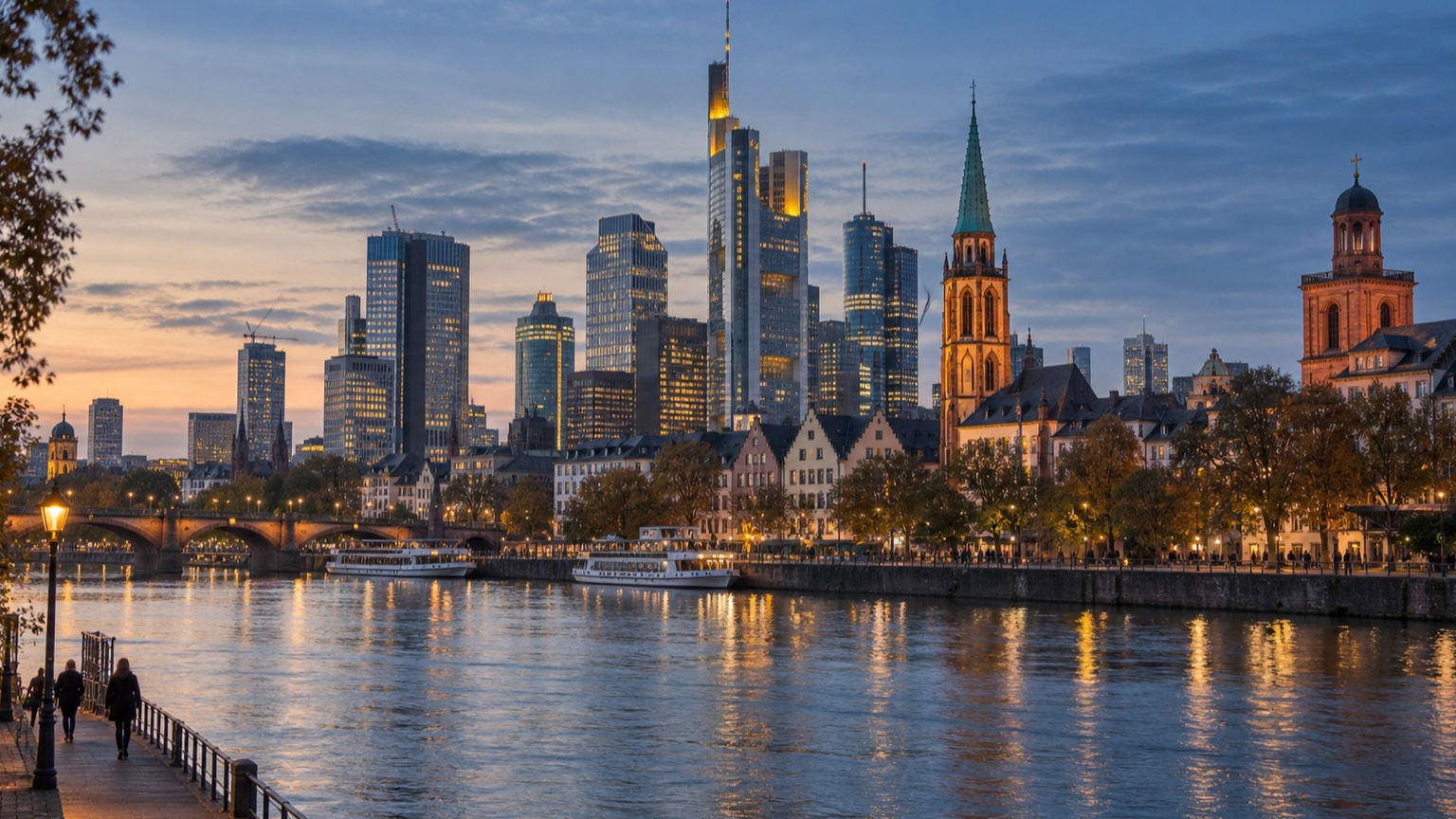
The river is the cleanest way to see Frankfurt’s contrasts. One bank leads toward the museums of Sachsenhausen and the other toward the old center and skyline. Walk at least part of the route, then choose one museum rather than treating Museumsufer as a dare. The city makes more sense when the financial towers and the river neighborhoods remain in the same frame.
Römerberg and the reconstructed old center deserve a look, but avoid spending the entire stay inside a historic image of Frankfurt. The city’s strength is the conversation between what was rebuilt, what is still working, and what is being built now.
Plan one serious cultural afternoon
Frankfurt’s museums cover art, film, architecture, communication, and history. Choose one that matches the travelers and leave time for a proper lunch or coffee afterward. The Palmengarten offers a different form of relief, particularly when the schedule has been heavy with meetings or interiors.
For business travelers, add a private evening route rather than another conference dinner. A guide can shape a short walk through the old center, riverfront, or Westend around the time actually available.
A useful base for a wider Germany trip
Frankfurt’s rail position makes it practical for a larger route through Germany and beyond. It can sit before or after Paris, Amsterdam, or Munich, but the stay should be given its own identity. A night between flights is a transaction. Two or three nights can be a city visit.
Planning brief
Frankfurt works when the trip needs efficiency without sacrificing a real city experience.
- Best suited to: business travelers adding leisure, couples who like museums and restaurants, families using the city as a rail base, and short European stopovers.
- Settle early: hotel neighborhood, airport or rail timing, museum choice, and the meal that anchors the stay.
- Useful pairing: combine with Munich, Berlin, Paris, or a wider Rhine and Central European route.
Give Frankfurt more than the airport window
The city is worth the extra evening. Tell us whether you are adding leisure to a business trip, passing through by train, or looking for a compact German city break.
Our luxury leisure travel planning can arrange the hotel, airport or rail transfers, museum visits, restaurant reservations, and a private route suited to your schedule.
How many nights should we spend in Frankfurt?
Two nights works for a focused stop or a business extension. Three nights is better for a first leisure visit because it leaves room for Museumsufer, the Main, the old center, a neighborhood meal, and one slower morning.
Is Frankfurt worth visiting beyond the airport?
Yes. The river, museums, old center, Palmengarten, Westend, and skyline create a compact city stay with more variety than the airport reputation suggests. Frankfurt is especially useful when travelers want culture and reliable connections without the pace of a much larger capital.
Where should we stay in Frankfurt?
The Innenstadt is central and convenient for a first visit. The Westend is calmer and useful for business, while Sachsenhausen brings more restaurants and evening life near the museums. Choose the airport only when an early departure makes the extra sleep more valuable than being in the city.
Do we need a car in Frankfurt?
No for the city or the airport connection. Walk the central route and use the S-Bahn, U-Bahn, trams, or taxis for longer moves. A car becomes useful for a wider Rhine, wine-country, or countryside itinerary rather than for Frankfurt itself.
CONTINUE EXPLORING