

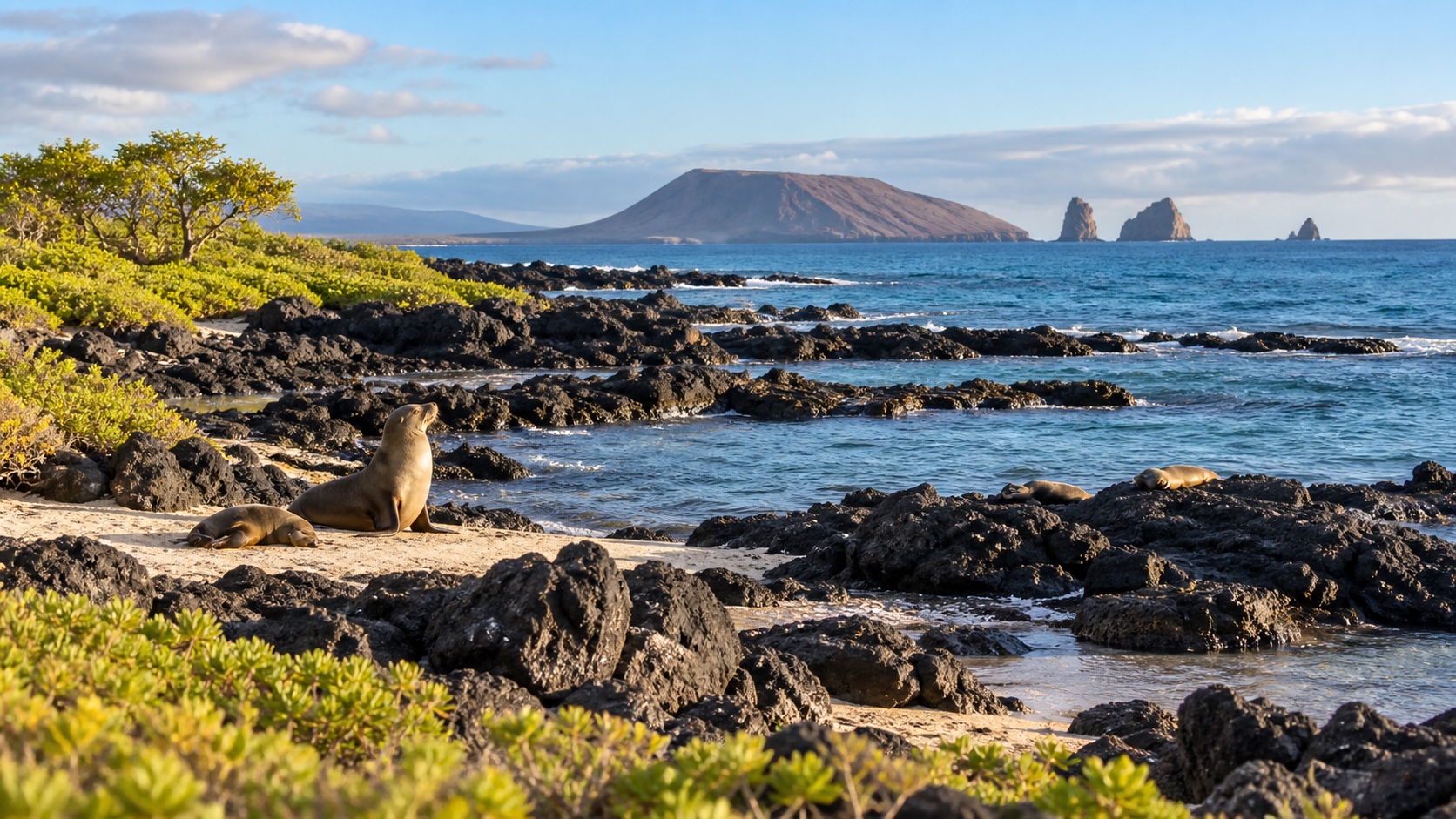

Galápagos Islands
Galápagos Islands, Wildlife with a Sense of Distance
The Galápagos Islands demand a different idea of luxury. The reward is not excess, but access to a protected landscape, expert naturalists, small moments with wildlife, and the rare feeling that the itinerary is being shaped by the conditions of the sea.
Seven nights is a useful minimum for a first expedition, though a longer voyage or a land and sea combination reveals more of the archipelago. Choose the vessel, route, and guide team before choosing the rest of the trip.
Know before you go
- Fly into: Quito or Guayaquil, then continue to the Galápagos by domestic flight. Entry procedures, park fees, and transit controls need to be handled in sequence.
- Trip length: Seven nights for a focused expedition. Ten to fourteen nights gives the islands and the mainland more depth.
- Best months: The islands can be visited year-round. Sea conditions, water temperature, wildlife cycles, and weather vary by season and route.
- Getting around: Most travellers use a small expedition vessel, with daily landings by boat and on foot. Land-based stays rely on inter-island boats and local flights.
- Money: Ecuador uses the US dollar. Cards may work on larger vessels and hotels, but bring cash for tips, small purchases, and transit days.
- What to reserve: The expedition route, vessel, naturalist team, mainland hotels, domestic flights, park requirements, and travel insurance.
Choose the expedition before the hotel
The vessel determines the islands, the pace, and the amount of time spent on shore. A smaller boat may offer a more intimate feel, while a larger vessel can bring more space and stability. Look closely at the naturalist team, landing style, and route rather than relying on cabin photographs alone.
Let the naturalists lead
The best guides change the way the islands are seen. They explain behaviour, geology, conservation, and the rules that protect the archipelago without crowding out the experience itself. Listen carefully to the briefing and respect the distance that wildlife needs.
Expect active days
Landings can involve uneven lava, sand, wet steps, and heat. Snorkelling, kayaking, and walks add variety, but the days are physical even when the vessel is comfortable. Pack light, wear shoes that can get wet, and keep the schedule honest.
Build in a mainland chapter
Quito or Guayaquil can make a useful beginning and ending, especially when flights require a night on the mainland. A short extension gives the Galápagos more context and creates a buffer against missed connections.
Planning brief
The Galápagos suit travellers who value wildlife, conservation, expert guiding, and a rare landscape more than a conventional beach holiday.
- Best suited to: wildlife travellers, families with older children, active couples, photographers, and guests comfortable with expedition routines.
- Settle early: the vessel, route, naturalist team, flights, park requirements, equipment, and mainland buffer nights.
- Useful pairing: Quito, the Ecuadorian Andes, the Amazon, or a wider Ecuador route.
Travel lightly and pay attention
The islands give back what visitors bring to them. Come prepared, follow the rules, and let the wildlife keep its distance.
Our luxury leisure travel planning can arrange the right expedition, naturalist team, flights, mainland stays, and conservation-minded route.
How many nights should we spend in the Galápagos?
Seven nights is a useful minimum for a first expedition. Ten to fourteen nights gives the route more depth and allows a mainland extension without rushing.
Should we choose a cruise or a land-based Galápagos stay?
A cruise reaches more distant islands and makes the sea part of the experience. A land-based stay offers more independence but relies on inter-island boats and day trips. The route and the group's preferred pace should guide the decision.
Is the Galápagos suitable for families?
Yes, especially with older children who enjoy wildlife and active days. The group should be comfortable with boats, heat, uneven ground, early starts, and conservation rules.
When is the best time to visit the Galápagos?
The islands work throughout the year. Sea conditions, water temperature, rainfall, and wildlife patterns change by season, so the route and the interests of the group matter more than one universal best month.
CONTINUE EXPLORING