


Hong Kong
Hong Kong, Vertical Energy and Human Scale
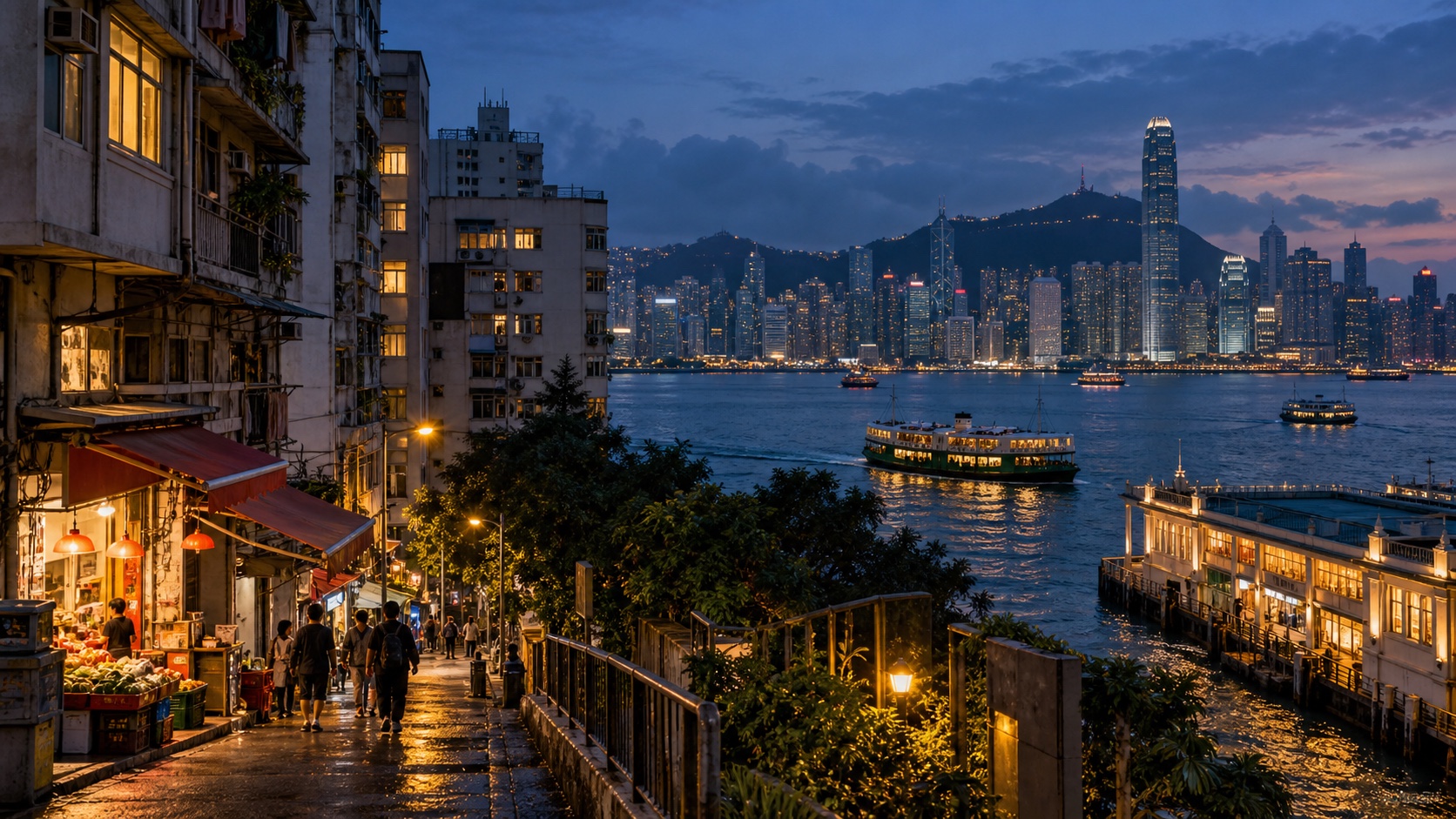
Hong Kong is often introduced through its skyline, but the city is more compelling at street level. Ferries, wet markets, old shopfronts, hill paths, serious restaurants, and short journeys between very different neighbourhoods give the city its rhythm.
Three nights is a useful first visit. It creates room for the harbour, a proper meal, a walk through one of the older districts, and a day that reaches beyond the central towers.
Know before you go
- Fly into: Hong Kong International Airport. The Airport Express is fast into the centre, while private transfers are useful for families and guests with luggage.
- Trip length: Three nights for a first visit. Four or five nights allows the outlying islands, beaches, hiking, or a slower food itinerary.
- Best months: October through April is generally comfortable for walking. Summer is hot, humid, and prone to heavy rain and typhoons, so keep the schedule flexible.
- Getting around: The MTR, ferries, trams, and taxis make the city easy to navigate. A private guide adds value when the day crosses several neighbourhoods.
- Money: Hong Kong uses the Hong Kong dollar. Cards are common, and an Octopus card is useful for transport and small purchases.
- What to reserve: Restaurants, a private food or architecture guide, airport transfer, harbour experience, and any ferry or island day trip.
Start with the harbour, then leave it
Victoria Harbour gives Hong Kong its most recognisable view, but it should be the opening scene rather than the whole visit. Cross by Star Ferry, walk the waterfront, then head into the streets where the city feels closer and more textured.
Move through neighbourhoods with purpose
Central, Sheung Wan, Sai Ying Pun, Kowloon, and the older markets each reveal a different city. Choose two or three areas rather than trying to cover everything. The best days link a walk, a meal, and a little context from someone who knows how the neighbourhood has changed.
Make food part of the itinerary
Hong Kong rewards appetite. Dim sum, roast meats, seafood, tea, bakeries, and the city's broader Cantonese tradition all deserve more than one meal. Mix a destination restaurant with a local institution, and plan the day around the fact that some of the city's best experiences are short, busy, and wonderfully specific.
Find the green edge
The city is vertical, but it is not only urban. Victoria Peak, the outlying islands, beaches, country parks, and short hill walks give the itinerary a needed change of scale. A half day on Lantau, Cheung Chau, or another island can make the city feel more complete.
Planning brief
Hong Kong suits travellers who want culture, food, design, and a city that can be explored in layers, with a surprising amount of nature at its edge.
- Best suited to: food lovers, design travellers, couples, families with older children, and guests who enjoy energetic cities.
- Settle early: the right neighbourhood base, restaurant reservations, weather margin, and whether to include an island or hiking day.
- Useful pairing: Tokyo, Kyoto, Seoul, Singapore, or a wider South China route.
Look past the skyline
Hong Kong is at its most memorable when the famous view becomes a doorway into the older, livelier city behind it.
Our luxury leisure travel planning can arrange the right hotel base, private guides, dining, transfers, and the quieter corners beyond the central skyline.
How many nights are enough in Hong Kong?
Three nights works well for a first visit with the harbour, neighbourhoods, and several serious meals. Four or five nights allows for an island, hiking, or a slower food-led stay.
Where should we stay in Hong Kong?
Central and the surrounding island neighbourhoods are convenient for first visits, while Kowloon gives a different relationship with the harbour and older city. The right base depends on whether the group values restaurants, views, transport, or quieter evenings.
Do we need a private guide in Hong Kong?
Not for every day, but a good guide can make food, architecture, markets, and neighbourhood history much more legible. One well-planned day often does more than a full schedule of unconnected stops.
When is the best time to visit Hong Kong?
October through April is generally the most comfortable period for walking. Summer can still be rewarding, but heat, humidity, heavy rain, and typhoon conditions call for more flexibility.
CONTINUE EXPLORING