


Jeju Island
Jeju Island, Wind, Stone, and Open Coast
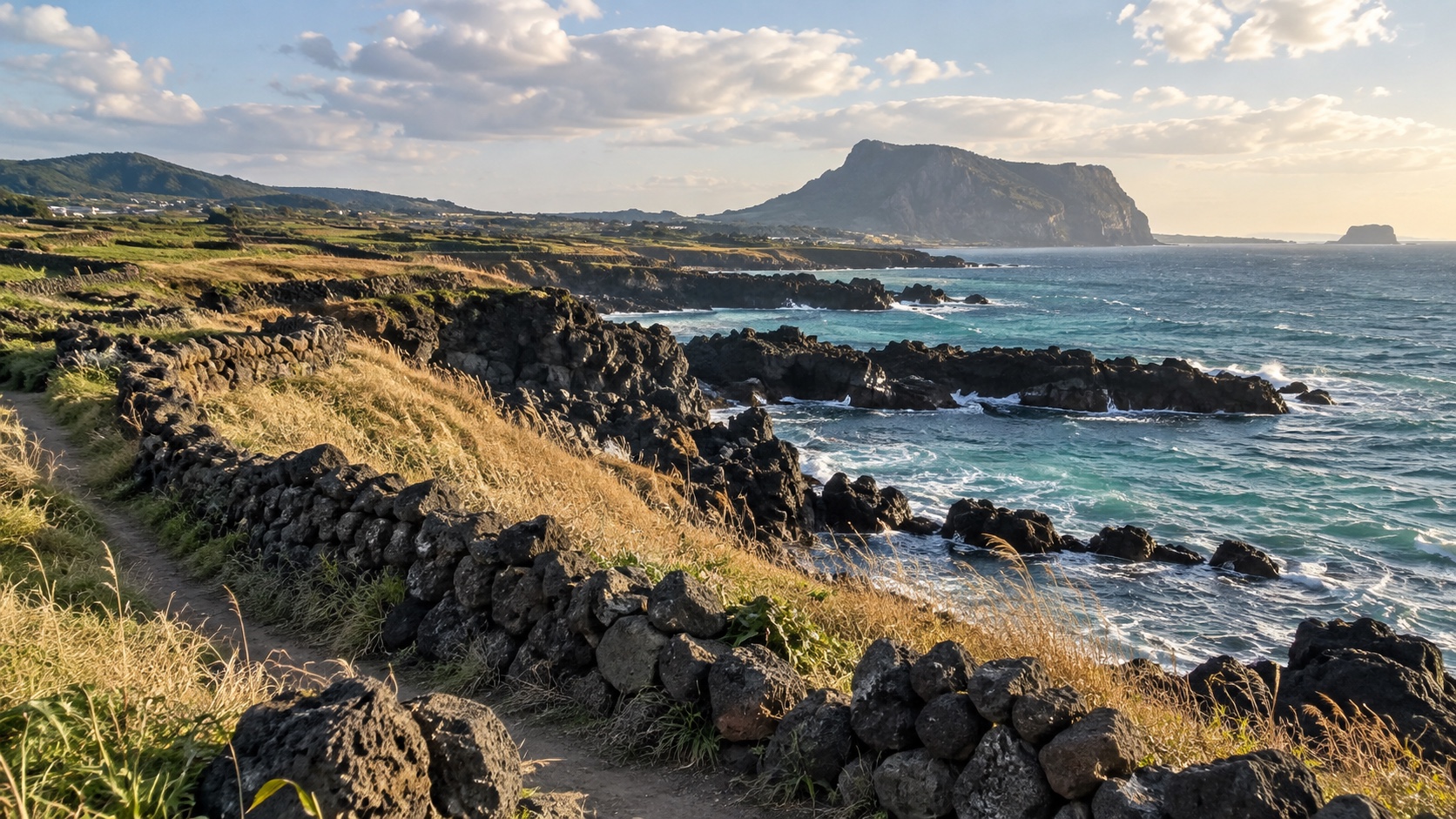
Jeju is South Korea's island counterpoint to Seoul's speed. Volcanic cliffs, low stone walls, tangerine orchards, small villages, and a strong coastal culture give the island a texture that changes from one side to the next.
Do not try to see all of Jeju from one hotel. Three or four nights can make a satisfying first visit, while a split stay gives the east and west coasts enough breathing room and keeps the daily drives sensible.
Know before you go
- Fly into: Jeju International Airport, with frequent domestic connections from Seoul and other Korean cities.
- Trip length: Three nights for one coastal base and the central highlights. Five nights works better when the group wants to explore both sides of the island.
- Best months: Spring and autumn are comfortable for walking and road journeys. Summer is warm and humid. Winter can be windy but often brings clear light.
- Getting around: A private car and driver are the most comfortable way to cover the island. Taxis and buses work in the main towns, but rural timing can be limiting.
- Money: South Korea uses the won. Cards are common, though small markets and rural stops may still be easier with some cash.
- What to reserve: A car and driver, coastal walks or local experiences, seafood meals, and any stay where the group wants a quiet ocean view.
Pick a coast before picking a hotel
Jeju's geography matters. Seogwipo is a useful base for waterfalls, the south coast, and Hallasan access. The east offers Seongsan, beaches, and long open drives. The west is quieter in parts, with artists, fields, and a more spacious coastal feel. A good itinerary begins with the landscape, not the address.
Walk the volcanic edge
The island's beauty is elemental: black basalt, green fields, salt air, and weather moving across the water. Choose one or two coastal walks and let them take time. Jeju is at its best when the plan leaves room for a café, a village road, or a sudden change in light.
Understand the island through food
Jeju's food reflects the sea and the land. Black pork, abalone, seafood, tangerines, and simple vegetable dishes all have their place. A local guide or a thoughtful hotel concierge can steer the group toward meals that feel rooted in the island rather than designed only for visitors.
Keep Hallasan realistic
Hallasan shapes the island even when you never climb it. Hiking routes vary greatly in length, weather can shift quickly, and some trails require advance planning. For many travellers, a lower-elevation forest walk or a view from the surrounding roads offers the right balance.
Planning brief
Jeju suits travellers who enjoy coastal landscapes, food, road journeys, and a destination with enough room to move at a human pace.
- Best suited to: couples, families, food travellers, active guests, and anyone who wants a slower Korean island chapter.
- Settle early: the base or split stay, private driving, weather-sensitive walks, and the restaurants that need planning.
- Useful pairing: Seoul, Busan, or a broader South Korea route.
Let the weather write part of the itinerary
Jeju is not an island to rush through. Leave the coast open, follow the wind, and allow the landscape to be the main event.
Our luxury leisure travel planning can arrange the right bases, private driver, coastal experiences, food, and connections across South Korea.
How many days should we spend on Jeju Island?
Three nights is a good introduction from one base. Five nights is better for a split stay between the east, south, or west coasts without turning every day into a long drive.
Is it better to rent a car on Jeju?
A private car and driver is the most comfortable option for visitors who want to cover the island and keep the days flexible. Taxis and buses work well around the main towns but are less convenient for rural touring.
What is Jeju best known for?
Jeju is known for its volcanic landscape, coastal walks, Hallasan, stone walls, seafood, tangerines, and distinctive island culture. The appeal comes from how those elements sit together rather than from one single attraction.
When is the best season for Jeju?
Spring and autumn are the easiest seasons for touring. Summer is warm and humid, while winter can be windy but often brings beautiful clear light and a quieter island atmosphere.
CONTINUE EXPLORING