


Kerala
Kerala, India at Water Level
Kerala is a state of water, spice, tropical light, and long green distances. The strongest trips move between the coast, the backwaters, and the hills rather than trying to see the whole state from one hotel.
Seven nights gives the route a proper shape. Ten is better for a first visit when the group wants the backwaters, a hill stay, and time near the Arabian Sea.
Know before you go
- Fly into: Kochi for the central backwaters and northbound routes, or Thiruvananthapuram for the southern coast and Kovalam. Domestic connections make a one way route possible.
- Trip length: Seven to ten nights for Kochi, the backwaters, and one hill or beach base.
- Best months: December through February is the easiest window. October and November can be beautiful after rain. June through September is monsoon season and needs a deliberate reason.
- Getting around: A car and driver for the road sections, with a proper houseboat or smaller boat for the backwaters. Flights can save the long southern transfer.
- Money: India uses the rupee. Hotels and larger restaurants take cards, while markets, small shops, drivers, and village stops need cash.
- What to reserve: The houseboat or private water villa, a spice or food guide, Ayurvedic treatments, the driver, and any hill or wildlife stay.
Start in Kochi, but do not stay too long
Fort Kochi gives the first few days an easy landing, with old trading streets, contemporary art, churches, warehouses, and a strong restaurant scene. It is a useful introduction to Kerala’s layered history. Two nights is usually enough before the itinerary moves into the water.
The backwaters need the right boat
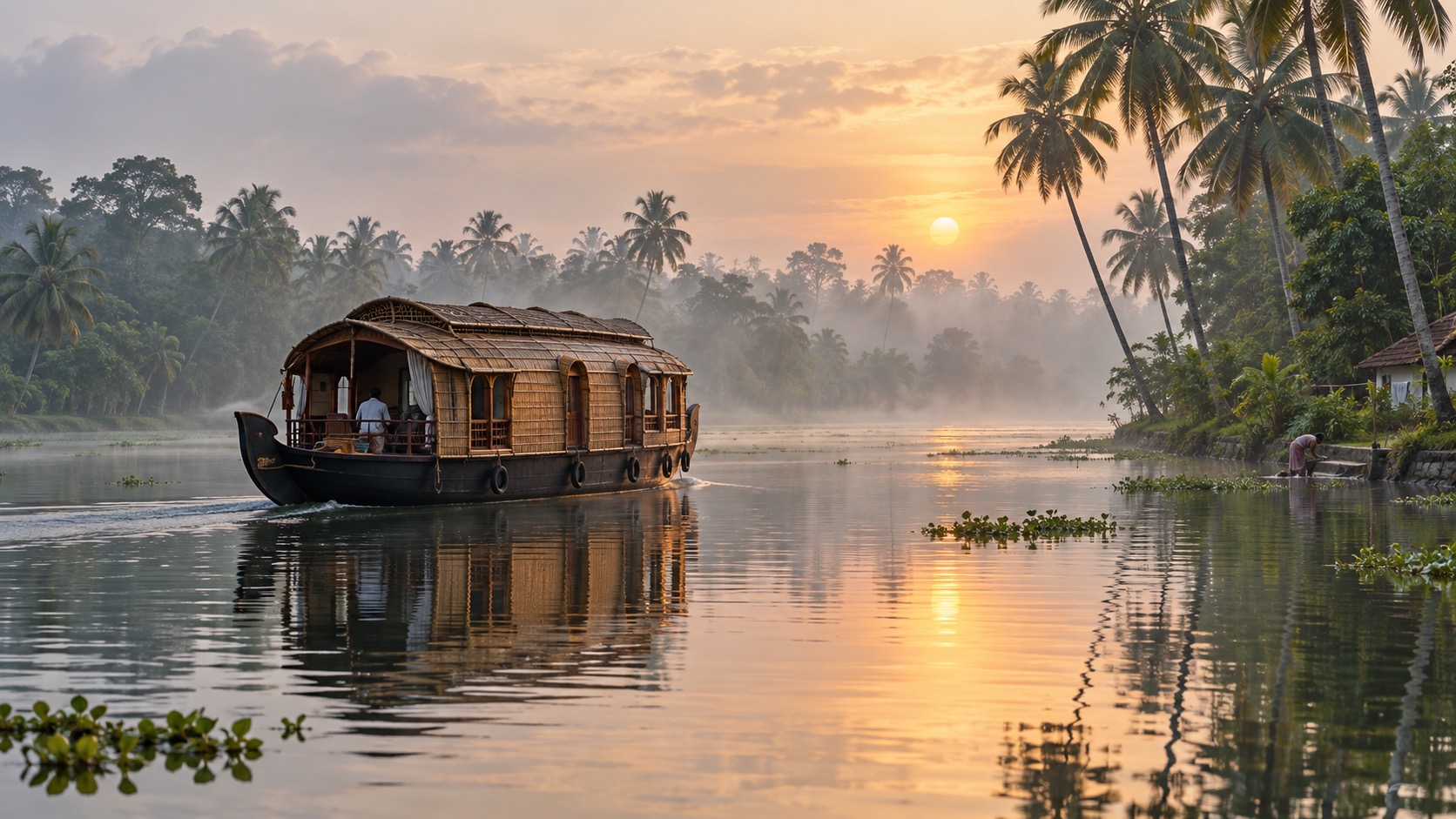
A large houseboat can be comfortable, but it can also turn the waterways into a floating hotel corridor. A smaller private boat reaches narrower channels and lets the crew stop when village life appears. The ideal stay is one night on the water or two nights in a water facing villa with a day boat attached. The route matters more than the size of the bedroom.
Choose the hills for air, not a checklist
Munnar and the high ranges change the temperature, the landscape, and the food. Tea estates make the obvious backdrop, but the reason to stay is the cooler air, early walks, and a slower day after the humidity of the coast. A hill stay works best when it has at least two nights and is not treated as an overnight transfer stop.
Monsoon can be the point
Kerala’s rain is substantial, but the wet season is also when the state is most intensely green. Ayurvedic programmes often use the monsoon for longer treatments, and the hotels are quieter. It is the wrong season for a tightly timed road circuit and the right season for a house, a treatment plan, books, and the sound of rain on a roof.
Let the food move with the route
Kerala’s food changes between the coast, the backwaters, and the hills. Seafood, coconut, black pepper, rice, and banana leaf meals create a through line, but the details belong to the place. Take one serious food walk in Kochi, eat with the houseboat crew when possible, and let the hotel kitchen explain what came in that morning.
Planning brief
Kerala suits travellers who want tropical landscape, thoughtful hotels, food, wellness, and a route that moves at water speed.
- Best suited to: couples, families, wellness travellers, food lovers, and first time visitors who want a gentler India route.
- Settle early: arrival airport, backwater style, hill or beach extension, driver, treatment preferences, and how much road time the group will accept.
- Useful pairing: Mumbai, Rajasthan, Goa, or a wider southern India itinerary.
Keep the route green and the days light
Kerala is better when the schedule leaves room for the water, weather, and the conversations that happen in between. Tell us whether the trip is about food, wellness, coast, backwaters, or a longer route through India.
Our luxury leisure travel planning can arrange the driver, houseboat, guides, stays, treatments, and the wider Indian itinerary.
How many nights do you need in Kerala?
Seven nights works for Kochi, the backwaters, and one additional base. Ten nights gives the route more room for a hill stay or the coast. Kerala is long and linear, so a shorter trip should choose one part rather than spend each day transferring.
Is a Kerala houseboat worth it?
Yes, when the boat is chosen carefully and the route is right. A smaller private boat can reach quieter channels, while a large houseboat offers more space but may follow busier waterways. One night is usually enough, with a water facing villa for anyone who wants more comfort.
When is the best time to visit Kerala?
December through February is the easiest season for a first trip. October and November can be lush and quieter. The monsoon from June through September is wetter but can suit travellers who want Ayurveda, empty hotels, and a stay built around rain rather than road movement.
Can Kerala be combined with Rajasthan?
Yes, and the contrast is excellent. Rajasthan brings forts, desert, and cold clear winter air, while Kerala brings water, tropical food, and a slower physical rhythm. Use a domestic flight between them and give each region enough nights to feel like its own chapter.
CONTINUE EXPLORING