


Komodo Islands
Komodo Islands, Dry Hills and a Blue Sea
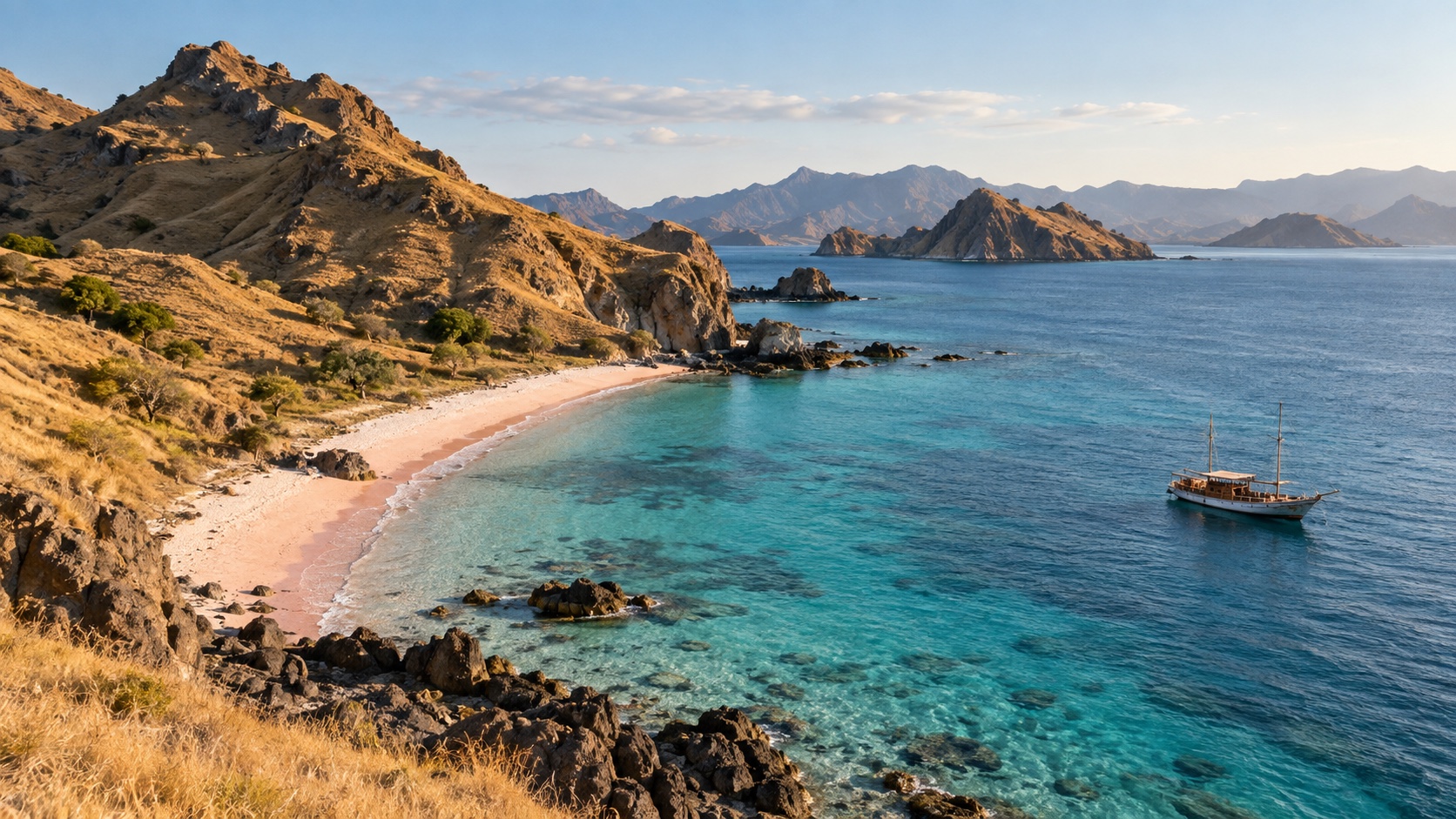
The Komodo Islands are a meeting of dry savannah, volcanic shorelines, clear water, and a remarkable sense of distance. The famous dragons matter, but the wider experience is shaped by the boat, the guide, the early light, and the islands that appear between each landing.
Four or five nights is a useful introduction from Labuan Bajo. Add time for a liveaboard, diving, or a slower route through the national park, especially when the group wants to balance wildlife with long hours on the water.
Know before you go
- Fly into: Komodo Airport in Labuan Bajo, usually via Bali or another Indonesian city. Continue by private transfer and boat.
- Trip length: Four or five nights for a focused island stay. Seven nights works well for a liveaboard or wider marine route.
- Best months: The drier months are generally easiest for boat days and trails. Conditions, wildlife activity, and sea state vary across the year.
- Getting around: The national park is experienced by boat, with landings and trails led by local rangers or guides. Keep transfers and sea conditions in mind.
- Money: Indonesia uses the rupiah. Cards work in larger hotels, while cash is important for boats, guides, tips, and smaller island purchases.
- What to reserve: The Labuan Bajo hotel, private boat or liveaboard, park arrangements, guide, transfers, and any diving or snorkelling days.
Choose the boat carefully
The boat is part of the hotel, transport, and daily rhythm at once. Look at the vessel, crew, safety standards, sleeping arrangements, and route before focusing on the number of stops. A slower private day can be more rewarding than a crowded circuit.
Meet the dragons at the right pace
Komodo dragons are wild animals in a protected landscape. Follow ranger instructions, keep distance, and listen to the natural history rather than treating the encounter as a staged photo opportunity. Early starts can make the trail more comfortable and the island quieter.
Leave time for the sea
Pink beaches, coral gardens, manta sites, and hidden coves give the park its full range. The best plan holds one day open enough for swimming, snorkelling, or simply staying on deck while the islands change around the boat.
Keep Labuan Bajo useful
Labuan Bajo is the practical gateway and a good place for an arrival or departure night. A comfortable buffer protects the trip from flight or sea changes and makes the island days feel more relaxed.
Planning brief
The Komodo Islands suit travellers who want wildlife, open sea, active days, and a tropical landscape with a strong sense of wilderness.
- Best suited to: couples, active families with older children, divers, photographers, and guests who enjoy small-boat travel.
- Settle early: the boat, route, park guide, Labuan Bajo buffer, sea activities, and the balance between wildlife and water time.
- Useful pairing: Lombok, Bali, Raja Ampat, or a wider Indonesia route.
Respect the islands and let them be wild
The Komodo Islands are strongest when the schedule makes room for heat, sea, silence, and the landscapes beyond the main encounter.
Our luxury leisure travel planning can arrange the right boat, guides, park logistics, transfers, and the wider Indonesia itinerary.
How many nights should we spend in the Komodo Islands?
Four or five nights works for a focused island stay from Labuan Bajo. Seven nights is better for a liveaboard, diving, or a wider marine route.
Do we need a guide to see Komodo dragons?
Park visits should follow local ranger and guide arrangements. The dragons are wild animals, and the right guide adds safety, natural history, and respect to the encounter.
Should we choose a private boat or a liveaboard?
A private boat suits shorter flexible days, while a liveaboard reaches more distant sites and makes the water part of the stay. Vessel quality, safety, crew, and route matter more than the label.
When is the best time to visit Komodo?
The drier months are generally easiest for trails and boat days. Sea conditions, heat, and wildlife activity vary, so the route should be checked close to travel.
CONTINUE EXPLORING