


Kotor
Kotor Is a Bay, a Town, and a Mountain Problem
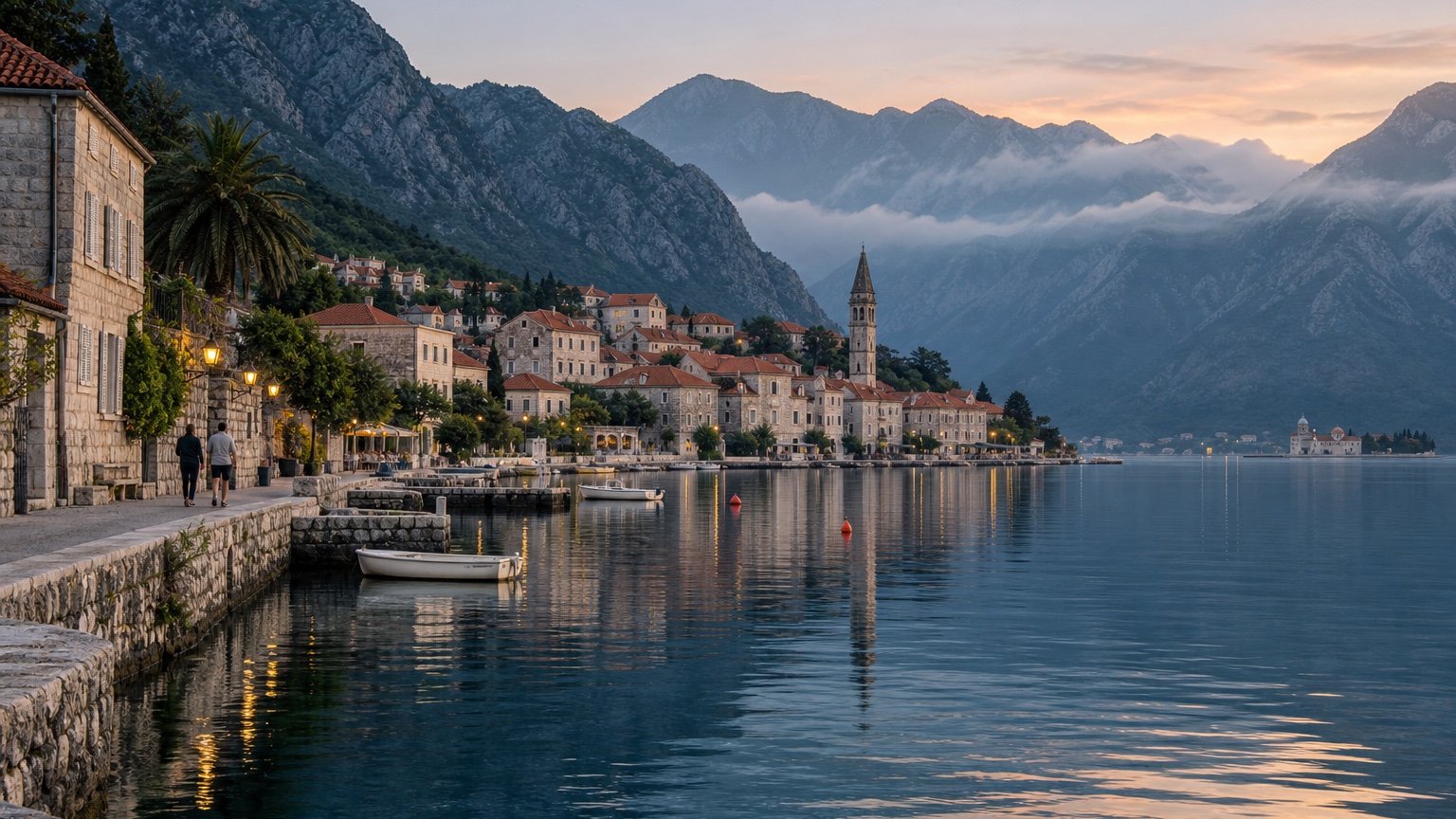
Kotor’s old town sits at the end of a dramatic bay, surrounded by steep mountains and stone villages that seem to fold into the water. The setting is extraordinary, but it also determines the trip. Roads slow down, cruise arrivals change the center for a few hours, and the difference between staying inside the walls and staying along the bay is meaningful.
Three nights is a good first stay. Two works for the old town and one coastal day, while four allows the bay to be explored without turning every move into a transfer.
Know before you go
- Fly into: Tivat, code TIV, or Dubrovnik, code DBV, depending on the route and season. A private coastal transfer is useful because the bay roads can be slow.
- Trip length: Three nights for the old town, bay, and one wider outing. Four nights for a slower Adriatic stay.
- Best months: May, June, September, and early October offer a strong balance of weather and demand. July and August are bright, hot, and busier.
- Getting around: Kotor’s old town is walked. Use a boat or private driver for Perast, the bay villages, and the coast. Do not judge distance by the map.
- Money: Montenegro uses the euro. Cards are common in hotels and restaurants, while cash is useful in smaller towns and for boats.
- What to reserve: Hotel, airport transfer, a bay day, and dinner tables. Cruise days should be checked before choosing the old-town schedule.
See the old town before the bay gets loud
Walk Kotor’s lanes early, when the stone is cool and the center has space. The churches, squares, and walls are close together, but the town feels larger when the route follows its edges rather than racing between landmarks.
The climb above the town is worth considering for travelers who are comfortable with steep steps and changing heat. For everyone else, the bay itself provides a more generous view, particularly from the water.
Use the bay as the day’s organizing line
Perast, the water, and the villages along the shore make a natural half or full day. A private boat gives the group control over timing, while a driver is useful for a route that includes lunch, viewpoints, and a return before the roads become slow.
Kotor is also a strong base for an Adriatic itinerary that includes Capri, Croatia, or a wider Mediterranean route. Keep the coast days connected. Too many one-night moves reduce the value of the setting.
Planning brief
Kotor suits travelers who want history, a dramatic bay, and an Adriatic stay with a little more texture than a standard resort.
- Best suited to: couples, photographers, families with older children, and clients building a Montenegro or Adriatic route.
- Settle early: hotel position, airport, bay transport, cruise calendar, and the degree of walking the group wants.
- Useful pairing: combine with the Montenegrin coast, Dubrovnik, or a wider Adriatic route.
Let the water solve the road problem
Kotor rewards travelers who plan around the bay rather than against it. Tell us whether the trip is a short old-town stay, a coastal route, or a private celebration by the water.
Our luxury leisure travel planning can arrange the hotel, airport transfers, private boat, driver, restaurants, and wider Adriatic routing.
How many nights should we spend in Kotor?
Three nights gives time for the old town, one bay day, and a relaxed dinner rhythm. Two nights works for a focused visit, while four nights is better when Kotor is the base for the wider Montenegrin coast.
Which airport should we use for Kotor?
Tivat is the closest airport when the seasonal schedule works. Dubrovnik can also fit a wider Adriatic route. The best choice depends on flights, border timing, luggage, and where the itinerary continues, so arrange the coastal transfer around the whole route.
Is Kotor too busy in summer?
The old town can feel crowded when cruise visitors arrive, particularly in July and August. Stay overnight, walk early, use the bay and surrounding villages for part of the day, and check the cruise calendar before setting the sightseeing sequence.
Do we need a car in Kotor?
No for the old town. A boat and private transfers are usually more useful for the bay, while a car or driver helps with the wider coast. Roads are slow in high season, so a local driver can be worth the cost.
CONTINUE EXPLORING