


Lithuania
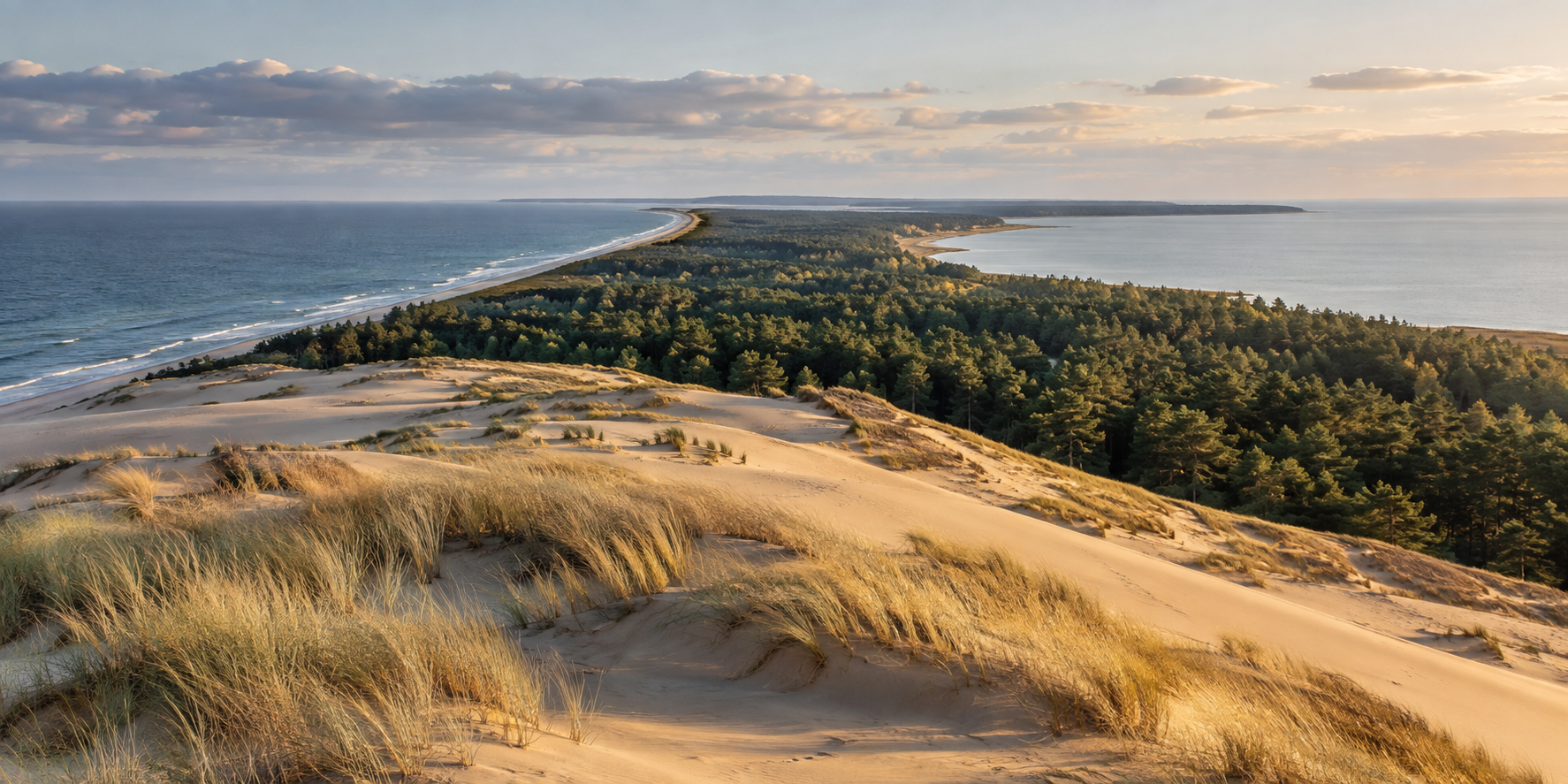
Lithuania is a country of quiet contrasts. Vilnius brings baroque streets and a lively contemporary culture, Kaunas adds modernist architecture and creative energy, and the Curonian Spit opens into dunes, pine forest, and Baltic air. The scale makes a short journey feel complete without feeling hurried.
Know before you go
- Fly into: Vilnius for the widest connections. Kaunas can work for a city-focused route, while the coast is reached overland.
- Trip length: Six to nine nights for Vilnius, Kaunas or another inland chapter, and two or three nights on the Curonian Spit.
- Best months: May through September is easiest for long days and the coast. Spring and autumn bring crisp light and fewer visitors, while winter is atmospheric and dark.
- Getting around: Trains and private transfers between cities, with a car useful for the coast, regional food, and the Curonian Spit.
- What to reserve: A central Vilnius hotel, architecture and food guides, coastal accommodation, and ferry or vehicle logistics for the spit.
- Plan around: Short winter days, Baltic weather, seasonal coastal openings, and the environmental rules that protect the dunes and forest.
Let Vilnius work in layers
Vilnius rewards wandering. Baroque churches, courtyards, independent cafés, design shops, and the river make a city that feels both historic and current. Give it two or three nights and allow the old town to open gradually rather than moving between monuments too quickly.
Read Kaunas through modernism
Kaunas has a distinctive interwar modernist character that changes the way the country is understood. Pair architecture with galleries, markets, and a meal in a neighborhood that is still being reshaped by local creatives.
Take the road to the Baltic
The coast is not just a beach extension. The route through western Lithuania brings small towns, forests, and a change in the air before the dunes of the Curonian Spit appear. Leave time for the road rather than treating it as a transfer between hotels.
Move lightly on the Curonian Spit
The spit is a fragile landscape of sand, pine, lagoon, and sea. Walk or cycle when possible, keep the route simple, and choose a base that lets the dunes and water do the work. The beauty here depends on restraint.
Who this trip suits
Design-minded travelers, couples, families and food lovers, especially guests who have seen the Baltic's headline cities and want the quieter version with a real coast attached.
When another plan may fit better
If the Curonian Spit is the reason for the trip, avoid winter, when the days are short and much of the coast is seasonal. If you only have a few nights, stay in Vilnius rather than chasing the coast. And if you want a single capital to walk for a weekend, Riga or Tallinn may suit a shorter stay better.
Planning brief
The shape we recommend: six to nine nights for Vilnius, Kaunas or another inland chapter, and two or three nights on the Curonian Spit.
- Settle early: Vilnius against Kaunas, coast time, vehicle logistics, and the season's light and weather.
- Useful pairing: Latvia, Estonia, Poland, or a wider Baltic journey.
Make the route yours
Tell us whether Lithuania should be built around architecture, food, history, coast, design, or a slower Baltic route with room for the landscape.
Our luxury leisure travel planning can shape the stays, guides, transfers, and pacing around the way you want to travel.
How many nights do you need in Lithuania?
Six to nine nights works for Vilnius, one inland chapter, and the Curonian Spit. A shorter stay should choose Vilnius and the coast or stay entirely city-led.
When is the best time to visit the Curonian Spit?
May through September brings the longest days and easiest coastal conditions. Spring and early autumn can feel more spacious, while winter is beautiful but cold, dark, and more seasonal.
Can you visit Lithuania without a car?
Yes for Vilnius and Kaunas, with trains and transfers covering the main connections. A car becomes more useful for the coast, regional food, and flexible movement on the mainland before the ferry.
Is Lithuania good for a design-focused trip?
Yes. Vilnius brings contemporary food and creative spaces, while Kaunas has a particularly strong interwar modernist story. The Curonian Spit then adds a natural counterpoint to the cities.
CONTINUE EXPLORING