

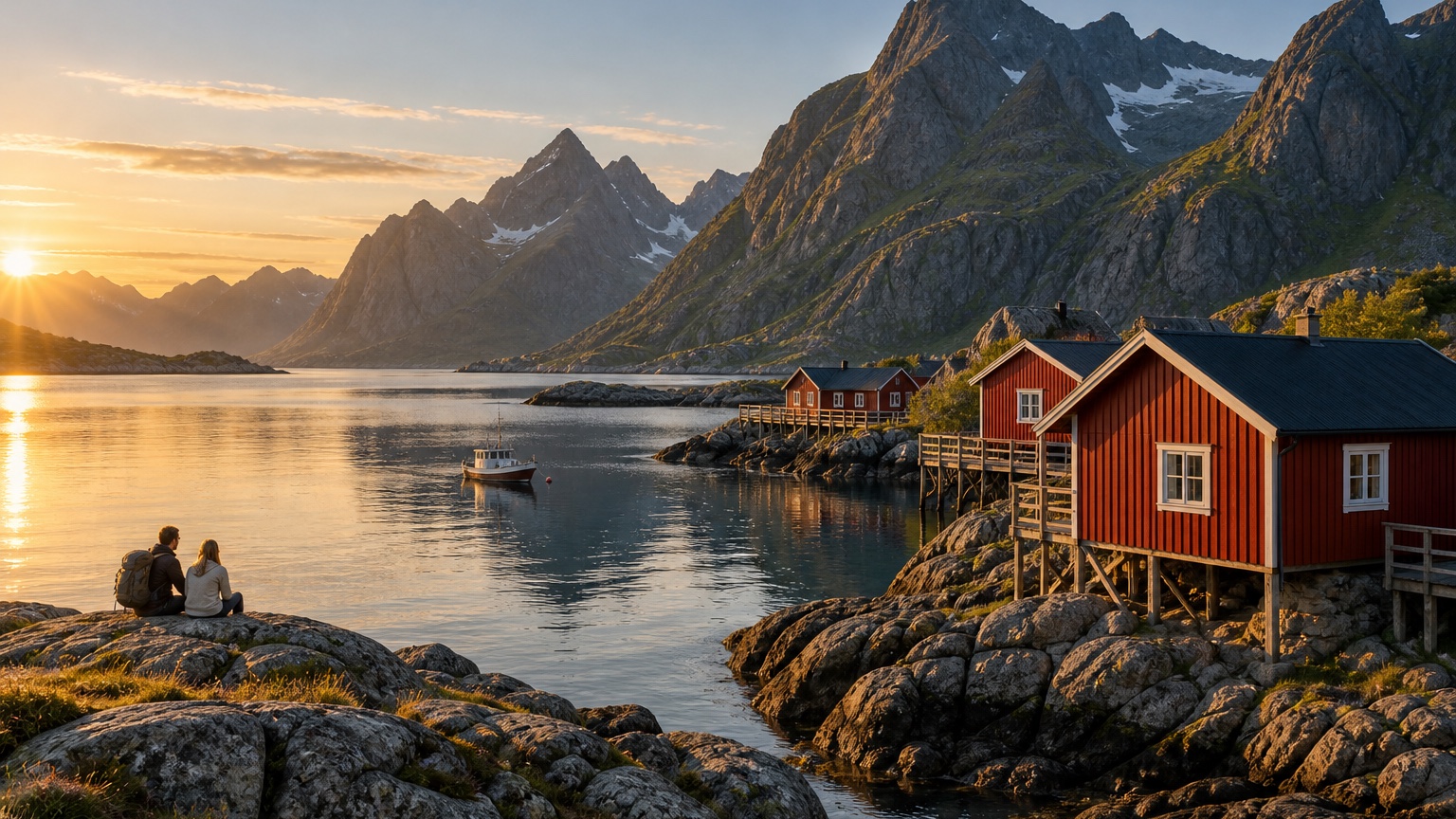

Lofoten Islands
Lofoten Is a Place for Fewer Plans
Lofoten has a landscape that feels almost too composed: red fishing cabins, sharp mountains, clear inlets, and roads that keep turning toward another view. The trip becomes better when the itinerary stops trying to capture all of it. Choose a base or two, plan the essential transfers, and let the weather decide which cove, walk, or village gets the day.
Four to six nights is a useful first stay. A shorter visit should focus on one part of the islands, while a longer trip can include fishing heritage, kayaking, hiking, and the quieter northern reaches.
Know before you go
- Arrive via: Bodø or Harstad-Narvik, code EVE, depending on the route and season. The right gateway follows the first island base and the final transfer.
- Trip length: Four to six nights for a first route. Add time when the trip includes hiking, kayaking, or several islands.
- Best months: June through August for long days and broad outdoor access. May and September bring quieter roads and changing weather. Winter is a separate trip built around darkness, snow, and northern light conditions.
- Getting around: A rental car or private driver is usually the practical choice. Roads are scenic and slow, and the route needs room for weather.
- Money: Norway uses the krone. Cards are common, though remote places have fewer services.
- What to reserve: The first and last transfers, key hotels, a guide for demanding outdoor days, and any boat or kayak experience.
Choose the base before choosing the photograph
Lofoten’s islands are close in appearance and different in logistics. A village with a beautiful inlet may be far from dinner, while a more central base can make the wider route easier. Decide whether the trip is about hiking, water, food, fishing history, or simply being surrounded by the landscape.
A local driver or guide can save the day when weather changes. Leave one open day in the route rather than booking every excursion in advance.
Let the old fishing culture stay visible
The red cabins, harbors, and working boats are not set dressing. Ask for a guide who can connect fishing life, local food, and the island communities without turning them into a museum. A quiet harbor walk or a meal built around local ingredients may be more memorable than another viewpoint.
Planning brief
Lofoten suits travelers who want dramatic landscape, outdoor days, and enough space for the weather to shape the route.
- Best suited to: couples, active families, photographers, hikers, and travelers who prefer landscape to nightlife.
- Settle early: gateway airport, base, car or driver, walking level, weather plan, and the final night near the departure route.
- Useful pairing: combine with Bergen and the Norwegian Fjords, or make Lofoten the focus of a longer northern Norway journey.
Leave one day deliberately empty
Lofoten rewards the traveler who can change direction when the light does. Tell us whether your priority is hiking, kayaking, fishing culture, photography, or a quiet landscape stay.
Our luxury leisure travel planning can arrange the bases, transfers, private guides, outdoor experiences, and route through northern Norway.
How many nights should we spend in Lofoten?
Four to six nights is a useful first stay. That allows one or two bases, several scenic drives, a walk or water day, and room for weather. A shorter visit should focus on one section of the islands.
Which airport is best for Lofoten?
Bodø and Harstad-Narvik are the main practical gateways for many routes, but the right choice depends on the first base, flight schedule, and final transfer. Choose the airport after the island route is settled.
Do we need a rental car in Lofoten?
A car or private driver is usually the easiest way to connect villages, beaches, trailheads, and hotels. Roads are scenic and slow, so allow more time than the distance suggests and keep an open day for weather.
When should we visit Lofoten?
June through August gives the longest days and broadest outdoor access. May and September are quieter with more variable conditions. Winter is a distinct trip centered on snow, darkness, and the possibility of northern lights.
CONTINUE EXPLORING