

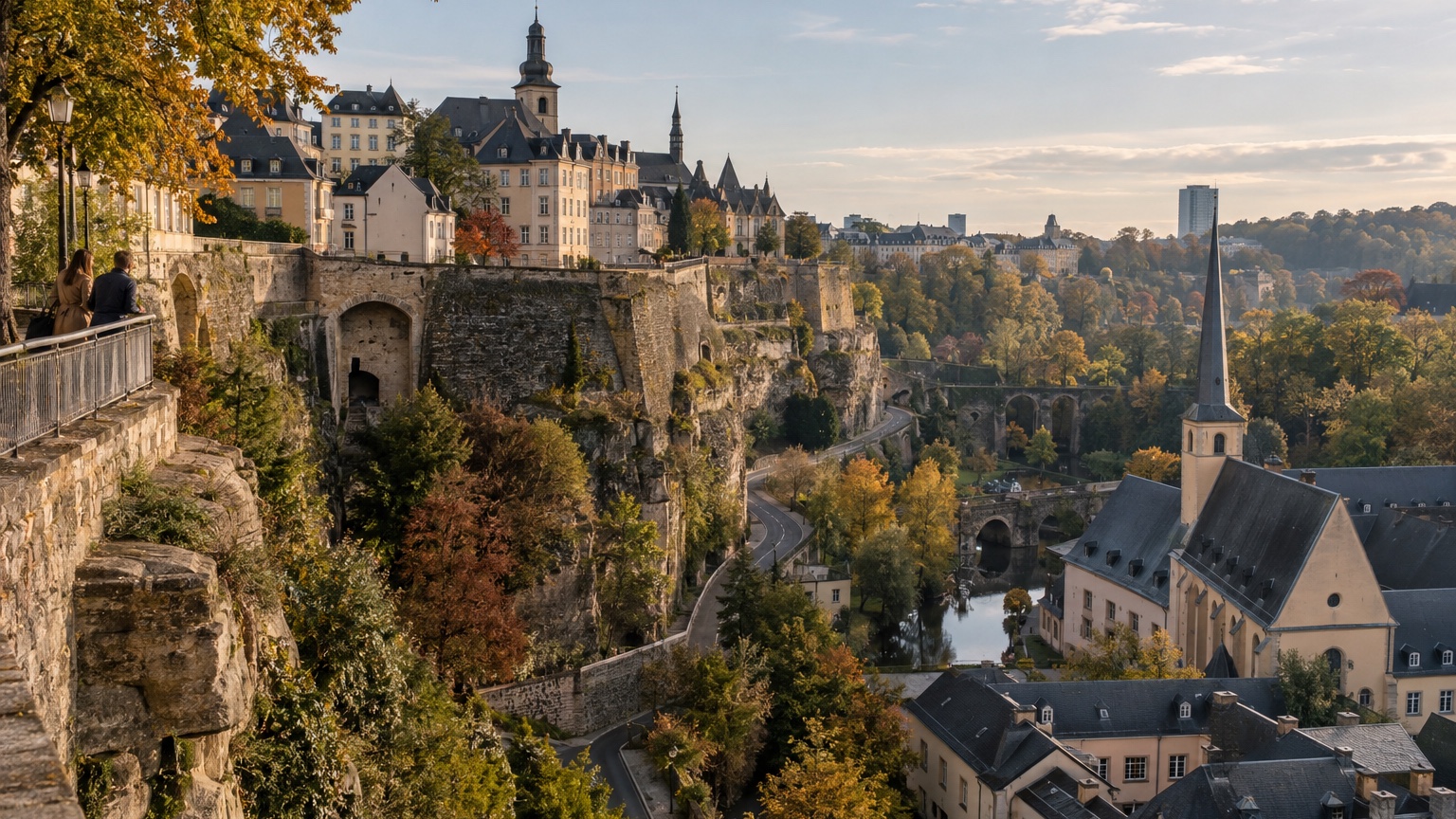

Luxembourg City
Luxembourg City Makes a Short Stay Feel Full
Luxembourg City is compact, vertical, and more varied than its size suggests. The upper town carries the formal history, while the Alzette and Pétrusse valleys cut through it with wooded paths, old fortifications, and sudden views. A short walk can move from polished squares to a ravine, then back into a restaurant district before dinner.
The city suits travelers who like a clear base and a little air around the itinerary. Two or three nights is enough to understand the old town, walk the valleys, visit a museum, and use the city as a gateway to the wider country. It also works as a measured break between larger European capitals.
Know before you go
- Fly into: Luxembourg Airport, code LUX. The airport is close to the city, and public transport makes the arrival simple. A private car is useful when the stay continues into the countryside.
- Trip length: Two nights covers the city. Three nights gives time for a valley walk, a museum, and one day beyond the capital.
- Best months: May through September is easiest for the paths and terraces. October brings good color in the valleys. Winter is quiet, though the slopes and shorter daylight change the rhythm.
- Getting around: The upper city is walkable, but the terrain changes quickly. Use the tram, bus, or taxi when moving between the plateau and the valley.
- What to reserve: A strong restaurant, a private history or architecture walk, and a countryside day if the trip includes wineries, villages, or castles.
- Pack for: Comfortable shoes and a light layer. Luxembourg City can feel formal at street level and surprisingly green a few minutes later.
Start above the valleys
Begin around the old town and the Grand Ducal Palace, then walk toward the Chemin de la Corniche. The view across the Alzette is the city’s signature, but the more interesting part is how the landscape explains the city. Fortifications, churches, bridges, and modern institutions share a topography that has always shaped movement.
Do not plan the entire day around viewpoints. Choose one, then drop into the valley. The Pétrusse and Alzette paths provide the change of pace that makes Luxembourg City feel distinct from a standard historic capital.
Choose one cultural anchor
The Nationalmusée um Fëschmaart, the Museum of Contemporary Art, and the city’s fortification history offer different readings of the place. Pick the one that matches the travelers rather than trying to make the city’s museums prove their value in a single afternoon. The city’s compact size makes it easy to add a second stop if the first one holds your attention.
For architecture and public life, look beyond the old town. Luxembourg’s role as a European institution center has created a modern layer that sits beside the older city without replacing it.
Use the capital as a doorway into the country
Luxembourg City is enough for a short break, but the wider country deserves consideration. The Moselle valley, northern wooded landscapes, and small towns can be reached by car with a guide who understands the distances and the seasonal character of each area. A countryside day works best when it has one strong reason to leave the city, not six unrelated stops.
The city pairs neatly with Paris, Brussels, or Amsterdam in a wider rail itinerary. It can also be the quieter end of a trip that begins in a larger capital.
Planning brief
Luxembourg City suits travelers who want history, green space, and a polished base without a large-city workload.
- Best suited to: couples, business travelers adding leisure days, families who like manageable cities, and travelers interested in fortifications, architecture, or wine country.
- Settle early: hotel location against the valley terrain, the cultural anchor, and whether to add a driver-led day beyond the capital.
- Useful pairing: combine with Brussels or Paris, or use the city as the first and last night around a wider Luxembourg itinerary.
Give the valleys their share of the day
Luxembourg City is most memorable when the itinerary moves between the built city and the green spaces below it. Tell us whether your visit is a short city break, a business extension, or part of a slower route through the country.
Our luxury leisure travel planning can arrange the hotel, private guiding, countryside route, restaurant timing, and rail or car logistics in one considered plan.
How many nights should we spend in Luxembourg City?
Two nights is enough for the old town, the main viewpoints, one museum, and a walk through the valleys. Three nights works better if you want a slower pace or a day in the Moselle valley, the north, or one of the country’s smaller towns.
Is Luxembourg City easy to walk?
The upper city is easy to explore on foot, but the terrain changes quickly because the valleys sit below the historic plateau. Comfortable shoes matter, and public transport or a taxi is useful when the itinerary moves between the old town, the valley paths, and the European Quarter.
Do we need a car in Luxembourg?
Not for a city stay. Public transport and taxis cover the practical moves, while the center is compact. A car or private driver becomes useful when adding the Moselle, northern landscapes, villages, wineries, or castles, especially when the day includes several stops.
What is the best way to combine Luxembourg City with another European trip?
Use it as a two or three night pause between larger capitals such as Brussels or Paris. The city works well at the beginning or end of a route because the airport is close and the historic center is manageable. Avoid giving it a single rushed night if the landscape and museums are part of the reason for coming.
CONTINUE EXPLORING