

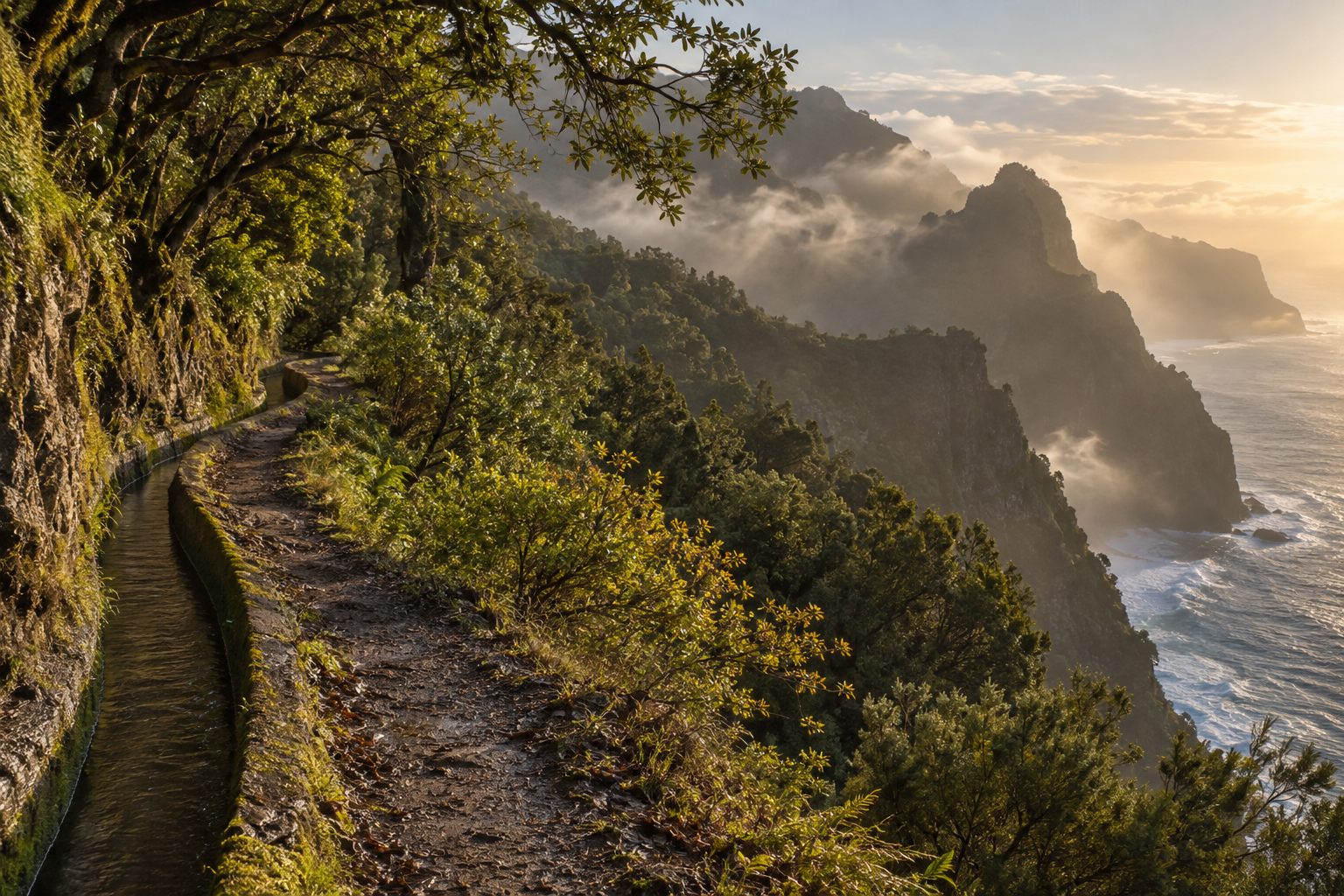

Madeira
Madeira is best understood as a vertical island. Funchal gives you food, gardens, and an easy base, while the high interior brings levadas, cloud forest, and sudden views over the Atlantic. The island is compact, but the roads and weather make a slower, region-led itinerary the more rewarding choice.
Know before you go
- Fly into: Funchal, with a pre-arranged transfer or rental car depending on how much of the island you want to explore independently.
- Trip length: Five to eight nights for Funchal, two or three walks, and a north or west coast extension.
- Best months: Madeira works year-round. Spring is known for flowers, summer for longer outdoor days, and autumn and winter for a quieter, greener feel.
- Getting around: A car is useful for confident drivers. Otherwise combine private transfers with guided walks, since mountain roads and trail logistics deserve attention.
- What to reserve: A Funchal stay with character, guided levada walks, a winery or food experience, and any peak-season trail permits or transport.
- Plan around: Microclimates, trail closures, narrow roads, and the difference between a scenic drive and a walk that needs a proper guide.
Give Funchal a real beginning
Funchal is more than an arrival point. Its markets, tiled streets, gardens, wine lodges, and restaurant scene make an easy first chapter. Two nights lets the itinerary settle before the road climbs into the mountains, and a final night here can make departure much simpler.
Walk the levadas with respect
The levadas are the island's signature way of moving through landscape, but the best walk is the one that suits the group. Some routes are gentle and shaded, while others include exposed sections, tunnels, or steep drops. A good local guide will match the route to weather, confidence, and fitness.
Stay for the north and west
The north coast is greener and more dramatic, while the west brings cliffs, natural pools, and long Atlantic views. One or two nights outside Funchal can change the feel of the journey completely, especially when the group wants mornings without a return drive.
Eat the island as it is
Madeira's food is tied to its geography: black scabbardfish from deep water, espetada, sweet bananas, bolo do caco, and wines that carry the island's volcanic character. Choose a guide or host who can explain the ingredients and the communities behind them.
Who this trip suits
Walkers, couples, food lovers and garden enthusiasts, and anyone who wants an active island with comfortable bases.
When another plan may fit better
If you want long sandy beaches, this is the wrong island. If narrow mountain roads make you nervous, use a driver rather than hiring a car. And if you want a single fixed weather forecast, the island's microclimates change the day from one valley to the next.
Planning brief
The shape we recommend: five to eight nights for Funchal, two or three walks, and a north or west coast extension.
- Settle early: walk difficulty, car versus driver, the Funchal split, and how much weather flexibility the trip needs.
- Useful pairing: the Azores, Lisbon, Porto, or a longer Portugal journey.
Make the route yours
Tell us whether Madeira should feel like a walking holiday, a food and garden escape, or a broader island journey with time on the coast.
Our luxury leisure travel planning can shape the stays, guides, transfers, and pacing around the way you want to travel.
How many nights do you need in Madeira?
Five nights works for Funchal and a few carefully chosen walks. Seven or eight nights lets you add the north or west coast and keep the driving days comfortable.
Do you need a car in Madeira?
A car gives confident drivers freedom, but mountain roads can be narrow and weather can change quickly. Private transfers and guided walks are often the better choice when the trip is built around hiking rather than independent road travel.
Is Madeira suitable for non-hikers?
Yes. Funchal, the gardens, scenic viewpoints, food, wine, and coastal drives create a strong trip without long walks. The island can be active or restorative depending on how the bases are chosen.
Can Madeira be combined with the Azores?
Yes, but the contrast is the point. Madeira is mountainous, garden-rich, and more developed, while the Azores feel more volcanic and maritime. A longer trip can make both work without forcing them into the same rhythm.
CONTINUE EXPLORING