


Maldives
The Maldives Is A Transfer, Not A Destination
Twenty six atolls, more than a thousand islands, one international airport. Almost every decision that matters about a Maldives trip gets made before you ever see the water, because the island you pick determines how you reach it, and how you reach it determines what your first and last days actually look like. Two resorts with near identical villas can sit forty minutes apart by speedboat or three hours apart by seaplane with a night in Male in between. That is the whole planning problem in one sentence.
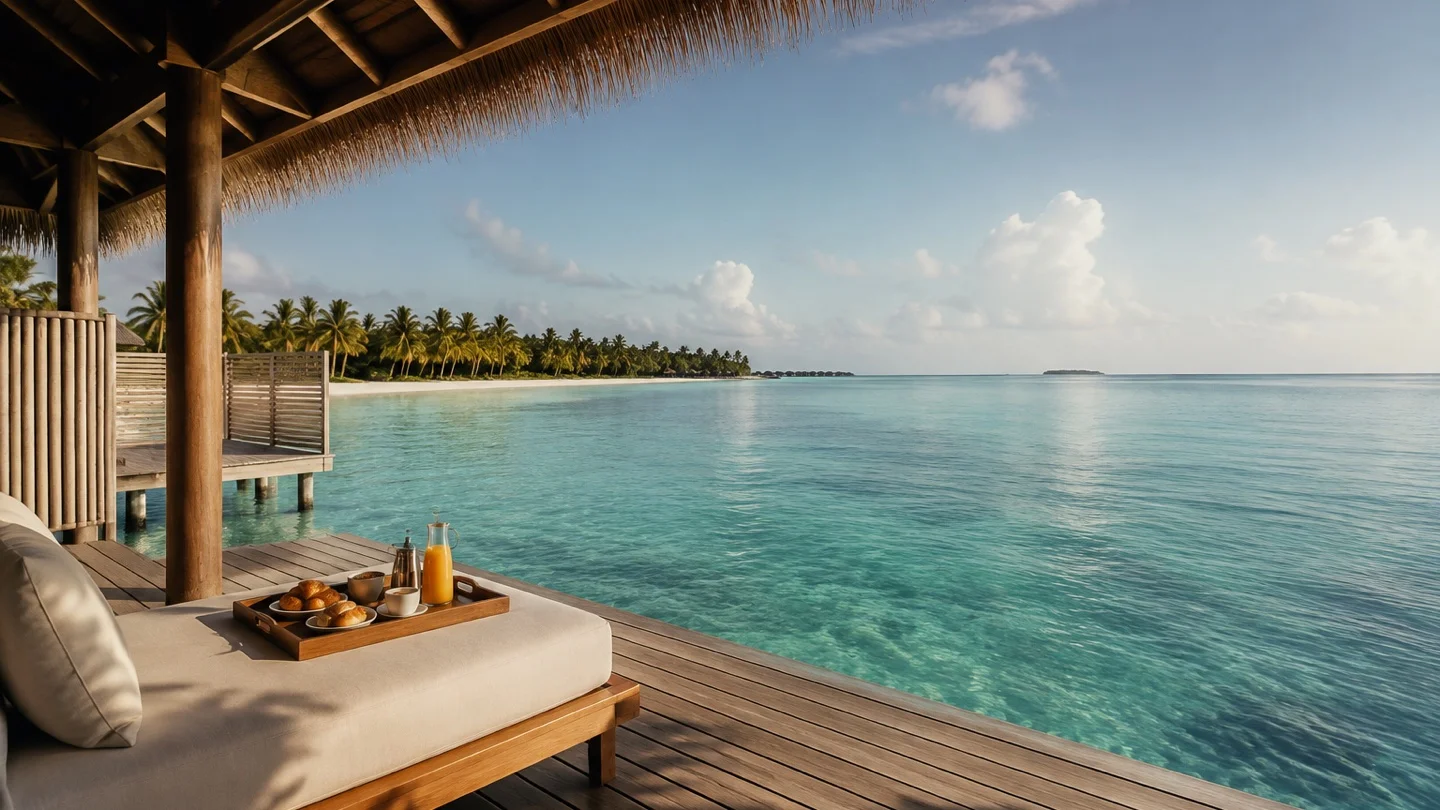
The brochures hide it. Every property photographs the same turquoise, the same villa on stilts, the same sandbank at golden hour. What separates a very good week from an expensive and tiring one is atoll, transfer window, house reef and timing, roughly in that order.
Know before you go
- Fly into Velana International, code MLE, on Hulhule island beside Male. There is no second gateway worth planning around. Every onward leg starts here, by speedboat, by seaplane, or by domestic flight plus a speedboat at the far end.
- Trip length seven nights on one island is the sweet spot. Five is the floor once two travel days are accounted for. Anything past nine nights is better split across two islands in two different atolls than stretched across one.
- Best months December through April is the northeast monsoon and the dry season, which is why those months carry the rates they do. May through November is the southwest monsoon, and the difference between the two is smaller than the price gap suggests.
- The 3:30pm rule seaplanes fly under visual flight rules, so they operate roughly from six in the morning until sunset, which falls between about 5:50pm and 6:20pm depending on the season. Trans Maldivian Airways will not take you onward if you land after 3:30pm. Miss that and you sleep at an airport hotel and lose a resort night. Plan the international flight to touch down by 1pm and the day belongs to you.
- Currency the Maldivian rufiyaa, written MVR, pegged at about fifteen to the US dollar. You will barely touch it. Resorts quote, bill and settle in dollars, cards work everywhere on a resort island, and cash matters only for tipping and for a guesthouse on a local island.
- Entry a free thirty day visa on arrival for every nationality, provided you hold a valid passport, an onward ticket and confirmed accommodation. Separately, everyone must file the free Traveler Declaration within ninety-six hours of the flight, at imuga.immigration.gov.mv. It costs nothing. Ignore any site that charges for it.
- The taxes nobody warns you about green tax runs at 12 US dollars per person per night at resorts, liveaboards and larger guesthouses, and 6 dollars at small guesthouses on inhabited islands. Goods and services tax on tourism rose to 17 percent on 1 July 2025. Departure tax and the airport development fee are charged separately and at the same rate, so a foreign passenger leaving in economy pays 100 dollars in total, in business 240, in first 480. A family of four on a ten night stay is looking at roughly 880 dollars in green tax and departure charges alone, before the room.
- Alcohol legal only on licensed resort islands and liveaboards. It is banned outright on inhabited local islands, which is the single biggest surprise for anyone booking a guesthouse to save money. Some local islands are served by a floating bar moored offshore.
- On a local island swimwear is confined to a marked bikini beach where one exists. Everywhere else, shoulders and knees covered. During Ramadan, which runs from roughly 8 February to 9 March in 2027 and moves eleven days earlier each year, do not eat, drink or smoke in public during daylight. Resort islands are unaffected.
- What it actually costs the transfer is the line item people forget. A shared seaplane runs several hundred dollars per person each way and is not optional if the resort is far out. A speedboat to a nearby North or South Male atoll resort is a fraction of that. Two otherwise identical weeks can differ by two thousand dollars on transfers alone.
The planning decision: which atoll, and how you reach it
Start with the transfer, not the resort. It sorts the entire country into three tiers and each tier suits a different trip.
North and South Male atoll sit within twenty to fifty minutes of the airport by speedboat, run at any hour, and do not care what time your flight lands. This is the right answer for a short stay, a first visit, anyone arriving late, and anyone traveling with small children who will not thank you for a floatplane. The trade is that these are the busiest waters in the country and the house reefs are generally the least dramatic.
The seaplane belt, mostly Baa, Raa, Lhaviyani, Ari and Noonu, sits twenty five to fifty minutes in the air. This is where the famous reefs are, where the manta and whale shark encounters happen, and where the arrival itself becomes part of the trip. The cost is money and daylight. You are tied to the 3:30pm cutoff at both ends, and on the way home the resort will put you on a boat or a plane far earlier than you would like.
The domestic flight tier covers the far north and the deep south, places like Addu, Gaafu and Shaviyani. A jet to a regional airport then a short speedboat, often cheaper than a long seaplane and workable after dark. This is for divers, for repeat visitors, and for anyone who wants water almost nobody else is in.
Then, and only then, choose the island. The questions that actually predict satisfaction are the house reef, whether you can snorkel from your own beach or have to be taken out by boat, how many villas there are, and whether the island is small enough to walk in fifteen minutes or large enough to have a road.
The two monsoons, and what they actually change
The northeast monsoon runs December through April. Calmer seas, clearer water, more sun, and the highest rates of the year. Christmas and New Year book out ten to twelve months ahead and carry compulsory gala dinners and minimum stays. February and March are the quiet excellence of the dry season, everything the peak weeks offer without the peak week surcharge.
The southwest monsoon runs May through November. It does not rain for two weeks. It rains hard for an hour, often overnight, and then stops. Rates fall by a third or more, the islands are quieter, and the marine life is at its best, because the same currents that bring the weather bring the plankton.
That last point is the one worth planning around. Manta rays and whale sharks follow the food, and the food moves with the wind. From December to April the filter feeders gather on the western side of the atolls. From May to November they switch to the eastern side. A resort that is superb for mantas in August can be the wrong side of its own atoll in February.
The clearest example is Hanifaru Bay in Baa Atoll, a UNESCO Biosphere Reserve and the largest manta aggregation on earth. It is open from May to early October, peaks between July and October, and is snorkeling only, no diving, under ranger supervision. If that is the reason for the trip, the trip is in the wet season and the resort must be in Baa. For whale sharks the answer is different: South Ari atoll, off Maamigili, has them essentially year round.
A seven night route that works
Land at Velana before 1pm. Clear immigration, meet the resort host in the arrivals lounge, and take the seaplane out the same afternoon. Arrival day is a write off by design, which is why it should end on a beach and not in a transit hotel.
Days two through four are the reef. Snorkel the house reef at first light before the boats and the wind get up, dive or snorkel the channel sites late morning, and keep the afternoons empty. The single most common mistake is over programming a Maldives week; the water is the itinerary.
Day five is the excursion that justifies the atoll you chose, whether that is Hanifaru, a whale shark drift, a night dive, or a dhoni out to a sandbank that appears at low tide and is gone by dinner.
Days six and seven slow down. A local island visit is worth half a morning if you want to see that people actually live here, and it recalibrates the whole week. Then home, remembering that the return seaplane runs to the same daylight rule, so a late evening flight out of Male usually means leaving the resort not long after breakfast. A day room at an airport hotel solves this for a couple of hundred dollars and is almost always worth it.
If you have ten nights, split it. Four in the seaplane belt for the reef, then five somewhere flatter and quieter, or the reverse order if you want the drama last.
Stay strategy
The Maldives is the rare place where the property is the destination, so the usual advice about location is replaced by three specifics.
The house reef is the first. A resort with a genuine drop off within swimming distance of the beach gives you something to do at seven in the morning and five in the afternoon every single day. A resort built on a lagoon with no reef sells you boat trips instead. Both can be beautiful. Only one of them is relaxing.
Villa type is the second, and the received wisdom is wrong. Overwater villas are the photograph, but they are hotter, they have no shade, the ladder into the water is often over sand rather than coral, and they are the worst place to keep an eye on a small child. Beach villas with a pool are usually the better week. The strongest compromise is to split the stay, three nights over the water and four on the sand.
Board basis is the third and it is where budgets are won and lost. On an island where you cannot leave, half board looks thrifty until the third dinner at 180 dollars a head. Full board or a proper all inclusive is often the cheaper answer in the end. Read what the plan actually covers, because on many islands the wine list sits outside it.
When to begin
For December and the New Year weeks, ten to twelve months out. For February and March, six to eight. For the southwest monsoon, three to four months is usually enough, though Hanifaru season in Baa tightens the good rooms by May.
The one date that overrides all of this is the school holiday calendar of whichever country the resort's core market comes from. A Baa Atoll resort full of European families in August is a different property from the same resort in October.
Six experiences worth building the days around
Hanifaru Bay at peak, snorkeling above a hundred mantas feeding in a chain, from May to early October and best from July.
A whale shark drift off Maamigili in South Ari, the one big animal encounter here that does not depend on the season.
A dawn snorkel on your own house reef, before any boat has started its engine, which is free and is the thing most people remember.
A night dive or a night snorkel on a lit jetty, where the reef swaps its day shift for its night shift in front of you.
A sandbank picnic timed to the tide, dropped off by dhoni onto an island that exists for four hours.
A morning on an inhabited island, ideally one with a working harbor rather than a souvenir strip, for the reminder that this is a country and not a set.
Who this trip suits
Couples who want to be left alone and will actually use the water. Families whose children are old enough to snorkel, or young enough that a short speedboat transfer and a kids club are the whole point. Divers, for whom the channel sites justify everything. Anyone at the end of a long stretch of work who needs a week where the hardest decision is which side of the island to be on at sunset.
When another plan may fit better
If you want to see a country, this is not it. You will see one island and the sea around it. If you have less than five nights, the transfers eat too much of the trip and Mauritius or the Caribbean will give you more. If you are traveling with a toddler and set on a far-flung resort, the seaplane is a real consideration and North Male atoll exists for exactly this reason. And if the appeal is the photograph rather than the water, an equally beautiful and much cheaper week exists in Thailand or the Grenadines.
Planning brief
Almost every Maldives decision is made before you see the water, because the island fixes the transfer and the transfer fixes your first and last days. Choose the atoll and the arrival time, then choose the resort.
- Best suited to: couples who want to be left alone and will actually use the water; families with children old enough to snorkel, or young enough that a short speedboat and a kids club are the point; divers; anyone at the end of a long stretch of work
- Decisions to settle early: which atoll and which transfer tier; the house reef, and whether you can swim to it; overwater villa, beach villa or a split of both; board basis, because full board is often the cheaper answer; whether mantas or whale sharks are driving the dates
- Arrival and routing: Velana International, code MLE, with no second gateway worth planning around; land by 1pm so the 3:30pm seaplane cutoff never becomes your problem; North and South Male by speedboat at any hour, the seaplane belt in daylight only, the far north and deep south by domestic flight and a short boat; seven nights on one island, and split the stay past nine
The Mistakes Here Are Small, Early and Expensive
A flight that lands at four in the afternoon. A resort on the wrong side of its atoll for the season. Half board on an island with one restaurant. A transfer quoted at booking and invoiced at a different number later. None of that is visible on a website and all of it is fixable in advance.
The Maldives pairs easily with Sri Lanka, with time in Galle and on safari in Yala.
Flights, transfer window, island and board basis go into one plan held by one person through our luxury leisure travel planning. If five nights is genuinely all you have, Mauritius gives you more of them on the ground and fewer in the air.
From the journal
More on the Maldives: Best Place to Stay in Maldives: A 2026 Guide by Style and Why the Maldives Remains the Ultimate Luxury Escape.
Is a seaplane transfer worth it, or should you stay near the airport?
It depends entirely on your flight times and who is traveling. Seaplanes fly under visual flight rules, so they run from roughly six in the morning until sunset and Trans Maldivian Airways will not carry you onward if you land after 3:30pm. Miss that window and you are paying for an airport hotel and losing a resort night at both ends of the trip. The seaplane belt, Baa, Raa, Lhaviyani, Ari and Noonu, has the better reefs and the better marine life, and the flight itself is genuinely one of the best twenty five minutes of the holiday. But if your inbound lands in the evening, if the trip is under five nights, or if you have a toddler, a resort twenty to fifty minutes away by speedboat in North or South Male atoll removes the entire problem and saves several hundred dollars a head.
Overwater villa or beach villa?
Beach villa with a private pool, for most people, most of the time. The overwater villa is the picture everyone has in their head, and it is worth two or three nights, but it is hotter, it has almost no shade, the ladder often drops onto sand rather than reef, and it is the least practical room in the Maldives if you are traveling with a young child. Beach villas are cooler, more private in practice, and put you a step from the house reef. The best answer on a week long stay is to split it, a few nights over the water and the rest on the sand.
Is the rainy season actually bad?
Not in the way people imagine. The southwest monsoon runs May through November and delivers hard, short squalls, often overnight, rather than days of gray. Rates fall by a third or more, the islands are quieter, and the snorkeling is at its best because the same currents that bring the weather bring the plankton. What you are buying in the December to April dry season is reliability and flat water, and you pay a significant premium for it. If you want guaranteed sun for a milestone week, go in the dry season. If you want the same island for materially less and you can accept a wet hour a day, the wet season is not the compromise it sounds like.
Where and when do you see manta rays and whale sharks?
They follow the plankton, and the plankton follows the wind, which is why the answer changes with the season. From December to April the filter feeders gather on the western side of the atolls; from May to November they move to the eastern side. For mantas the destination is Hanifaru Bay in Baa Atoll, a UNESCO Biosphere Reserve and the largest manta aggregation in the world, open from May to early October, peaking July to October, and snorkeling only under ranger supervision. No diving is permitted there. For whale sharks, South Ari atoll off Maamigili is the reliable one, with sightings close to year round. If either animal is the reason for the trip, it dictates both the month and the atoll, so choose them before you choose the resort.
How many nights do you need in the Maldives?
Seven nights on one island is the sweet spot. Five is the floor once two travel days are counted. Past nine nights, split the stay across two islands in two different atolls. Plan the international flight to land by 1pm, since seaplane transfers stop taking guests after 3:30pm. Read our guide to where to stay in the Maldives.
CONTINUE EXPLORING