

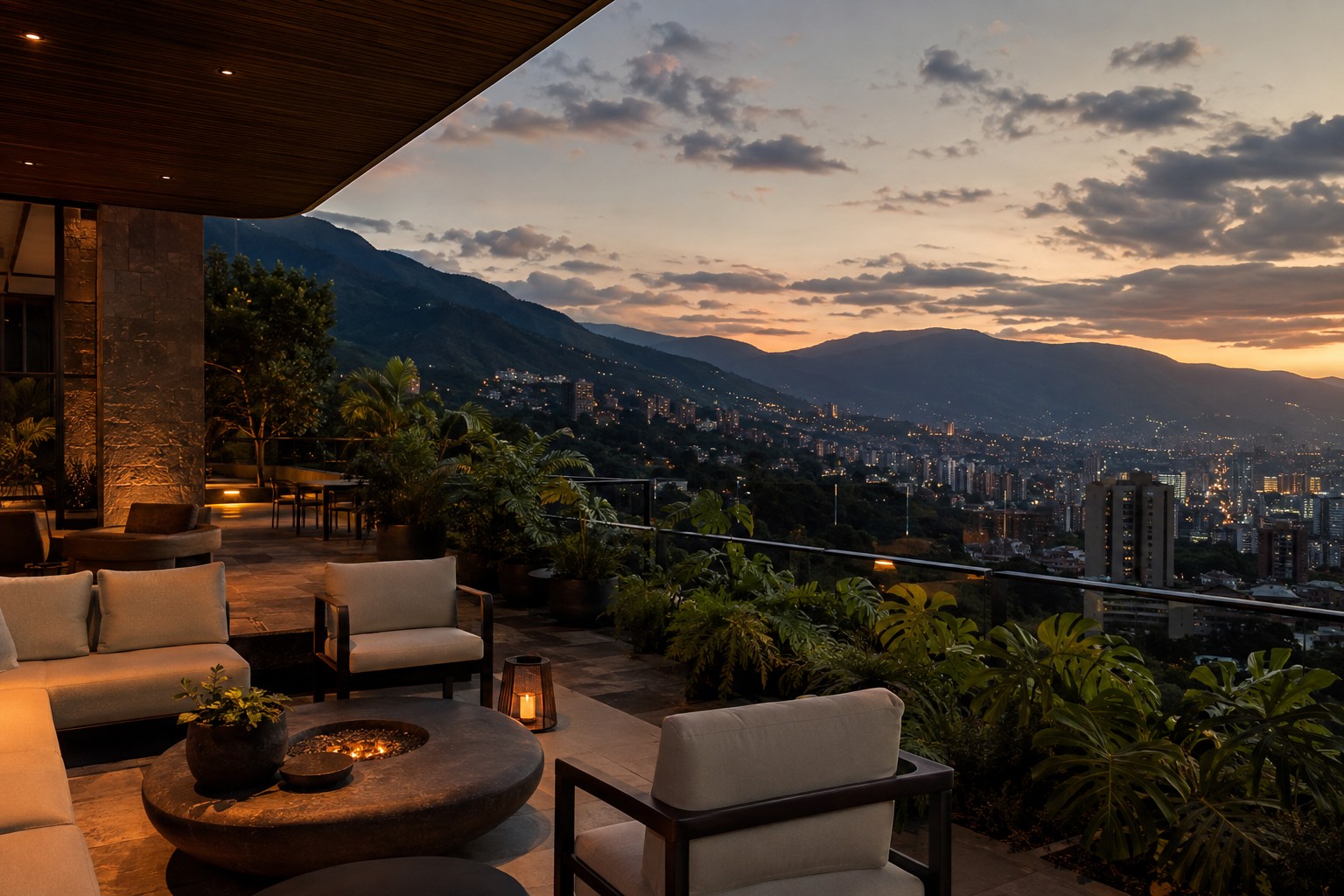

Medellin
The City Of Eternal Spring, Which Is Literally True
Medellin sits at about fifteen hundred metres in a narrow Andean valley, close enough to the equator that there is no summer or winter, high enough that the temperature holds around twenty two degrees every single day of the year. That is the practical fact that shapes everything: flowers bloom continuously, nothing needs heating or cooling, and there is no wrong month to come. The other fact is the one everyone knows, and the honest version is that the city's transformation over the past two decades is the actual reason to visit, not a footnote to be politely stepped around.
The planning decision: El Poblado, Laureles, or out of town
El Poblado is the affluent green hillside where the good hotels are, along with the restaurants and most of the international visitors. Provenza, within it, is the concentrated nightlife pocket, which is either the reason you chose the neighbourhood or the reason to stay a few streets away from it. Laureles is flatter, more residential, more Colombian in feel and increasingly where the better new places are opening. Beyond the city, the countryside around Rionegro and the lake at Guatape has a serious finca and boutique hotel market, and it is where a lot of the best two or three night additions are.
Season, and what altitude does to weather
Temperature is constant. Rain is not. December through February and June through August are the drier windows, and the two rainy periods in between bring heavy afternoon showers rather than all day weather. The Feria de las Flores in early August is the city's great festival, with the silleteros parade, and it is worth planning around in either direction. Christmas lighting along the river in December is genuinely spectacular and draws domestic visitors, so book earlier for that stretch.
Where to base, and getting in
Jose Maria Cordova international airport sits above the valley near Rionegro, forty five minutes to an hour from El Poblado down a mountain road. Direct flights connect from Miami, Panama, Bogota and increasingly from Europe via Madrid. The metro, and above all the metrocable gondolas that connect the steep barrios to it, is a piece of civic infrastructure worth riding as an experience rather than only as transport. Traffic in the valley is heavy at the usual hours.
Stay strategy
The Click Clack and the Charlee occupy the sharp design end in El Poblado. Marquee Medellin and the Four Points cover the reliable international category. The genuinely interesting inventory, though, is boutique: a handful of restored houses in Laureles and Envigado, and out in the countryside the fincas and small hotels around Rionegro and Guatape, some of which are as good as anything in the country. For a group, a private finca with staff is excellent value and the way most Colombians would do it.
When to begin
Three to four months is usually enough outside the August festival and Christmas, when six is safer. The one thing worth arranging well ahead is the guiding. A Comuna 13 visit with a resident guide who lived through the period is a completely different experience from the walking tours that run continuously, and the good ones are booked. Coffee country day trips and Guatape are better done privately and early in the morning.
Four experiences worth building the days around
- Comuna 13 with a local guide, taking the outdoor escalators up through the barrio, which is the clearest lesson in what the city has done.
- The metrocable to Parque Arvi, which climbs out of the valley over the rooftops into cloud forest at the top.
- A coffee finca day in the hills, with the actual process from cherry to cup rather than a tasting room.
- Guatape and the Piedra del Penol, two hours out, for the lake country and the climb up the rock.
Who this trip suits
Medellin suits curious travellers, food and city people, and anyone who wants somewhere in Latin America that is not yet routine. It works extremely well as three or four nights inside a longer Colombian route with Cartagena on the coast and the coffee region between them.
When another plan may fit better
This is not a beach destination and there is no water anywhere near it, so anyone wanting a sun holiday should look at Cartagena or the islands. Anyone wanting colonial architecture and old streets will find far more in Cartagena. And travellers who want a fully polished resort experience should know the hotel inventory here is city and boutique rather than resort.
Plan it with one accountable advisor
Tell us how long you have in Colombia and we will set the order between the coast, the mountains and the coffee country, with the right guides rather than the ones with the best marketing. Our luxury leisure travel planning covers the whole route.
Is Medellin safe for travellers?
The city has changed enormously over the past two decades and normal travel here is unremarkable now. Standard city sense applies as it would in any large Latin American city: sensible neighbourhoods, licensed transport, nothing flashy at night. The transformation is the reason to visit rather than a footnote to step around.
What is the weather like in Medellin?
Around twenty two degrees every day of the year. The city sits at fifteen hundred metres near the equator, so there is no summer or winter, only drier and wetter months. December to February and June to August are the drier windows. Nothing needs heating or cooling, which is why they call it the city of eternal spring.
Where should you stay in Medellin?
El Poblado for the hotels and restaurants, though Provenza within it is the concentrated nightlife pocket and worth being a few streets away from. Laureles is flatter, more residential and more Colombian. The countryside around Rionegro and Guatape has excellent fincas for a group.
Is Comuna 13 worth visiting?
Yes, and with a resident guide who lived through the period rather than one of the continuous walking tours. The outdoor escalators up through the barrio are the clearest lesson in what this city has actually done. The good guides are booked ahead.
Continue Exploring