


Monaco
Monaco Is About Position, Not Size
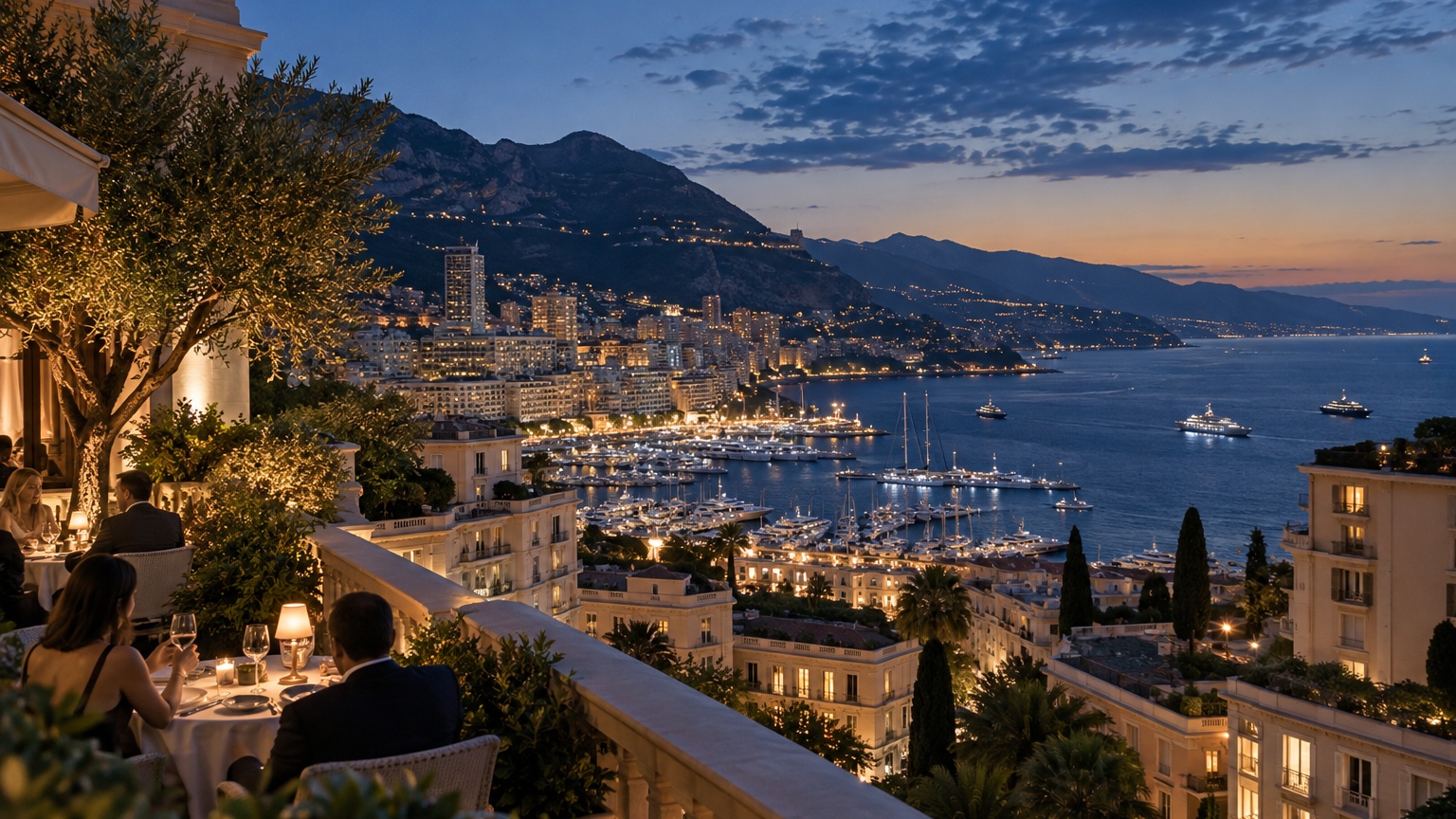
Monaco is small enough to cross on foot and layered enough to make the choice of hotel matter. The harbor, Monte-Carlo, the old town on the Rock, and the eastern beaches each produce a different version of the principality. The mistake is expecting one neighborhood to provide the whole experience. Monaco works when the day moves between water, gardens, architecture, and a properly chosen table.
There is glamour here, but the more interesting luxury is practical. A room with the right view, a car that arrives when it should, a table away from the loudest promenade, and a plan that respects the hills can change the stay more than a list of famous names.
Know before you go
- Fly into: Nice Côte d’Azur Airport, code NCE. Monaco is roughly a 30-minute drive in light traffic, though the coast road can take much longer. A private car is the sensible default with luggage.
- Trip length: Two nights works for a focused stay. Three nights gives time for the old town, Monte-Carlo, a harbor or coastal day, and a meal without rushing between them.
- Best months: May, June, September, and early October balance weather and demand. July and August are bright and busy. Winter is mild but quieter, with shorter days and a different dining rhythm.
- Getting around: Distances are short, but the slopes are real. Use taxis or a driver between the high and low parts of the principality, especially in heat or formal clothes.
- Money and language: Monaco uses the euro. French is the main language, while English is common in hotels, restaurants, and the international visitor economy.
- What to reserve: The hotel category and view, the restaurants that matter, coastal transport, and any event-period travel. Demand changes sharply around major calendar dates.
Choose the Monaco you want to wake up to
Monte-Carlo gives you the most recognizable version of Monaco, with the casino square, grand hotels, and a polished evening scene. The old town offers more history and a different view across the harbor. Fontvieille is calmer and more residential, while Larvotto is the choice when the sea should be part of the daily routine.
Do not book the room by photograph alone. Ask which way the balcony faces, how much traffic the street carries, how the hotel handles the hillside connections, and whether the view comes with evening noise. In a place this compact, the details are the itinerary.
Give the Rock a proper morning
The old town is most enjoyable before the midday heat and the larger visitor flow. Walk the narrow streets, look across the harbor, and make time for the Oceanographic Museum if it suits the travelers. The point is not to turn the morning into a ceremony. It is to see the principality’s older scale before returning to the contemporary waterfront.
Gardens are a useful part of a Monaco day because they create distance from the traffic and stone. Ask a local guide to connect the gardens, viewpoints, and architecture rather than booking a generic highlights walk.
Use the coast beyond the postcard
Monaco is strongest as part of the Côte d’Azur rather than in isolation. A driver can shape a day toward Menton, Èze, or the quieter stretches between the major towns, with time for lunch and a return before the evening. Cannes and Capri answer different questions, but both can sit inside a wider Mediterranean itinerary built around the water and a few excellent hotels.
Keep the routing honest. The coast looks close on a map and slows down quickly when roads, events, and summer traffic coincide. Private transport earns its place here through timing alone.
Planning brief
Monaco suits travelers who want a polished Mediterranean base, a short and visually rich stay, or a natural pause within a longer French Riviera route.
- Best suited to: couples, milestone trips, travelers who enjoy design and gardens, yacht or event guests, and clients combining the principality with the wider Côte d’Azur.
- Settle early: hotel position, airport transfer, dinner reservations, the event calendar, and whether the trip includes a coastal day with a driver.
- Useful pairing: combine with the French Riviera, Provence, or a wider Mediterranean itinerary rather than treating Monaco as a stand-alone resort week.
Let the day move between the water and the hills
Monaco does not need a packed schedule. Choose the right room, see the old town early, reserve the meal that matters, and leave one stretch of coast open. Tell us whether you are coming for a celebration, an event, a short Riviera stay, or a few quiet nights by the water.
Our luxury leisure travel planning can coordinate the hotel, transfers, restaurants, coastal route, and the small timing decisions that keep Monaco polished without making it feel managed.
How many nights should we spend in Monaco?
Two nights is enough for Monte-Carlo, the old town, one museum or garden, and a memorable dinner. Three nights gives the stay a calmer shape and makes room for a coastal day toward Èze, Menton, or another part of the Côte d’Azur.
Where should we stay in Monaco?
Monte-Carlo suits travelers who want the most recognizable setting, grand hotels, and an evening scene close by. The old town offers history and harbor views, while Larvotto is better when the sea should be part of the daily rhythm. Ask about the exact view, street noise, and hill connections before choosing a room.
Is Monaco easy to reach from Nice Airport?
Yes, but the timing depends heavily on traffic. Nice Côte d’Azur Airport is the practical gateway, and the drive is roughly 30 minutes in light conditions. A private transfer is usually worthwhile with luggage, formal clothing, or a fixed dinner reservation. Build more margin than the map suggests during summer and event periods.
Do we need a car in Monaco?
No for the principality itself, though taxis and short private transfers are useful because the slopes are steep. A driver becomes valuable when the itinerary extends along the Côte d’Azur, where one well-planned coastal day is usually more enjoyable than several separate rental-car moves.
CONTINUE EXPLORING