

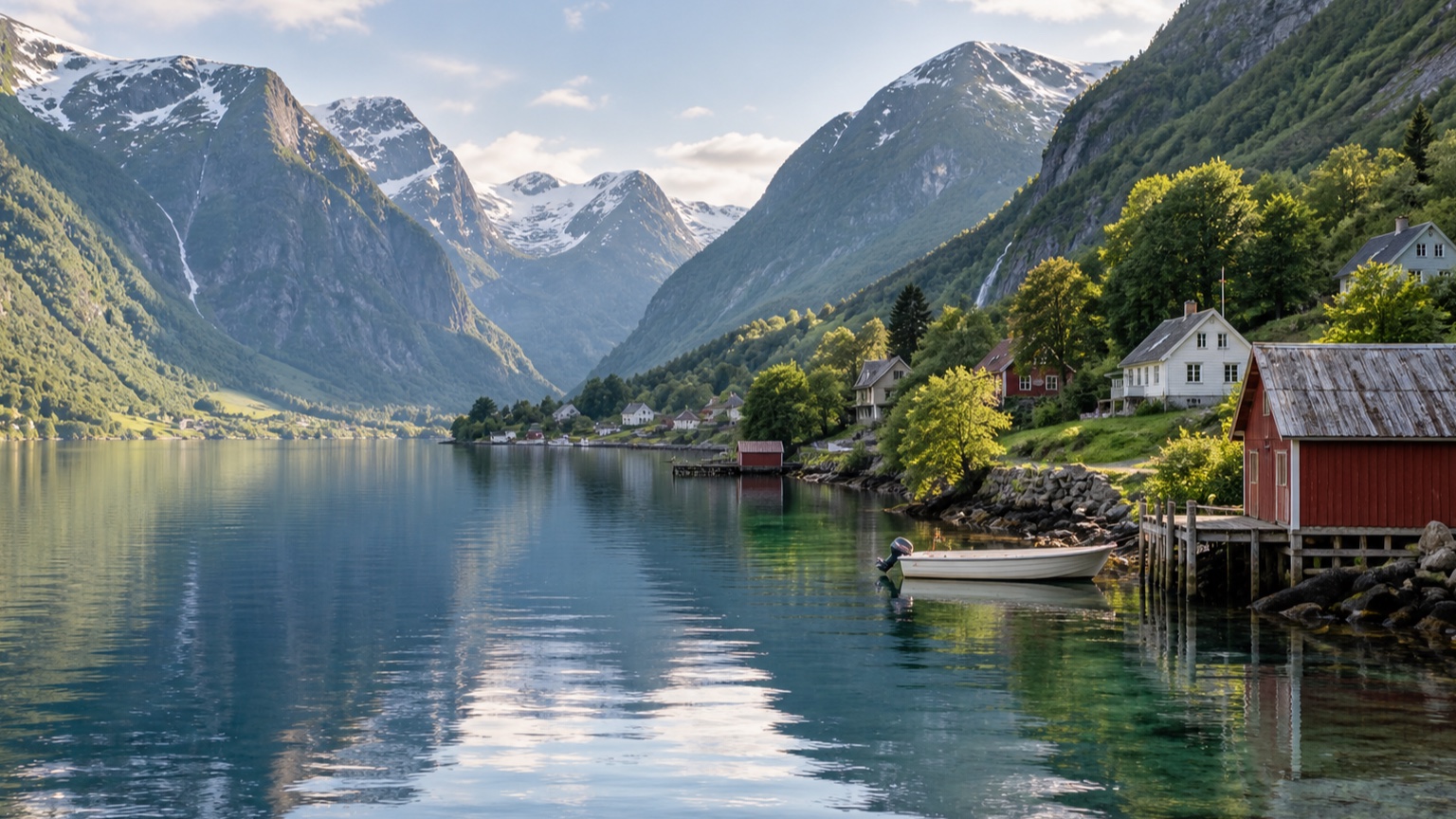

Norwegian Fjords
The Norwegian Fjords Need More Time on the Water
The fjords are often treated as a sequence of viewpoints. That misses the main pleasure. The landscape changes when seen from the water, from a village road, from a quiet hotel, and from a short walk that ends somewhere with a table. The best route has fewer bases, a clear pace, and enough time for weather to become part of the day.
Five to seven nights is a useful first journey. A shorter trip should choose one fjord area rather than trying to cover the coast from a single hotel.
Know before you go
- Arrive via: Bergen or Oslo depending on the fjord and route. The exact airport should follow the first hotel and the final transfer, not simply the largest city.
- Trip length: Five to seven nights for a balanced first route. Three nights for one fjord and a focused stay.
- Best months: May through September for long days, boat routes, and the widest outdoor access. Shoulder seasons bring quiet and changing weather.
- Getting around: Combine ferries, trains, road transfers, and local boats according to the route. A private driver is useful for remote hotels and scenic roads.
- Money: Norway uses the krone. Cards are widely accepted, but remote stops can have limited services.
- What to reserve: Hotels, boats, key rail or road legs, and a local guide for any demanding walk or special landscape day.
Choose one fjord as the center of the story
Different fjord areas produce different trips. Some are better for long water journeys, some for hiking, some for villages and orchards, and some for a hotel that makes the landscape the entire day. Ask what the travelers want to do between the views before choosing the route.
The map can make the distances look simple. Weather, ferries, road conditions, and hotel check-ins make them more complicated. Keep the route legible.
Give the villages and water their own time
A fjord day should not be a race between viewpoints. Take the boat, stop for a village or farm, and leave room for a meal that is part of the place. A private guide can choose a route that works for the group rather than the standard coach pattern.
Planning brief
The Norwegian Fjords suit travelers who want scale, water, mountain air, and a route that remains calm in the face of changing weather.
- Best suited to: couples, families, active travelers, photographers, and clients looking for a landscape-led journey.
- Settle early: fjord area, bases, boats, hotels, private driver, walking level, and weather alternatives.
- Useful pairing: begin in Bergen once that guide is live, or combine with Oslo and the wider Norwegian coast.
Let the route move at the speed of the water
The fjords do not need a packed itinerary. Tell us whether your priority is boating, hiking, villages, food, or a quiet hotel in the landscape.
Our luxury leisure travel planning can arrange the hotels, boats, guides, private road transfers, and the route through Norway.
How many nights do we need for the Norwegian Fjords?
Five to seven nights gives a first route time for two bases, boat travel, villages, and a little weather flexibility. Three nights can work when the trip focuses on one fjord area rather than trying to cover the whole coast.
Should we begin in Bergen or Oslo?
Choose according to the fjord, hotel, and route you want. Bergen is the more natural start for many western fjord journeys, while Oslo can make sense for a wider Norway itinerary. Let the first landscape decide the airport.
Do we need a private driver in the fjords?
A driver is useful for remote hotels, scenic roads, families, and routes that combine several modes of transport. It is not necessary for every section. Ferries, trains, and local boats can be the best part of the journey when the itinerary is built around them.
When is the best time to visit the fjords?
May through September brings long days and the broadest outdoor access. Spring and early autumn are quieter but need more flexibility around weather, ferries, and mountain conditions.
CONTINUE EXPLORING