


Palawan
Palawan, Limestone, Lagoon, and Open Water
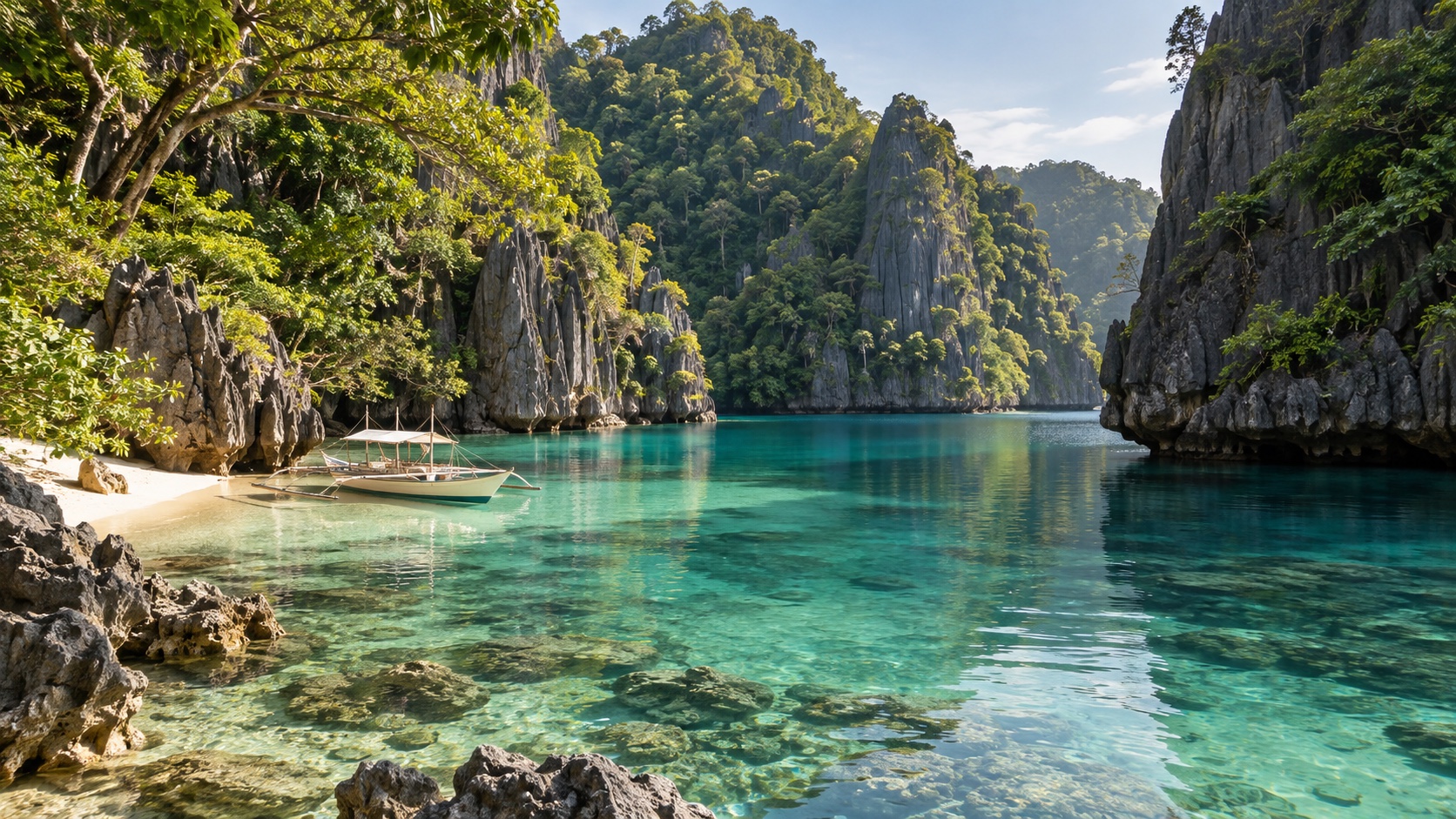
Palawan is a long, varied island province where limestone cliffs, clear lagoons, jungle, fishing villages, and wide stretches of sea create a natural sense of distance. The most rewarding trips choose one part of the coast and give it enough time.
Four or five nights is a useful first stay. Add time for a private boat, a quieter island base, or a route that links El Nido with Coron only when the transfers make sense for the group.
Know before you go
- Fly into: Puerto Princesa, El Nido, or Busuanga for Coron, depending on the coast and island route chosen.
- Trip length: Four or five nights in one area. Seven or more nights works for a carefully planned combination of Palawan regions.
- Best months: December through April is generally drier. May through October is greener and wetter, with sea conditions affecting boat days.
- Getting around: Use private transfers and a reputable boat operator. Overland journeys can be long, while island time depends on wind and sea conditions.
- Money: The Philippines uses the peso. Cards work in larger hotels, but cash matters for boats, smaller islands, guides, and tips.
- What to reserve: The island base, airport or ferry connections, private boat, guide, sea conditions, and any diving or snorkelling experience.
Choose one coast before adding another
El Nido is known for limestone lagoons and island-hopping, Coron brings wrecks, lakes, and a different northern landscape, while Puerto Princesa is a practical entry point for a wider Palawan route. The best itinerary respects the distances between them.
Make the boat day private when it matters
The sea is the main road in Palawan. A private boat gives the group more control over timing, snorkelling, lunch, and quieter coves, though the captain must still follow weather and local rules. Start early and keep the route flexible.
Keep the island life visible
Palawan is more than clear water. Fishing communities, forest, local food, and the practical work of moving between islands give the trip its texture. Choose guides and operators who keep wildlife, reefs, and villages treated with respect.
Do less on arrival
Flights, road transfers, boats, heat, and humidity can make the first day long. Arrive gently, settle into the hotel, and keep the first boat outing for the following morning when the sea and the group are both ready.
Planning brief
Palawan suits travellers who want dramatic coastlines, clear water, boat days, and a tropical journey with a real sense of landscape.
- Best suited to: couples, families with older children, divers, active travellers, and guests who prefer sea and nature to city life.
- Settle early: the area, island base, boat operator, transfers, weather margin, and conservation-minded activities.
- Useful pairing: Manila, Raja Ampat, Bali, or a wider Philippines route.
Give the water the time it deserves
Palawan is best when the itinerary is light enough for the sea, the weather, and the next cove to shape the day.
Our luxury leisure travel planning can arrange the right island base, private boats, transfers, guides, and the wider Philippines route.
How many nights should we spend in Palawan?
Four or five nights is a good stay in one area. Seven or more nights works for a carefully planned combination of El Nido, Coron, or other parts of the province.
Should we visit El Nido or Coron?
El Nido is known for limestone lagoons and island-hopping, while Coron offers wrecks, lakes, and a different northern landscape. The better choice depends on the group's interests and the available transfer time.
Is a private boat worth booking in Palawan?
Yes, particularly for families or groups who want flexible timing, quieter coves, and a more personal day. The captain should still follow weather conditions and local conservation rules.
When is the best time to visit Palawan?
December through April is generally drier and good for boat days. May through October is greener and wetter, with more weather variation on the water.
CONTINUE EXPLORING