

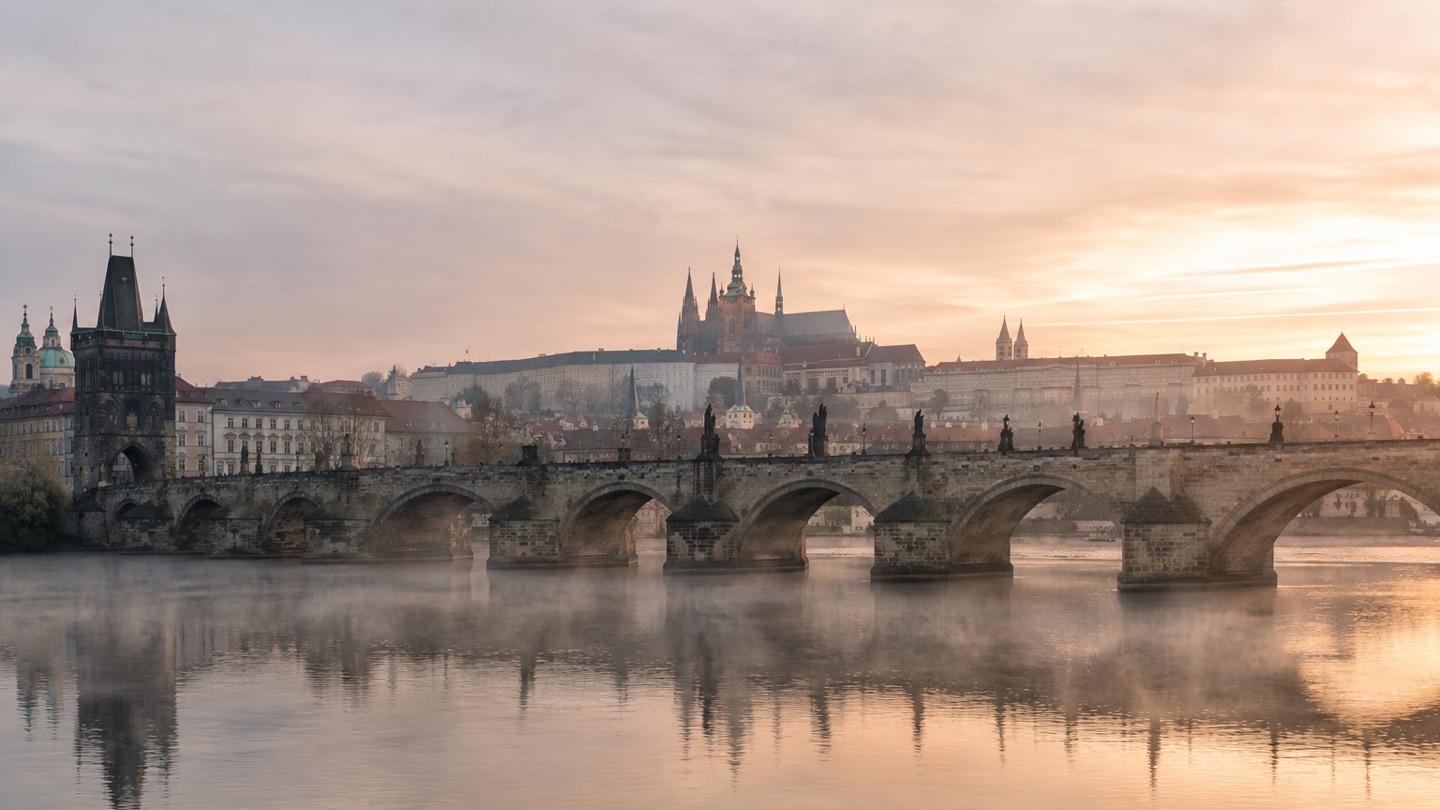

Prague
A City the Twentieth Century Forgot to Destroy
Prague survived. That is the short explanation for why the Czech capital looks the way it does, and it is the reason a walk across the Charles Bridge at dawn is one of the genuine experiences left in Europe. While Berlin, Warsaw and Dresden were flattened, Prague came through the war largely intact, then spent four decades behind the Iron Curtain with no money to modernize anything. What remains is a thousand years of Gothic, Renaissance, Baroque and Art Nouveau standing shoulder to shoulder across a river, essentially uninterrupted. The consequence, entirely predictable, is that a great many people now want to see it, and planning here is mostly about timing.
The planning decision: three nights, or Prague as a hub
Prague's historic core is compact and three nights covers it properly, four if you want the castle, the Jewish Quarter and the museums without rushing. Beyond that, the decision is whether to stay put or move. Český Krumlov, a small and almost impossibly picturesque town, is around two and a half hours south. Karlovy Vary and the spa towns are about two hours west. Dresden is just over two hours north by train, Vienna about four, Berlin roughly four. Prague also works extremely well as the first stop in a Central European rail trip rather than as an isolated long weekend, and the trains here are comfortable and cheap.
The two shoulder seasons, and the hours that matter
May, early June, September and early October are the right months: mild, long enough in the day, and busy without being unbearable. July and August are hot, crowded and the least rewarding time to be on the Charles Bridge. Winter is genuinely lovely, with the Christmas markets on the Old Town Square through December, frost on the roofs and hotel rates at their lowest, though the days are short and it can be bitterly cold. Whatever month you choose, the single most valuable planning habit here is the early start. The Charles Bridge and the Castle before eight in the morning are a different city from the same places at noon, and it is worth losing an hour of sleep for.
Where to base, and which side of the river
Malá Strana, the Lesser Town below the castle, is the quieter and prettier side of the river and the choice for most travelers who want atmosphere. The Old Town, Staré Město, puts you in the middle of everything and in the middle of the crowds, which cuts both ways. Vinohrady, east of the center, is residential, leafy and where locals actually eat. Josefov, the former Jewish Quarter, sits between the Old Town and the river with the synagogues and the cemetery. Václav Havel Airport sits about half an hour from the center. Inside the city, walking and trams are the answer, and the cobblestones are real, so the shoes matter more than usual.
Monasteries, palaces and a room with the right view
Augustine, a Luxury Collection Hotel occupies a thirteenth century monastery in Malá Strana and still has monks next door. Four Seasons Hotel Prague sits on the riverbank in the Old Town with the best views of the bridge and the castle. Mandarin Oriental Prague is a converted Renaissance monastery, quiet and understated. Aria Hotel is small, musical in theme and directly under the castle. The view is a real differentiator in this city and worth specifying, because a room facing the river and the castle is a materially different stay from one facing a courtyard.
When to begin
Three to four months is comfortable. The December market weeks, New Year and the May and September peaks want five to six. Prague's best hotels are small by international standards, and the rooms with the views are a limited subset of an already limited inventory, so the room category is often the constraint rather than the property. If you want the Estates Theatre or a specific concert in one of the churches or palaces, tell us early.
Four experiences worth building the days around
- Prague Castle and St. Vitus Cathedral at opening with a private guide, then down through the Lesser Town before the tour groups come up.
- The Charles Bridge at sunrise, walked rather than photographed from a distance, which is worth setting an alarm for exactly once.
- The synagogues and the Old Jewish Cemetery of Josefov with a guide who can carry the history, which is dense and worth an unhurried morning.
- A concert in one of the historic halls or churches, or a performance at the Estates Theatre where Mozart conducted the premiere of Don Giovanni.
Who this trip suits
Prague suits architecture and history travelers, couples on a romantic long weekend, and families with children old enough to walk a hilly old town. It suits classical music travelers, and it suits anyone starting a Central European rail itinerary. It is also unusually good value at the top end compared with Western European capitals, which makes a longer stay or a better room category easier to justify.
When another plan may fit better
Travelers who need space, quiet and few people will struggle in the historic core in high summer, and the Czech countryside or a different month is the answer. If you want the grandeur of an imperial capital with a full opera season, Vienna is four hours south. And if you want a city that engages with the modern world rather than preserving the old one, Berlin is the stronger choice.
Plan it with one accountable advisor
Tell us your month and how much of the trip is Prague, and we will set the room, the view, the early guided mornings and the rail connections onward. Our luxury leisure travel planning builds the whole Central European sequence rather than one city at a time.
Continue Exploring