

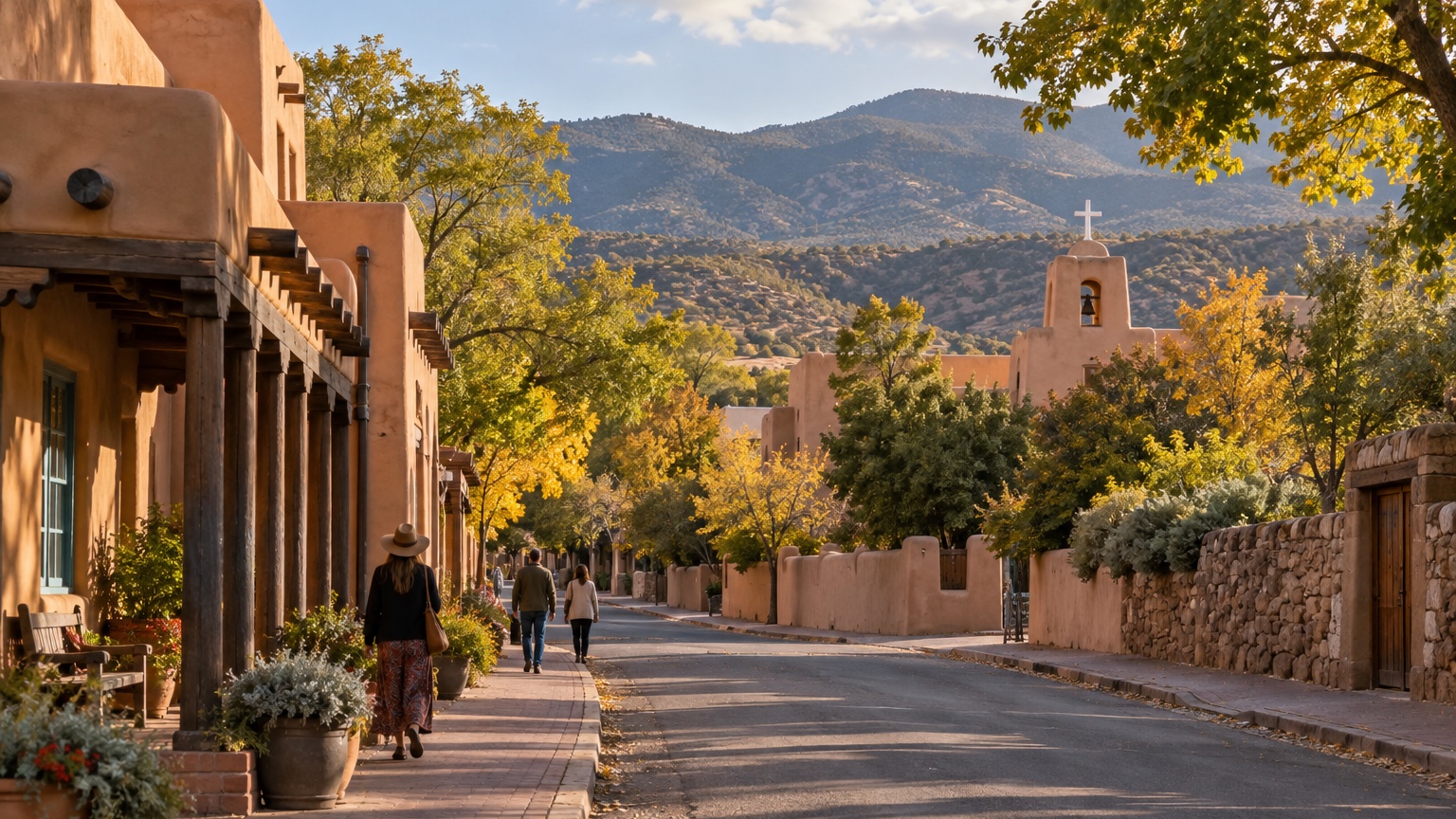

Santa Fe
Santa Fe, High Desert Light and Living History
Santa Fe is a city of adobe walls, mountain light, serious art, and a food culture that makes the high desert feel generous. Its history is visible everywhere, but the city is not preserved in amber. Galleries, studios, restaurants, and contemporary design keep the center moving.
Three or four nights gives a first visit enough depth. Add time for a private art route, a day toward the mountains, or a wider New Mexico journey.
Know before you go
- Fly into: Santa Fe Regional Airport, code SAF, when connections suit. Albuquerque International Sunport, code ABQ, offers more flight choice, followed by a road transfer.
- Trip length: Three to four nights for the historic center, galleries, food, and one wider high-desert or mountain day.
- Best months: March through May and September through October bring comfortable days and strong light. Summer is warm with afternoon storms. Winter is quieter, with cold nights and possible snow.
- Getting around: The historic center is walkable, while a car or private driver helps with galleries, studios, mountain roads, and day trips.
- Money: The United States uses the US dollar. Cards are widely accepted, with tax and gratuity added in many situations.
- What to reserve: A characterful hotel, private art guide, restaurant tables, museum tickets, and any studio or high-desert day.
Start with the historic center
Santa Fe’s central streets are compact enough to explore slowly. Look beyond the main plaza toward older lanes, courtyards, churches, galleries, and the details of the adobe building tradition. A local guide can place the city’s layered history in context without flattening it into a shopping walk.
Follow the art, not a single district
Canyon Road is the obvious beginning, but Santa Fe’s art life reaches beyond it. The right route might include contemporary galleries, Indigenous artists, photography, design, or a studio visit arranged with care. Choose a few places with a clear thread and leave time for conversation.
Make the landscape part of the stay
The Sangre de Cristo Mountains and high desert are close enough to shape a half or full day. A private driver can build a route toward Taos, the high road, or a quieter landscape according to the season. Santa Fe’s altitude and dry climate are noticeable, so the day should not be overfilled.
Planning brief
Santa Fe suits travelers who want art, architecture, food, history, and high-desert landscape in a city with a clear visual and cultural identity.
- Best suited to: couples, art travelers, food guests, architecture lovers, photographers, and travelers building a New Mexico route.
- Settle early: hotel, private art guide, restaurant sequence, museum tickets, and any mountain or studio day.
- Useful pairing: combine with Taos, Albuquerque, Sedona, or a wider Southwest itinerary.
Let the light set the route
Santa Fe is most rewarding when the itinerary leaves space for art, weather, altitude, and the small distances between the center and the high desert. Tell us whether the trip is about galleries, food, architecture, history, landscape, or a wider New Mexico journey.
Our luxury leisure travel planning can arrange the hotel, private art guides, drivers, restaurants, museum access, and the wider Southwest route.
How many nights should we spend in Santa Fe?
Three nights works for the historic center, art, food, and one wider day. Four nights is useful when a private studio route, mountains, or a New Mexico extension is part of the plan.
When is the best time to visit Santa Fe?
March through May and September through October bring comfortable days and strong light. Summer is warm with afternoon storms, while winter is quieter with cold nights and possible snow.
Do we need a car in Santa Fe?
Not for the historic center, but a car or private driver helps with Canyon Road, studios, mountain routes, and day trips beyond the city.
Can Santa Fe be combined with Taos?
Yes. Taos makes a natural extension for travelers who want more high-desert landscape, art, and northern New Mexico history. Allow enough time for the road rather than treating it as a quick add-on.
CONTINUE EXPLORING