

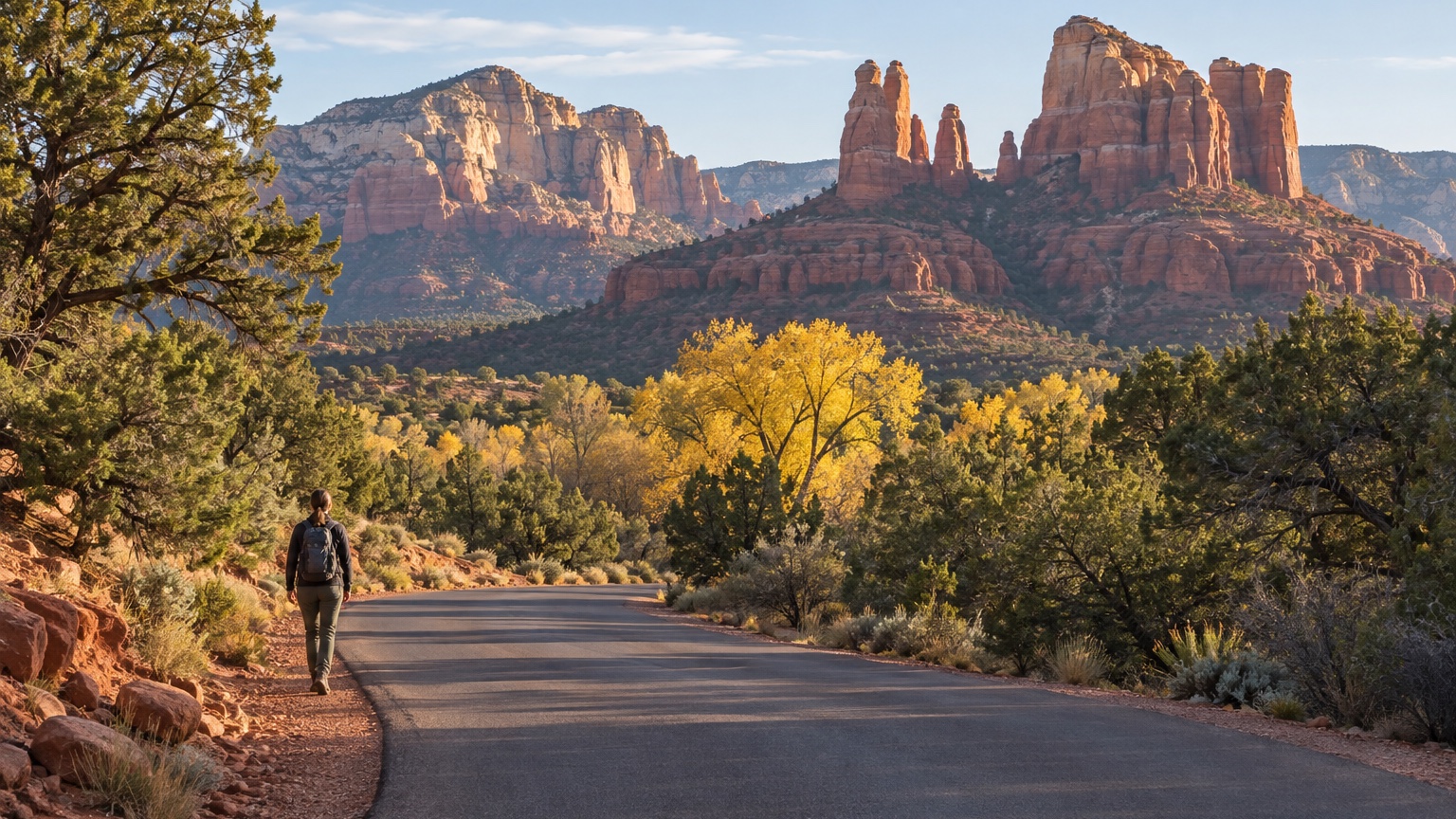

Sedona
Sedona, Red Rock Country with a Restful Center
Sedona is visually immediate, but the strongest stays are not built around trying to photograph every red rock. The landscape asks for walking, quiet, good light, and enough time to move between the town, the trails, and the high desert without turning the day into a series of car parks.
Three or four nights gives a first visit a natural shape. Add time for a private guide, a longer hike, a spa stay, or a route through northern Arizona.
Know before you go
- Fly into: Phoenix Sky Harbor International Airport, code PHX, usually followed by a private transfer or rental car. Flagstaff Pulliam Airport, code FLG, can work for selected connections.
- Trip length: Three to four nights for red rock walks, local food, a slower afternoon, and one wider landscape day.
- Best months: March through May and October through November bring comfortable days and clear light. Summer is hot, with early starts useful. Winter is cooler and quieter, with occasional snow at elevation.
- Getting around: A car or private driver helps, though a guide can simplify trail access, timing, and the choice between busy and quieter areas.
- Money: The United States uses the US dollar. Cards are widely accepted, with tax and gratuity added in many situations.
- What to reserve: A well-placed hotel, private hiking or landscape guide, restaurant tables, and any spa, horseback, or day-trip plans.
Start with the light, not the list
Sedona’s formations change through the day, and early or late light often gives the most generous experience. A private guide can match the walk to the travelers’ pace and keep the route away from the busiest hours without losing the landscape.
Let the town balance the trail
Red rock country is only part of the stay. Galleries, restaurants, local makers, spa time, and a quiet room with a view make the afternoons useful, especially for groups with different energy levels. The town should be a base for the landscape, not an interruption to it.
Use Sedona in a northern Arizona route
Sedona can pair with the Grand Canyon, Flagstaff, or a wider route through northern Arizona. Keep the distances honest and let the trip have a slower center. It also offers a very different experience from Scottsdale, where desert design and resort life take more of the lead.
Planning brief
Sedona suits travelers who want red rock landscape, walking, art, wellness, and a comfortable base that keeps the high desert close.
- Best suited to: couples, families, walkers, photographers, wellness travelers, and guests who enjoy landscape with a strong town nearby.
- Settle early: hotel, driver or guide, trail plan, restaurant sequence, and any Grand Canyon extension.
- Useful pairing: combine with the Grand Canyon, Flagstaff, Scottsdale, or a wider Arizona route.
Let the red rock stay spacious
Sedona is at its best when the itinerary makes room for light, weather, and the simple distance between one trail and the next. Tell us whether the trip is about walking, food, art, wellness, family time, or northern Arizona.
Our luxury leisure travel planning can arrange the hotel, private guides, transfers, trail days, restaurants, and the wider Arizona journey.
How many nights should we spend in Sedona?
Three nights works for the main landscape, one guided walk, and a slower town day. Four nights is better when wellness, photography, or a Grand Canyon extension is part of the plan.
When is the best time to visit Sedona?
March through May and October through November bring comfortable days and clear light. Summer needs early starts because of heat, while winter is quieter and cooler.
Do we need a guide in Sedona?
Not for every walk, but a private guide can improve the timing, trail choice, geology, and access to quieter parts of the landscape, especially for a first visit.
Can Sedona be combined with the Grand Canyon?
Yes. The route works well when Sedona has at least three nights and the Grand Canyon is given enough time on its own rather than treated as a quick stop.
CONTINUE EXPLORING