

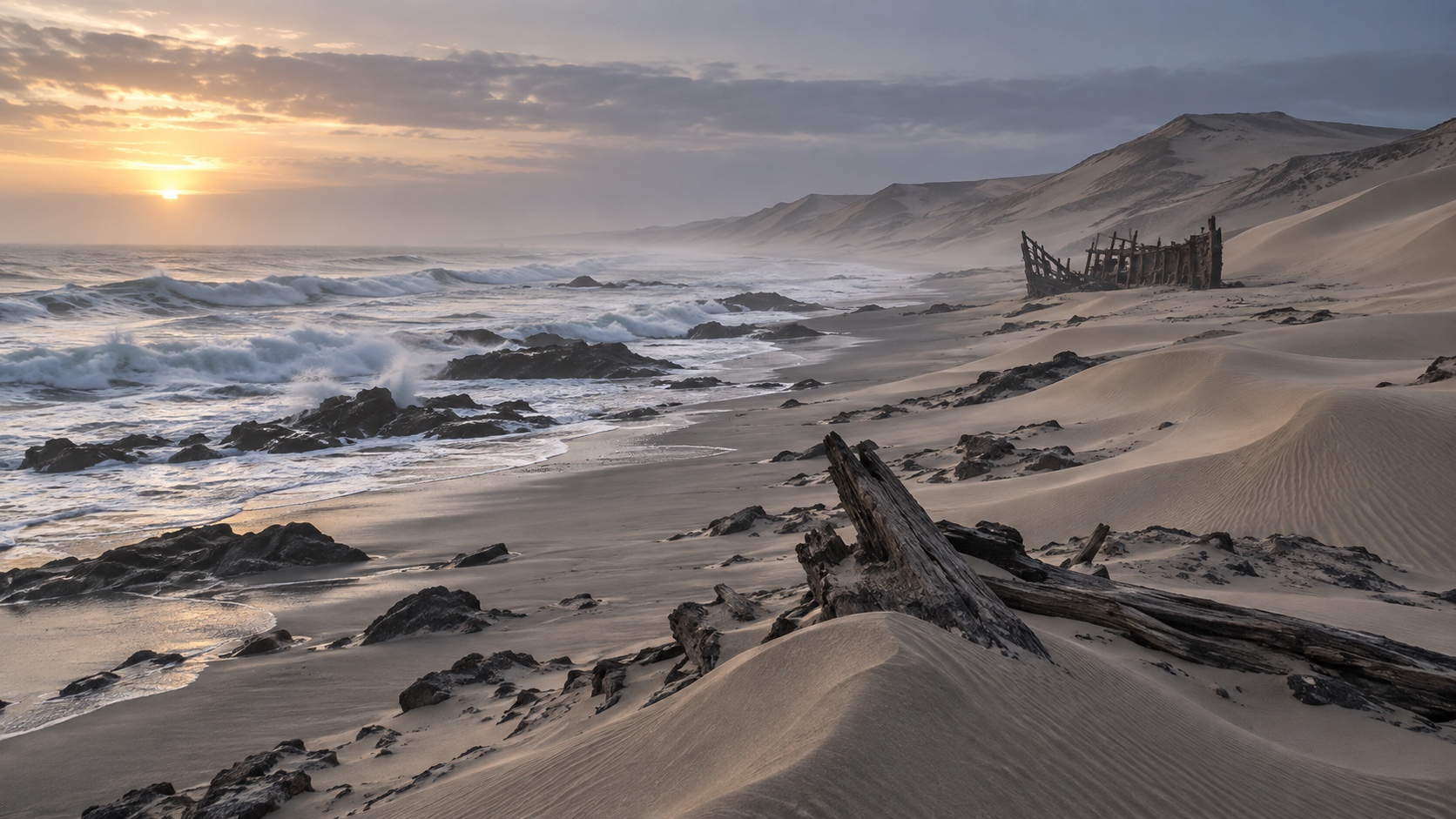

Skeleton Coast
Skeleton Coast, Namibia at the Edge of the Atlantic
Namibia’s Skeleton Coast feels like the end of the map. The cold Atlantic, coastal fog, pale dunes, rocky shore, and scattered shipwrecks create a landscape that is severe without being empty. Desert-adapted wildlife moves through the riverbeds and hills, while the sea keeps the whole coast in a state of motion.
Two to four nights works depending on how remote the route is. The southern coast can be reached as part of a longer road itinerary, while the more isolated northern park is usually best experienced by guided fly-in. Either way, the destination asks for preparation and a willingness to let the landscape stay wild.
Know before you go
- Fly into: Windhoek is the main international gateway, with connections onward by light aircraft or private vehicle. Walvis Bay and the coastal towns can also fit into a wider route.
- Trip length: Two nights for a focused coastal stay, with three or four nights better for a remote fly-in route and more time in the river valleys.
- Best months: May through October is cooler and generally drier, though the coast can be foggy and cold at any time. The fog is part of the coast’s character rather than a problem to solve.
- Getting around: Use a specialist guide, 4x4, or light aircraft. Access rules and road conditions vary, and some areas require advance booking or permits.
- Money: Namibia uses the Namibian dollar, and the South African rand is widely accepted. Remote camps may have limited card service, so plan cash and connectivity accordingly.
- What to reserve: A permitted route, the right coastal camp, a specialist guide, aircraft or 4x4 logistics, and any fishing or wildlife activities well ahead.
Choose the coast you mean
Skeleton Coast is a broad idea as much as a single park. The southern approach can include shipwreck beaches, seal colonies, and coastal desert near the road. The remote northern section brings greater isolation, riverbeds, and a more demanding fly-in experience. Be precise about the landscape you want before choosing the itinerary.
Let the fog stay in the picture
The Benguela Current brings cold water and dense coastal fog, which softens the horizon and changes the colour of the sand. Clear weather is beautiful, but fog can be equally atmospheric. Pack for both and let the coast show you its own mood.
Look for life in the dry riverbeds
The ephemeral rivers and valleys are where the coast becomes less severe. Elephants, desert-adapted lions, antelope, birds, and smaller animals move through these corridors when conditions allow. A guide with real local knowledge is essential because the signs are subtle and the distances are large.
Respect the permissions
The Skeleton Coast is protected and access is controlled in parts of the park. Use an operator who handles permits, park rules, and community relationships properly. Fishing, camping, and vehicle routes can all have specific requirements, and the remoteness leaves little room for casual improvisation.
Build in a quiet landing
After a day of wind, sand, and long views, the best camp may be the one that does very little. A warm meal, dry clothes, a sheltered fire, and a sky with no nearby city are more than enough. The coast is already the entertainment.
Planning brief
Skeleton Coast suits repeat Namibia travellers, photographers, serious landscape lovers, and anyone drawn to remote wilderness with a strong sense of atmosphere.
- Best suited to: experienced travellers, couples, photographers, private groups, and guests who are comfortable with distance, weather, and limited infrastructure.
- Settle early: southern or northern route, permits, camp access, aircraft or 4x4, guide quality, and cold-weather packing.
- Useful pairing: Etosha, Damaraland, Swakopmund, Sossusvlei, or a longer private Namibia circuit.
Go for the edge of the map
Skeleton Coast is not a quick add-on. Tell us how remote the group wants to go, whether wildlife or landscape leads the trip, and how much comfort matters, and we will choose the right section of coast.
Our luxury leisure travel planning can arrange specialist guides, camps, permits, aircraft, private vehicles, and the rest of Namibia.
How many nights do you need on the Skeleton Coast?
Two nights can work for a focused southern section, while three or four nights is better for a remote fly-in itinerary. The right length depends on whether the group wants wildlife, shipwreck beaches, river valleys, or time to absorb the landscape.
Is the Skeleton Coast easy to visit?
It is accessible with the right planning, but it is remote and regulated. A specialist operator should handle permits, aircraft or 4x4 logistics, camp bookings, and the route through areas where services are limited.
What wildlife can you see on the Skeleton Coast?
Wildlife varies by season and route, but the coast and river valleys can support desert-adapted elephant, lion, antelope, seals, and a wide range of birds. The guide’s knowledge and the landscape’s conditions matter more than a fixed checklist.
What should you pack for the Skeleton Coast?
Bring warm layers, sun protection, sturdy shoes, a windproof outer layer, binoculars, and enough personal essentials for a remote stay. Fog and cold coastal air can arrive even when the wider desert is warm.
CONTINUE EXPLORING