

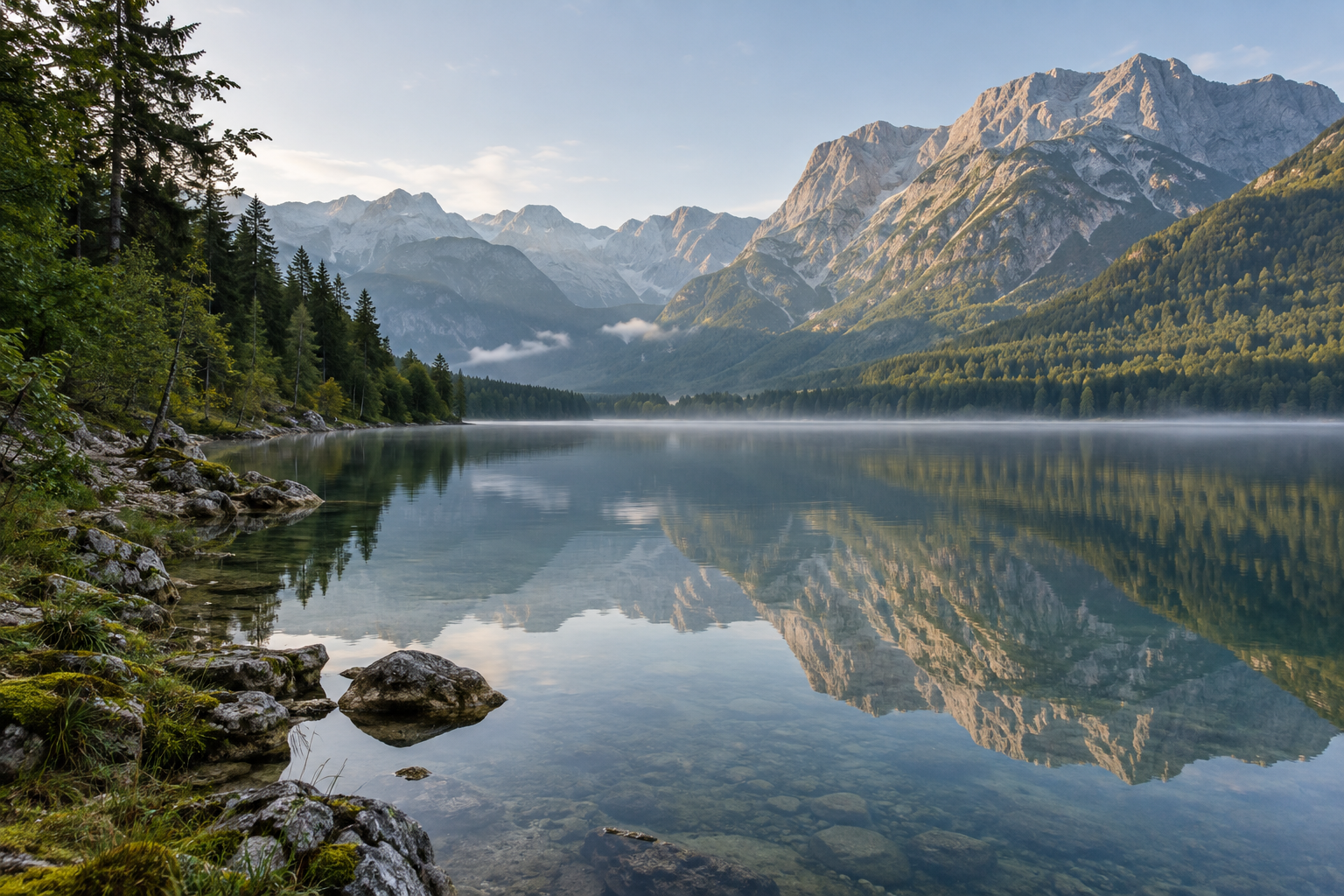

Slovenia
Slovenia makes a strong journey because the landscape changes without demanding long transfers. Alpine lakes, river valleys, karst caves, wine hills, Ljubljana, and the Adriatic coast can sit in one thoughtful route. The trick is to keep the country compact in feel, not crowded in schedule.
Know before you go
- Fly into: Ljubljana for the easiest access to the Alps, the capital, and the coast. Venice or nearby airports can work for open-jaw routes.
- Trip length: Seven to ten nights for Ljubljana, the Julian Alps, and the coast or wine country.
- Best months: Late spring through early autumn is easiest for lakes and trails. Winter brings a quieter alpine atmosphere and a different set of activities.
- Getting around: A rental car is useful for the Alps and wine country, while Ljubljana and the coast are easy to explore on foot and by transfer.
- What to reserve: A mountain or lakeside stay, a guide for the Soča or Triglav region, a food or wine experience, and a calm Ljubljana base.
- Plan around: Mountain weather, trail conditions, summer demand, and the temptation to make every region a one-night stop.
Give the Julian Alps the opening chapter
Bohinj, Bled, Kranjska Gora, and the Soča Valley each offer a different alpine mood. Bohinj is quieter and closer to the feel of the national park, Bled brings history and an iconic lake, and the Soča gives the route a vivid river-green thread. Choose two rather than trying to sleep everywhere.
Let Ljubljana reset the journey
Ljubljana is small enough to walk and layered enough to reward a full day. Its markets, cafés, riverside streets, architecture, and cultural life make a useful middle chapter between mountains and coast. It is also a good place to follow the country's food story.
Continue toward the coast or the vineyards
Piran and the salt pans bring a Mediterranean change of pace. The Karst and Brda bring caves, villages, and wine country. Both work well after the mountains, but they make different endings: sea and stone on one side, food and hills on the other.
Keep the Alps safe and generous
The mountains deserve respect, especially on longer or exposed routes. Check conditions, choose trails for the group, and use a guide when the terrain or weather demands it. A slower walk with time for lunch is more in keeping with Slovenia than a day spent chasing distance.
Who this trip suits
Couples, families, walkers and food and wine travelers, and anyone who wants a compact European route with real variety.
When another plan may fit better
If you want to move every night, the country is small enough to tempt you and worth resisting. If big city life is the point, Vienna or Venice nearby will give you more of it. And if serious alpine hiking is the goal, check trail conditions and mountain weather before fixing dates.
Planning brief
The shape we recommend: seven to ten nights for Ljubljana, the Julian Alps, and the coast or wine country.
- Settle early: alpine base, car versus driver, hiking level, and whether the coast or wine country is the final chapter.
- Useful pairing: Croatia, northern Italy, Austria, or a wider Adriatic journey.
Make the route yours
Tell us whether Slovenia should lean toward walking, food, wine, lakes, architecture, or a gentle combination of the country's four landscapes.
Our luxury leisure travel planning can shape the stays, guides, transfers, and pacing around the way you want to travel.
How many nights do you need in Slovenia?
Seven to ten nights is enough for Ljubljana, the Julian Alps, and either the coast or wine country. The country is compact, but the best route still benefits from two-night stays.
Is Slovenia good for a walking holiday?
Yes. The Julian Alps, Triglav National Park, and the Soča Valley offer routes for different levels, but mountain weather and terrain should be taken seriously. A local guide is useful for more demanding walks.
Should you visit Bled or Bohinj?
They are close but distinct. Bled is more iconic and historically layered, while Bohinj feels quieter and more immersed in the alpine landscape. A first trip can include both if the route gives each its own time.
Can Slovenia be combined with Croatia?
Yes. The coast and inland regions connect naturally, but keep Slovenia's alpine and wine chapters intact before moving toward the Adriatic. A route that includes Ljubljana and the mountains feels more complete than a border-hopping itinerary.
CONTINUE EXPLORING