

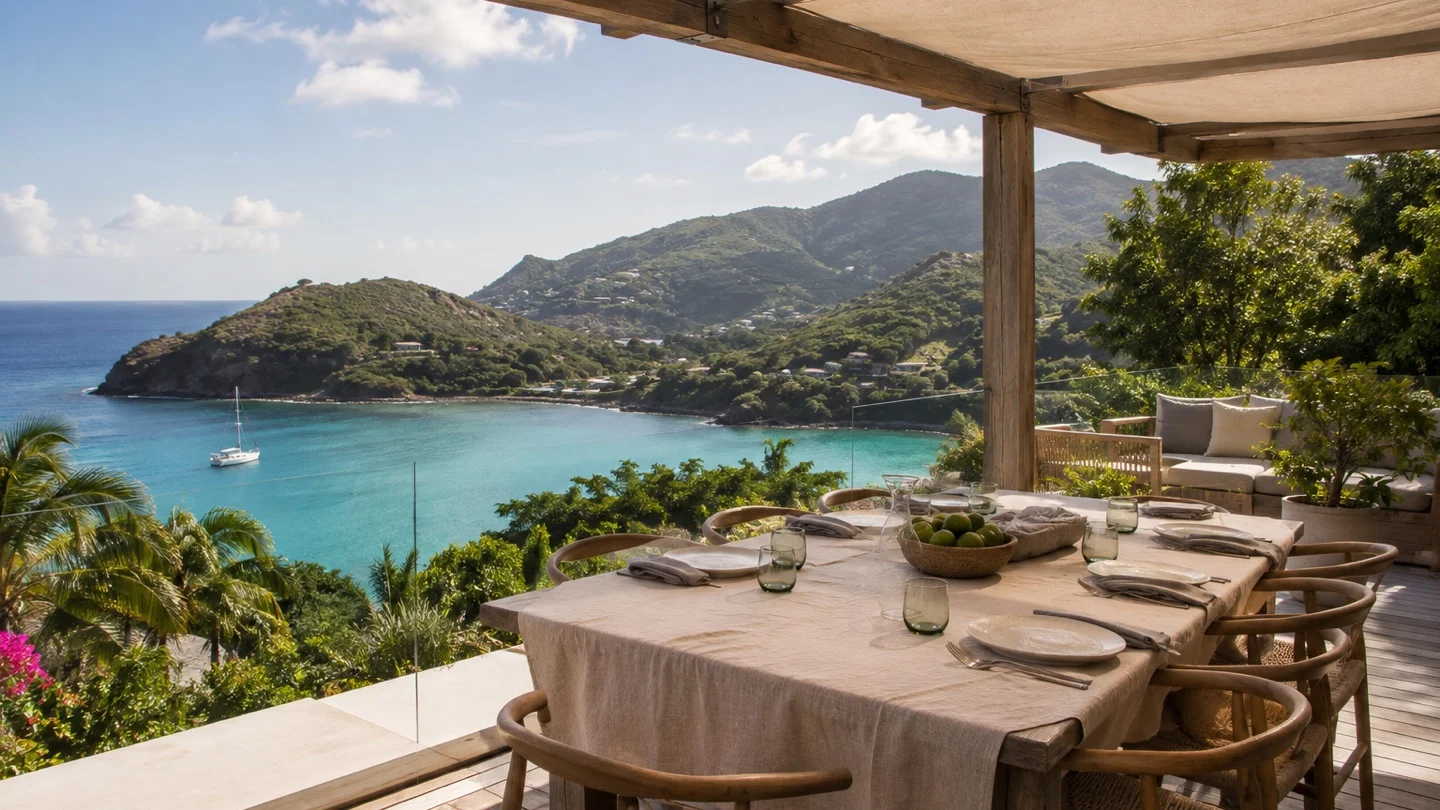

St. Barths
St Barths Is Won or Lost at the Connection
No long haul aircraft lands on St Barths. The runway at Gustaf III is 646 meters, about 2,119 feet, and the largest aircraft ever permitted onto it is a Dash 7 turboprop. Every pilot who flies in holds a specific short takeoff and landing certification, and there is no runway lighting at all, so the airport works from seven in the morning until fifteen minutes after sunset and not a minute beyond. Everything about planning this island follows from those two facts. You arrive through Sint Maarten on a small aircraft or a ferry, against a hard daylight deadline and luggage rules stricter than anything you are used to, and the trip works or fails on how carefully that day is built.
Know before you go
- Fly into SBH, Gustaf III, by way of Sint Maarten. The hop from SXM takes about fifteen minutes, on Winair's nineteen seat Twin Otter or St Barth Commuter's seven seat Grand Caravan.
- The runway 646 meters, 2,119 feet, at 48 feet of elevation. The Dash 7 is the largest aircraft ever permitted here, and every pilot needs a specific short takeoff and landing certification for this airport.
- No night arrivals There is no runway lighting. The airport operates from 07:00 until fifteen minutes after sunset, so an SXM arrival that slips means a night in Sint Maarten. Build hours of daylight into the connection, not minutes.
- The ferry alternative Voyager 3 from Marigot takes an hour, departing 08:50, 16:00 and 18:55 daily. Great Bay from Philipsburg and The Edge from Simpson Bay both take 45 minutes, the latter on Tuesdays, Thursdays and Saturdays at 09:00. Allow one hour to an hour and twenty minutes for checking in.
- Luggage is the trap St Barth Commuter allows 23 kg, 50 lb, checked plus 12 kg, 26 lb, in the cabin. Tradewind's Caribbean shuttle is far stricter, capping everything at 23 kg total per passenger including the cabin bag and personal item, with the personal item no larger than 6 by 9 by 17 inches and all wheeled luggage checked. Unusual items such as golf clubs need notice and are not guaranteed. The official fix for more is buying an extra seat.
- Trip length Seven nights is the minimum at most properties in high season, and fourteen over Christmas, New Year and the Bucket Regatta. Shortening the stay is usually not a choice you are offered.
- Best months December to April. Gustavia averages highs of 83°F in December, 82°F in January and February, 84°F in March and 85°F in April. February is the driest month at 1.8 inches against an annual thirty nine.
- Storm season The Atlantic hurricane season runs 1 June to 30 November, with peak activity from late August into mid October. September is also the warmest month at 88°F and October the wettest at 2.5 inches, so the two calendars sit on top of each other.
- Entry rules St Barthélemy is a French overseas collectivity, so treat the paperwork as its own question rather than assuming your usual European entry covers it. A United States passport needs at least three months of validity plus a return or onward ticket. Some nationalities need a Type C multiple entry French visa specifically endorsed for the overseas territories.
- Money and tax The euro, trading a little above the dollar. A tourist tax of 5 percent applies to accommodation.
- Getting around A small hire car is the norm and effectively required. The island is compact and the roads are steep and narrow, so the constraint is parking in Gustavia and Saint Jean rather than distance.
Build the connection day around daylight, not the timetable
The rule that catches people is simple and unforgiving. Gustaf III has no runway lighting, so it closes fifteen minutes after sunset, and no amount of goodwill gets you in after that. A long haul arrival into Sint Maarten in the late afternoon leaves almost no margin, and the price of losing it is a night in Sint Maarten and a first morning spent recovering the plan. Give the connection hours rather than minutes. Where the timings are tight, the ferry beats an optimistic booking: Great Bay from Philipsburg and The Edge from Simpson Bay each take 45 minutes, Voyager 3 from Marigot takes an hour. It also carries as much luggage as you like, which the aircraft emphatically do not.
The luggage rules are stricter than you think
This is the detail that quietly ruins arrivals. St Barth Commuter is the more generous of the two, at 23 kilograms checked plus 12 in the cabin per person. Tradewind's Caribbean shuttle caps everything at 23 kilograms in total per passenger, and that total includes your cabin bag and your personal item, which itself must fit inside 6 by 9 by 17 inches. All wheeled luggage is checked. Golf clubs and anything else out of the ordinary need advance notice and are not guaranteed to travel. The official fix, and people do use it, is buying an extra seat for the bags. Anyone packing for a week of dinners in Gustavia wants to know this before they pack, not at a counter in Sint Maarten.
High season is mid December to mid April, and the best weeks sell a year out
The festive peak runs 20 December to 5 January and behaves like nothing else in the Caribbean. The best villas go nine to twelve months ahead and are largely gone by the previous May or June, with fourteen night minimums and premiums of 50 to 100 percent over standard high season pricing. The Bucket Regatta, 17 to 21 March in 2027, is the other block that books early, at six to nine months. Ordinary high season weeks, which is most of January through mid April, are far more civilized at four to eight weeks. If you want the island at its best without the festive economics, take late January or February. February is the driest month of the year at 1.8 inches, the highs sit at 82°F, and the houses are available on a human timescale.
Planning brief
Everything on St Barths follows from the arrival and the week. Settle those two and the villa or hotel question becomes straightforward.
- Best suited to: villa stays; long lunches and serious restaurants; families and groups taking a house for a week; sailing weeks; travelers who want a French island rather than a resort island.
- Decisions to settle early: festive dates, which need nine to twelve months; villa against hotel; the Sint Maarten connection and how much daylight it leaves; luggage, and whether an extra seat is needed; the hire car.
- Arrival and routing: SXM to SBH by air in about fifteen minutes, in daylight only; or by ferry from Marigot, Philipsburg or Simpson Bay in 45 minutes to an hour, with checking in an hour or more before.
The house is the easy part
What decides this trip is the day you land: the daylight left when you reach Sint Maarten, and the bags you are carrying when you get there. Give us the dates and the size of the party and we will work backwards from the last flight of the day.
If you are weighing this against a quieter neighbor, our Anguilla guide covers the other end of the same water. Our leisure travel planning handles the villa or hotel, the connection, the luggage and the tables as one job.
From the journal
More on St. Barths: St. Barths: Villa or Hotel?
Is the ferry better than the plane from Sint Maarten?
The plane is quicker and the ferry is more forgiving, so the answer depends on your arrival time and your bags. The hop from SXM takes about fifteen minutes on a nineteen seat Twin Otter or a seven seat Grand Caravan, which is the pleasant version. The ferry takes 45 minutes from Philipsburg or Simpson Bay and an hour from Marigot, with checking in an hour or more beforehand, but it carries whatever luggage you have and it is not bound by the daylight rule the airport lives under. If your long haul flight lands late in the day, take the boat.
How far ahead do I need to book for Christmas and New Year?
Nine to twelve months for the villas worth having, and the best of them are largely gone by the previous May or June. The festive peak runs 20 December to 5 January, carries fourteen night minimums at most properties, and prices at 50 to 100 percent above standard high season. The Bucket Regatta in March is the other early block, at six to nine months. An ordinary high season week is much gentler at four to eight weeks out. If the festive two weeks matter to you, that conversation belongs a full year ahead, not in September.
Do we need to hire a car, and what should we hire?
Yes, and take the smallest thing on the list. The island is compact but the roads are steep, narrow and short of anywhere to leave a vehicle, so the constraint is parking in Gustavia and Saint Jean rather than distance, and a large car turns every dinner into an expedition. A small open car is the local answer and the right one. Book it with the villa or hotel well before you arrive, because the fleet is finite and the festive weeks clear it out, and confirm who is meeting you, since arrivals do not line up neatly with an office being open.
Should we take a villa or a hotel?
A villa if there are more than two of you or the trip is longer than a week, a hotel if it is a short high season stay and you want the service without organizing it. The island is built around villas, which is why the good ones are the thing that books first and why they carry the long minimum stays. A house gives you a kitchen, a pool and privacy, which is most of what people come for. A hotel gives you a beach, a restaurant and someone else running the logistics. Groups almost always regret splitting into hotel rooms.
What is the largest plane that can land at St Barths?
Only small turboprops land at St Barths. The runway at Gustaf III is about 646 meters, so no jets fly in. Scheduled flights use aircraft like the Twin Otter with about 19 seats, and the Dash 7 is the largest ever permitted. Most travelers connect through Sint Maarten. Read our St Barths villa and hotel booking guide.
CONTINUE EXPLORING