

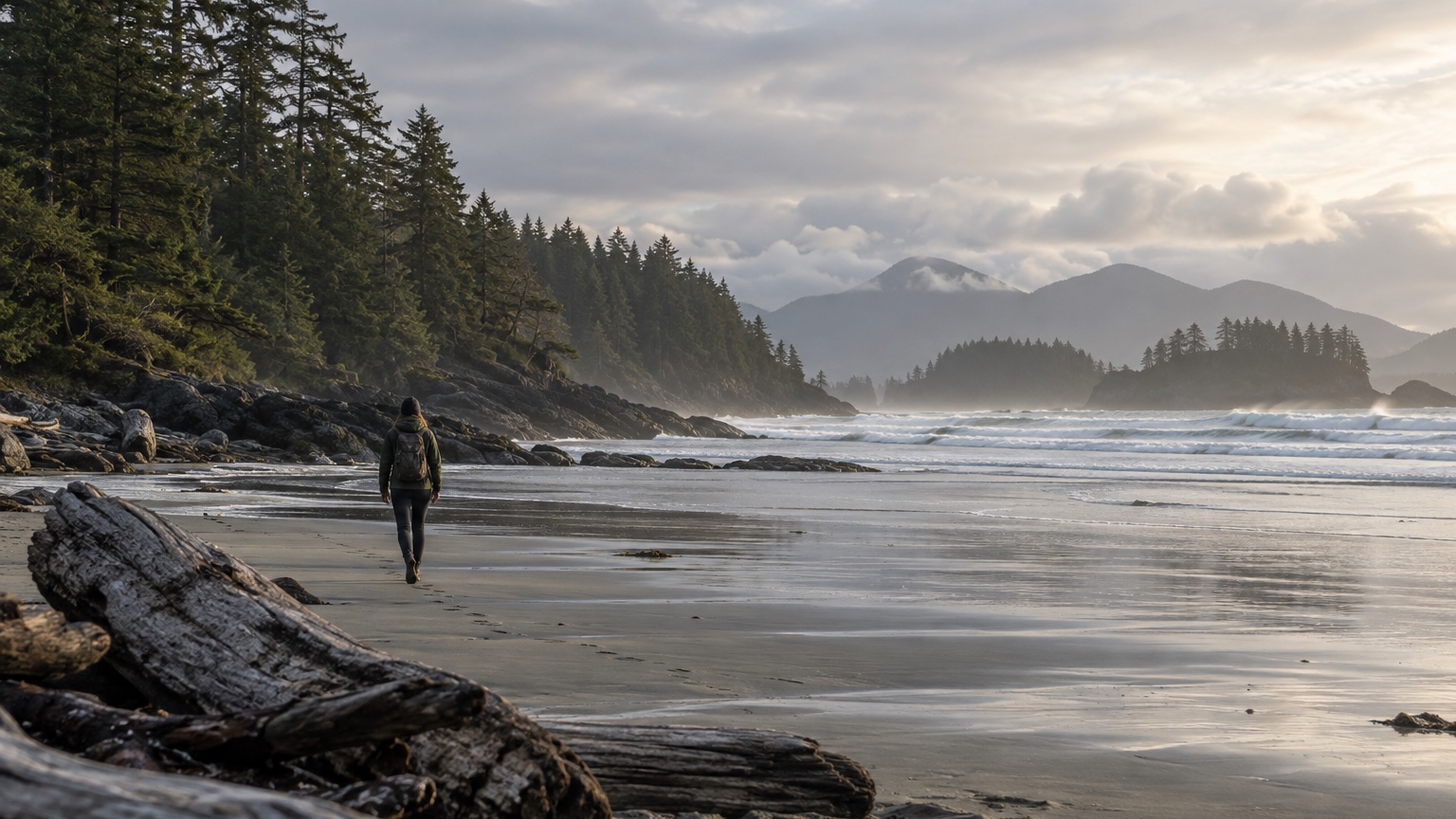

Tofino
Tofino, A Pacific Coast Stay with Weather in the Room
Tofino is a place for ocean, forest, surf, and weather rather than a packed sightseeing route. Long Beach, the old-growth shoreline, small boats, and a good lodge create the structure, while the rest of the day can be left open to the conditions.
Three or four nights gives the coast enough time. Add a night for a private boat, wildlife, surfing, hot springs, or a slower Vancouver Island route.
Know before you go
- Fly into: Tofino-Long Beach Airport, code YAZ, when the seasonal route works. Vancouver, Nanaimo, or Comox can also open a road-based Vancouver Island journey.
- Trip length: Three to four nights for the beaches, forest, one water or wildlife day, and enough room for changing weather.
- Best months: May through September suits lighter weather and more outdoor options. November through February is the storm-watching season, with rougher seas, rain, and a quieter coast.
- Getting around: A car or private transfer is useful. Distances on Vancouver Island are longer than they appear, and local roads are part of the route.
- Money: Canada uses the Canadian dollar. Cards are widely accepted, though smaller operators may prefer advance payment or cash.
- What to reserve: A small lodge, private boat or wildlife guide, surfing or kayaking, and any ferry or air connection early in the season.
Let the weather stay visible
Tofino is better when the forecast is treated as part of the experience. A clear morning can belong to the beach, a wet afternoon to the forest or lodge, and a stormy evening to the shoreline. The itinerary should have enough room to make those choices without disappointment.
Choose the right coast day
Surfing, kayaking, wildlife, fishing, hot springs, and a walk through the coastal forest all ask for different conditions. A local guide can help choose the right day and keep the group away from a plan that looks good on paper but does not fit the sea or weather.
Stay close to the forest and water
The best room in Tofino is one that makes it easy to return from the beach, dry out, and look back toward the same landscape. Pair the coast with Vancouver or a wider Vancouver Island route, but do not let the connection shorten the stay.
Planning brief
Tofino suits travelers who want the Pacific, old-growth forest, small-lodge hospitality, and a trip that can follow the weather rather than a fixed list.
- Best suited to: couples, families with older children, surfers, walkers, photographers, and travelers who enjoy an exposed coastal landscape.
- Settle early: lodge, vehicle or transfer, water guide, restaurant options, and ferry or air connections.
- Useful pairing: combine with Vancouver, Victoria, Whistler, or a wider Vancouver Island route.
Let the coast decide some of the day
Tofino is most rewarding when the route leaves room for rain, wind, tide, and a clear stretch of beach. Tell us whether the focus is surfing, wildlife, forest, food, storm watching, or a wider British Columbia journey.
Our luxury leisure travel planning can arrange the lodge, private guides, transfers, water days, ferry or air connections, and the wider Vancouver Island route.
How many nights should we spend in Tofino?
Three nights works for the beaches, forest, and one water or wildlife day. Four nights gives the weather more room and makes a Vancouver Island connection feel more worthwhile.
When is the best time to visit Tofino?
May through September brings more reliable outdoor conditions. November through February is the storm-watching season, with more rain and rougher seas but a quieter coast.
Do we need a car in Tofino?
A car or private transfer is useful, especially when the trip includes Vancouver Island. The roads take time, and local transport is not a substitute for a fully flexible route.
What can we do in Tofino if it rains?
Rain is part of the coast. Choose a forest walk, a guide-led water activity when conditions allow, a long meal, a spa or lodge afternoon, and a shoreline walk when the weather shifts.
CONTINUE EXPLORING