


Tulum
The Only Maya City Built On The Sea
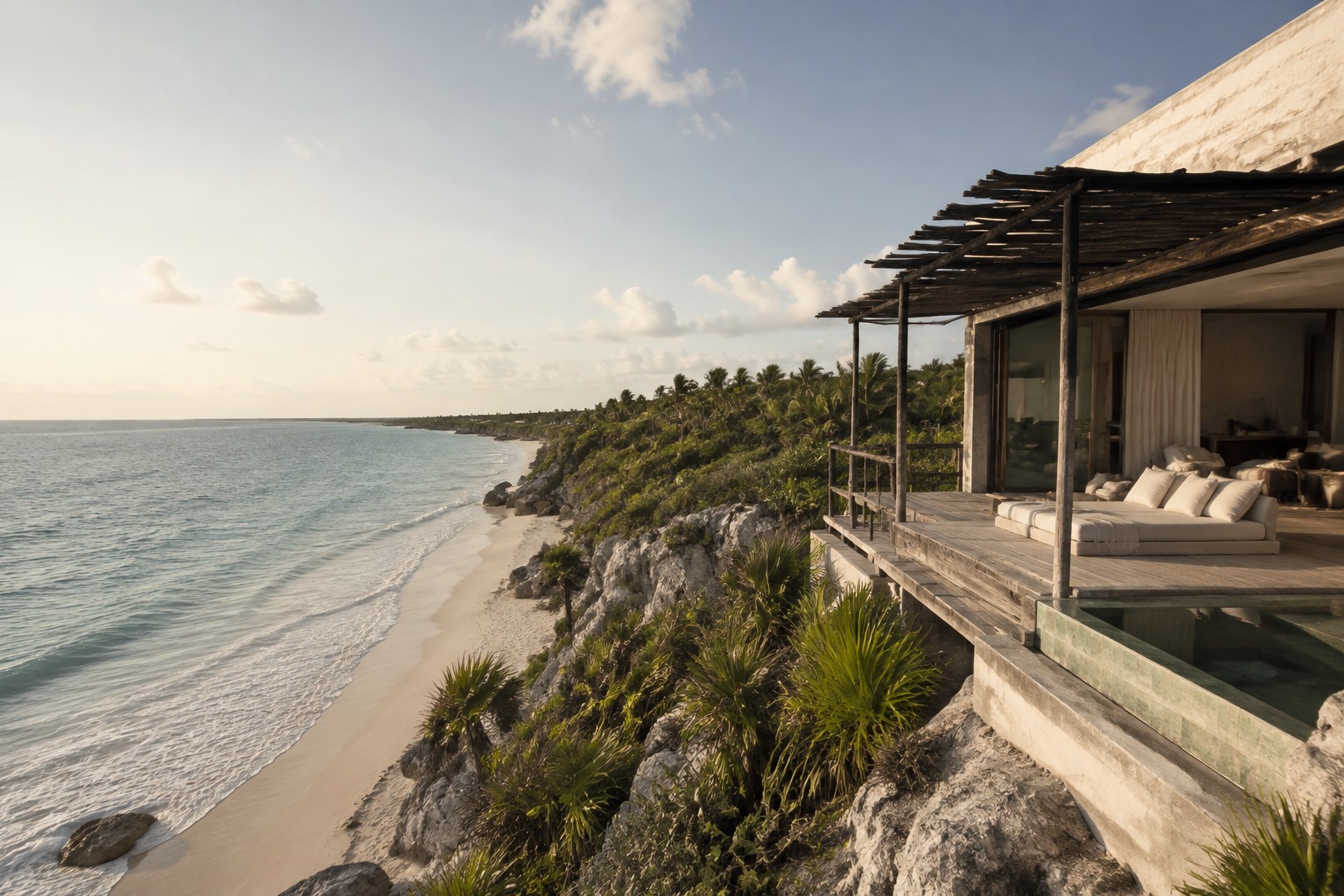
The Maya built inland, almost always, which is what makes Tulum unusual: a walled trading city on a limestone cliff directly above the Caribbean, occupied when the Spanish arrived and abandoned soon after. That is the postcard. The town that grew up around it is a stranger thing, a single beach road threaded through jungle where a series of small hotels have built something genuinely original, and where the electricity supply, the water table and the seaweed are all real considerations rather than footnotes. Tulum rewards knowing what you are booking.
The planning decision: the beach road, or somewhere with infrastructure
The Zona Hotelera is a narrow strip between the sea and the lagoon, reached by one road, with limited grid power. Several of the best known properties run on generators and solar, some have no air conditioning by design, and the aesthetic that makes them photograph beautifully is the same aesthetic that means a hot night is a hot night. That is a wonderful trade for the right traveller and a miserable one for the wrong one. If you want reliable cooling, a proper spa, a kids club and a beach that is maintained daily, the Riviera Maya north of here does all of it better, and Tulum becomes a day trip. Decide which of those two people you are before anyone books.
Season, and the sargassum conversation
December through April is the dry season and the right window: warm, low humidity, and the months when the sargassum is usually lightest. From roughly May into October, drifts of that brown seaweed arrive on the east facing Caribbean beaches. Some years are mild, some are severe, it varies week to week and no hotel can promise a clear beach. Anyone who tells you otherwise is selling. The better properties rake daily and the water beyond the line is fine, but it is the single most common disappointment on this coast and it should be discussed before you book rather than discovered on arrival. Hurricane season runs June through November.
Where to base, and getting in
Tulum now has its own international airport, opened at the end of 2023, which has cut the transfer time considerably for anyone able to fly into it. Cancun remains the larger hub, around ninety minutes north by road. Tulum Pueblo, inland from the beach, is where the town actually lives and where the restaurants are cheaper and often better. The beach road congests badly in peak weeks. Sian Ka'an, the biosphere reserve, begins immediately south and is the reason the strip stops where it does.
Stay strategy
Nomade and Be Tulum are the properties that defined the look, low and wooden and open to the sea. Azulik is the one people either love or find unbearable, with treehouse suites, no electricity in the rooms and no glass in the windows. Habitas covers the same territory with more comfort. Further north, Chable Maroma and Rosewood Mayakoba are a different category entirely, full service and reliably cooled, forty five minutes to an hour and a quarter away. For groups, the villa market along the beach road is strong and gives you the aesthetic with your own generator.
When to begin
Six months for the December through April window, and longer for Christmas, New Year and the weeks around Easter, when the whole coast sells out. Restaurant reservations at the handful of serious kitchens are the other constraint and are released a month or so ahead. Cenote visits are better arranged privately and early, because the well known ones take large numbers from mid morning.
Four experiences worth building the days around
- The ruins at opening, before the heat and the coaches, which takes about an hour and is worth doing properly with someone who can read it.
- A cenote morning, ideally at one of the quieter ones rather than the famous ones, swimming in fresh water in a collapsed limestone cave.
- A boat through Sian Ka'an, into the lagoons and the mangrove channels, which is the best half day on this coast.
- Dinner in Tulum Pueblo rather than on the beach road, which is where the cooking has actually got interesting.
Who this trip suits
Tulum suits couples, design travellers and wellness trips above everyone. It suits groups taking a villa. It suits anyone who wants the Yucatan without a resort. And it works as three or four nights inside a longer Mexican route with Mexico City at the front.
When another plan may fit better
Families who want a resort with everything on site are better served by the Riviera Maya, and it is not close. Anyone travelling May through October who cannot tolerate the seaweed risk should look at the Pacific side, where Punta Mita and Los Cabos have no sargassum at all. And anyone who needs air conditioning as a condition rather than a preference should say so early, because several of the best known Tulum hotels do not have it.
Plan it with one accountable advisor
Tell us your month and how much rusticity you actually want, and we will be straight with you about the beach, the power and the seaweed before anything is held. Our luxury leisure travel planning covers it, and our group travel planning handles villa weeks.
Is there seaweed in Tulum?
From roughly May into October, yes, and the severity changes year to year and week to week. No hotel can promise you a clear beach and anyone who does is selling. December through April is the window with the least of it. This is the single most common disappointment on this coast and it is worth discussing before you book.
Do Tulum hotels have air conditioning?
Several of the best known ones do not, by design. The beach road has limited grid power and a number of properties run on generators and solar. That is a wonderful trade for the right traveller and a miserable one for the wrong one, so it should be settled before anything is held.
How many nights should you spend in Tulum?
Three or four, usually inside a longer Mexican trip rather than as the whole holiday. It suits couples, design travellers and wellness stays. Families wanting a full service resort are better served on the Riviera Maya to the north.
Should you fly into Tulum or Cancun?
Tulum has its own international airport now, which cuts the transfer considerably if the schedule works. Cancun remains the larger hub with far more flights, about ninety minutes north by road.
Continue Exploring