


Warsaw
Warsaw Is a City That Refuses a Single Story
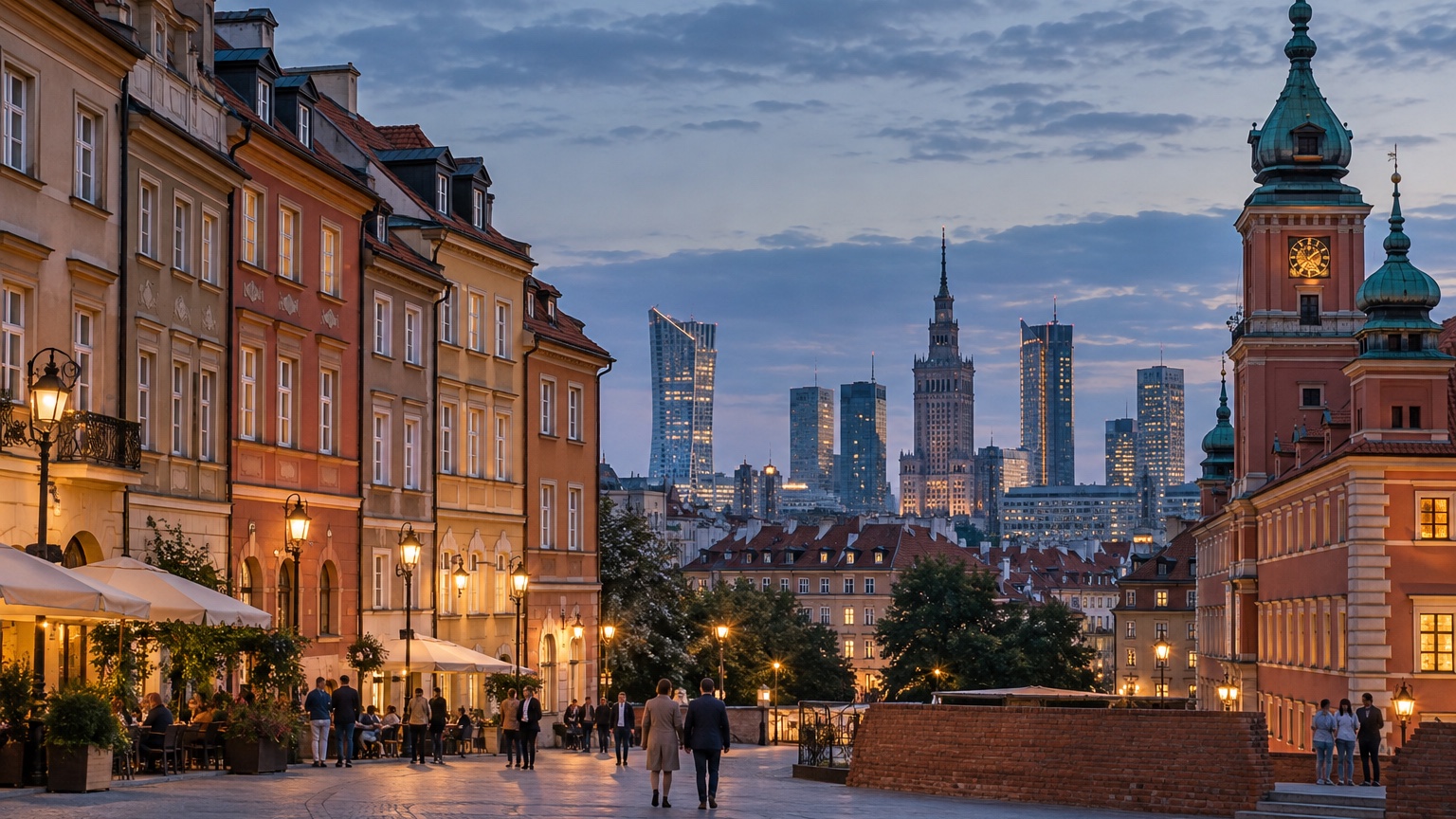
Warsaw asks for a little more attention than a postcard city. The restored old town, nineteenth-century avenues, modern towers, riverfront, and postwar neighborhoods do not form one polished picture, and that is the point. The city’s identity comes from what survived, what was rebuilt, and what keeps changing.
Three nights gives a first visit enough time to see the old town, one serious museum, the river or parks, and the contemporary city beyond the historic center. Four nights creates room for food, design, and a guide-led route through the city’s layered history.
Know before you go
- Fly into: Warsaw Chopin Airport, code WAW, for the most convenient city arrival, or Warsaw Modlin when the flight schedule requires it. Confirm the airport before arranging the transfer.
- Trip length: Three nights for a first stay. Four nights for museums, neighborhoods, food, and a slower look at the city’s postwar architecture.
- Best months: May through September for parks and the river. September and early October are especially good for walking. December brings seasonal atmosphere with short days.
- Getting around: The old town and central route can be walked in sections. Trams, metro, and taxis cover the larger city.
- Money: Poland uses the złoty. Cards are widely accepted, but keep local currency for smaller purchases and markets.
- What to reserve: The museum that anchors the visit, a restaurant with a clear point of view, and a private guide for the history or architecture route.
Let the old town be the first chapter
The restored old town is beautiful, but it should be the beginning rather than the final word. Walk the square and castle area, then continue toward the river and the streets beyond the tourist center. Warsaw becomes more legible when the restored historic fabric sits beside the modern city and the places shaped by reconstruction.
A guide can help the route stay honest. The city’s history is too important to flatten into a few dates, and the strongest visits make space for silence as well as explanation.
Choose the museum that changes your view
Warsaw’s museums can give the trip a clear center, whether the interest is Polish Jewish history, the Second World War, modern art, Chopin, or the city itself. Choose one anchor and allow time afterward. A museum visit that changes how you read the streets is worth more than four hurried interiors.
Give the contemporary city its share
Warsaw has a strong present tense in restaurants, design, galleries, and new public spaces. The river and parks offer a more relaxed way to move through the city, particularly after a day of historical material. Ask for a food or architecture route that links the newer districts with the older ones rather than treating them as separate worlds.
Warsaw pairs well with Kraków once that guide is live, Prague, or a longer Central European route. The contrast between Warsaw and Kraków is worth preserving rather than smoothing out.
Planning brief
Warsaw suits travelers who want history, contemporary food and design, and a city with a more complicated point of view.
- Best suited to: culture travelers, couples, families with older children, business extensions, and repeat visitors to Central Europe.
- Settle early: hotel neighborhood, museum anchor, guide, airport, and restaurant sequence.
- Useful pairing: combine with Kraków, Prague, Budapest, or a wider Poland route.
Give Warsaw time to contradict the first impression
The city is strongest when the route includes both memory and ordinary life. Tell us whether the trip is about history, food, design, family travel, or a wider journey through Poland.
Our luxury leisure travel planning can arrange the hotel, private guiding, museum timing, dining, airport transfers, and onward rail route.
How many nights should we spend in Warsaw?
Three nights gives a first visit enough time for the old town, one major museum, a neighborhood beyond the center, and several good meals. Four nights is better when the trip includes a deeper history or architecture route.
Is Warsaw worth visiting if we are already going to Kraków?
Yes. Kraków offers a more concentrated historic center, while Warsaw shows reconstruction, modern urban life, and a different scale. The cities complement each other rather than repeat each other. Give both enough time to be destinations, not overnight stops.
Which area is best for a first stay in Warsaw?
Central Warsaw is the most practical base for museums, restaurants, and transport. The old town suits travelers who want the historic setting outside the door, while neighborhoods farther south or west can feel more local and design-led. Choose according to the evening life you want.
Do we need a guide to understand Warsaw?
A guide is particularly valuable for the old town, the history of reconstruction, and museums connected with the city’s difficult twentieth century. You do not need a guide for every day. One thoughtful route can give the rest of the trip a more useful context.
CONTINUE EXPLORING