

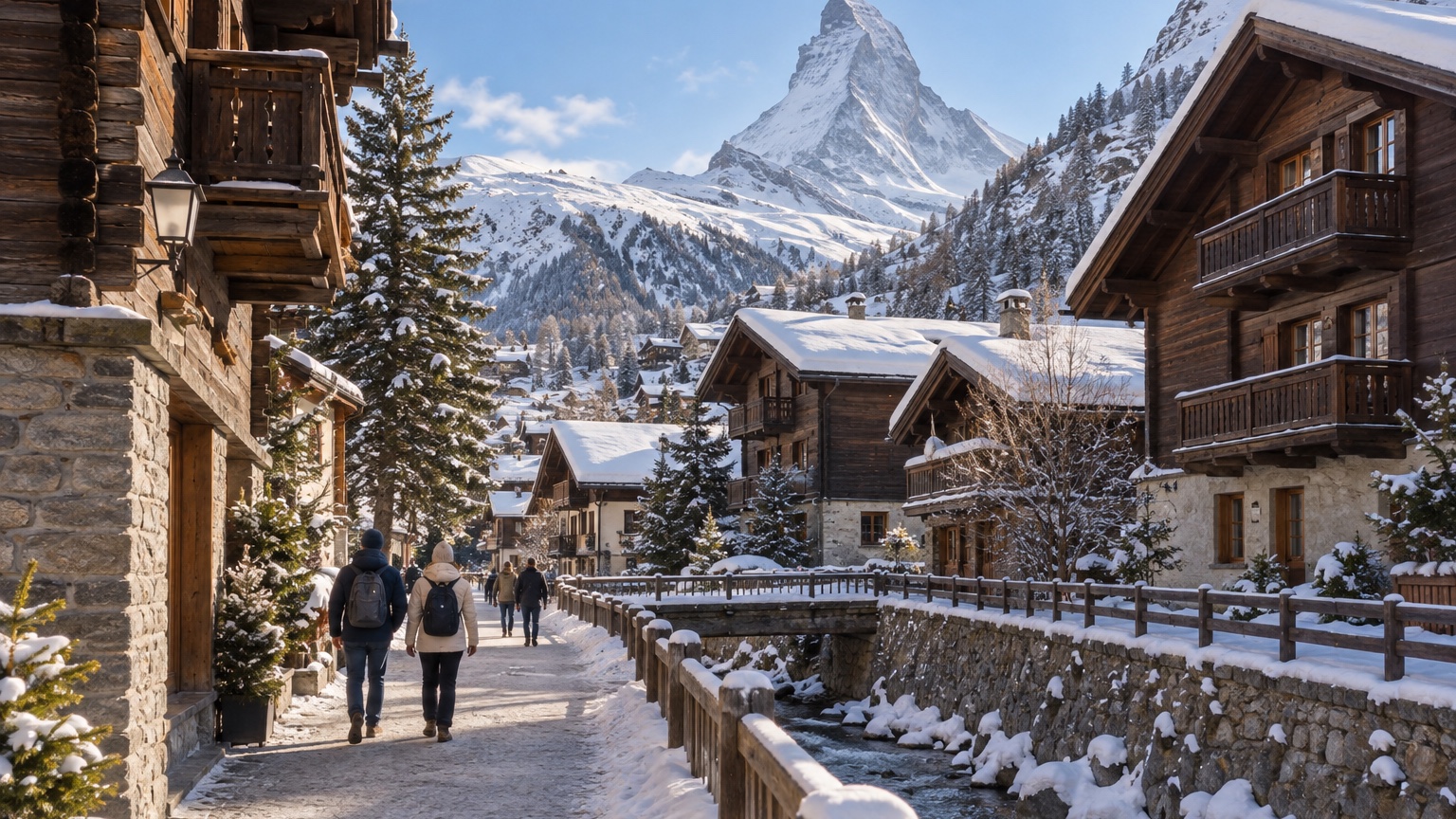

Zermatt
Zermatt, A Mountain Town Under the Matterhorn
Zermatt earns its place on a Swiss itinerary through the mountain itself, but the town has enough character to make a stay feel like more than a view. Timber chalets, narrow lanes, mountain railways, and a serious culture of walking and skiing all begin close to the center.
Three or four nights is a good starting point. It gives the weather time to clear, allows one strong mountain day, and leaves space for a meal or a walk that is not dependent on the Matterhorn appearing on schedule.
Know before you go
- Fly into: Geneva or Zürich, followed by a train to Zermatt. The final approach is by rail from Täsch, as Zermatt is car-free.
- Trip length: Three to four nights for a first visit. Add time for skiing, serious walking, a family trip, or a longer Swiss rail route.
- Best months: January through March for winter sports. June through September is best for walking and lifts. April, May, October, and November are quieter and more seasonal.
- Getting around: The village is walked, with electric taxis and mountain railways for longer distances. Pack light enough for the train connection and local paths.
- Money: Switzerland uses the Swiss franc. Cards are widely accepted, and high-season prices are substantial.
- What to reserve: A room with the right view, a private mountain guide, ski instruction, lift plans, and restaurants that suit the evenings after a full day outside.
Let the town settle in
Zermatt is more pleasant when the first day is light. Walk the old lanes, find the view toward the mountain, and let the town’s older farming history sit alongside the hotels and mountain railways. The best base makes it easy to return without needing a car.
Take the mountain seriously
The Matterhorn is the signature, but Zermatt’s wider terrain is what gives the trip depth. Skiers can choose from a large connected area, while walkers have lifts, high paths, and valley routes that suit different abilities. A private guide is worth considering when the group has mixed experience or wants a day beyond the obvious route.
Mountain weather changes quickly. Keep one flexible day in the plan and do not promise a particular view, lift, or trail until conditions are known.
Make it one chapter of Switzerland
Zermatt can follow Lake Geneva, Gstaad, or the Bernese Oberland. It also works as the alpine center of a rail journey, with Verbier offering a different mountain personality when a second base is genuinely useful.
Planning brief
Zermatt suits travelers who want a classic Swiss mountain setting, strong infrastructure, and the chance to build a serious outdoor day around a memorable town.
- Best suited to: couples, families, skiers, walkers, photographers, and travelers who value a car-free village.
- Settle early: the train connection, hotel location, mountain guide, lift plans, and dinner reservations.
- Useful pairing: combine with Lake Geneva, Gstaad, Verbier, or a wider Swiss rail route.
Give the mountain enough weather
Zermatt rewards an itinerary that leaves room for the mountain to appear on its own terms. Tell us whether the trip is about skiing, walking, family time, views, food, or a wider Swiss route.
Our luxury leisure travel planning can arrange the hotel, rail journey, private mountain guides, transfers, restaurants, and the rest of Switzerland.
How many nights should we spend in Zermatt?
Three nights works for the town and one mountain day. Four nights is better when the trip depends on clear weather, skiing, walking, or a family schedule.
How do we reach car-free Zermatt?
Travel by train from Geneva or Zürich to Täsch, then continue by the short shuttle train into Zermatt. A private transfer can simplify the airport connection and luggage handling.
When is the best time to visit Zermatt?
January through March suits winter sports, while June through September is best for walking and mountain lifts. The shoulder seasons are quieter but more dependent on local opening dates and weather.
Do we need a private mountain guide?
It is not essential for every traveler, but it is valuable for mixed-ability groups, first-time visitors, serious walking, off-piste skiing, or anyone who wants the mountain day shaped around conditions.
CONTINUE EXPLORING