

Morocco Destination Guide

Morocco in the Right Order
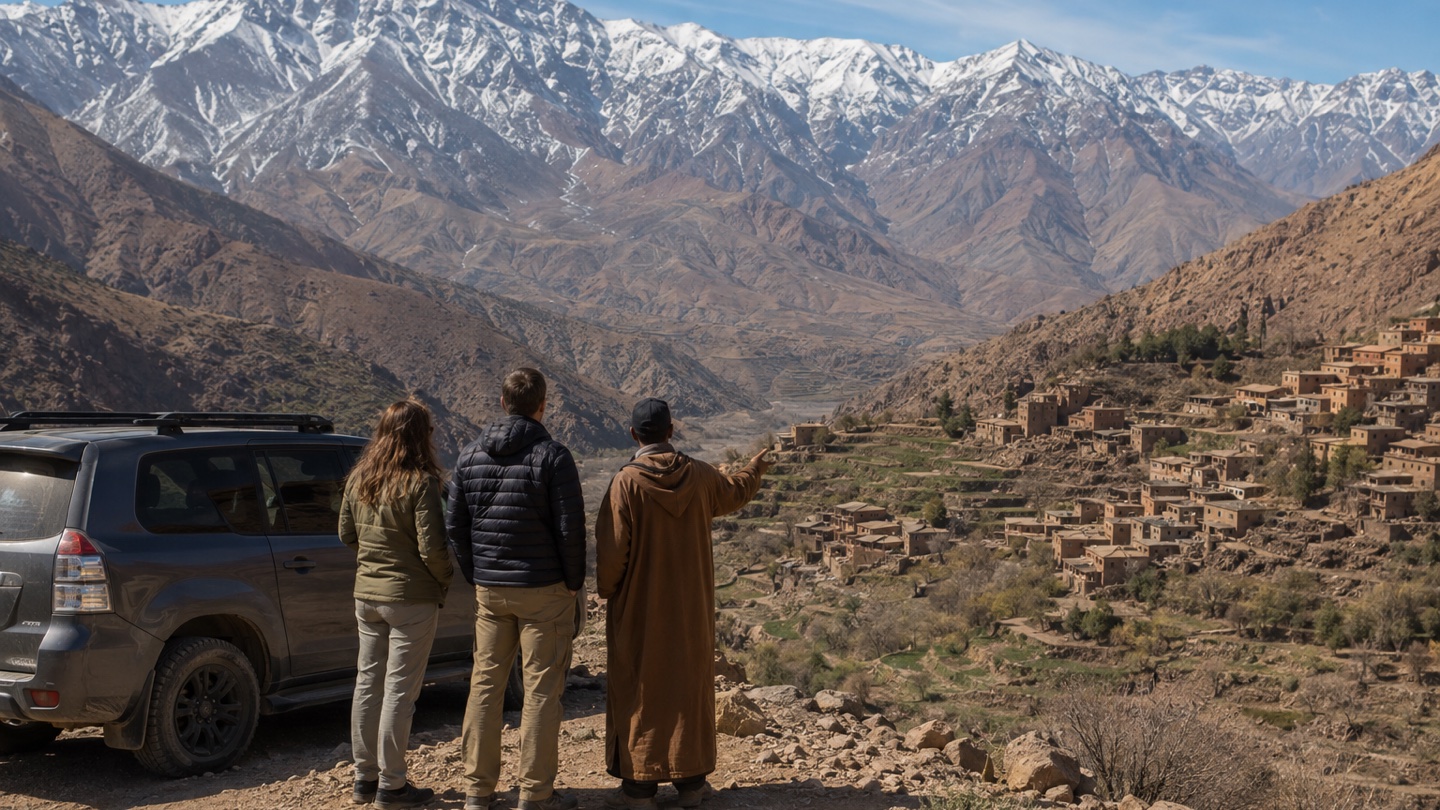
Morocco is a sequence, not a single stop. Marrakech supplies the noise and the theater, the Atlas Mountains the silence an hour later, the Sahara the night sky, and Fes the deep end of the country's craft and history. First-timers usually try to drive all of it in a week, and that is the most common planning mistake. The country is bigger than the map suggests, and the roads are slower than the distances imply.
When Morocco is at its best
Spring and autumn are the answer. March through May and late September through November bring warm days, cool nights, and the desert at its most comfortable. July and August push Marrakech well past 100 degrees, which is when Essaouira's breezy coast or the higher Atlas Mountains offer relief from the afternoon heat. Winter is underrated: sunny days and thin crowds, though desert camps drop near freezing after dark and older riads can be chilly, so we choose properties with real heating. Ramadan shifts each year and changes the country's rhythm; we plan around it rather than through it.
The desert is farther than it looks
The great dunes are nowhere near Marrakech. Erg Chebbi sits roughly nine hours' drive to the east, Erg Chigaga even deeper into the southwest, and doing either as a rushed overnight ruins the point of going. We build the desert as two nights minimum, broken by the Atlas passes and the Draa or Dades valleys, and when the calendar is tight we shortcut a leg by air. Ten to twelve days makes the classic loop of Marrakech, mountains, dunes, and Fes feel unhurried. With a week or less, we keep you to Marrakech and the Atlas and save the rest for a return. Fes deserves two nights of its own, and the fast train between Tangier and Casablanca opens up the north when it calls to you.
Riads, palaces, and who each is for
Royal Mansour Marrakech remains the standard: a small city of private riads built by royal commission, with craftsmanship you will stop mid-sentence to touch. La Mamounia, a Leading Hotels of the World member, holds the storied garden address by the medina walls. Amanjena, in palm groves just outside town, is the calm one. In the Atlas, Kasbah Tamadot above Asni works especially well for couples seeking views and quiet. On timing, be earlier than feels necessary: the marquee suites and the best private riads go four to six months ahead for spring and autumn, and the festive weeks in Marrakech sell out well before that.
Worth noting for the next two years: Royal Mansour is now a collection, with Casablanca opened in late 2024 and Tamuda Bay following on the northern coast in 2025. Opening years tend to be generous ones, and both give Morocco itineraries a new coastal chapter.
Planning brief
Morocco is a sequence: select a realistic route, protect the long transfer days and give the desert more than a rushed overnight.
- Best suited to: culture and craft; desert and mountains; private touring; food-led journeys.
- Decisions to settle early: trip length; route direction; desert priority; driver and guide team; season.
- Arrival and routing: Marrakech and Casablanca are common gateways; airport operations and overland routing require date-specific confirmation.
Start with a conversation
Tell us how many days you have and whether the desert is essential this time. We will come back with the right loop, the riads that fit who you are, and an experienced driver and guide team.
Begin with the wider route, then use our Marrakech guide to decide between the medina and the Palmeraie. Our luxury leisure travel planning coordinates the cities, desert, mountains, private drivers, and hotel sequence.