
Napa Valley Destination Guide

Napa Valley, on a Winemaker's Calendar
Napa is thirty miles long, holds more than four hundred wineries, and runs almost entirely on appointments. That last part is what first timers miss. The valley's best rooms, tables, and tastings are invitation shaped, and the difference between a good trip and a great one is almost never money. It is timing, and knowing who to call. Seasonal timing matters as much as the wine list when planning Napa Valley.
Harvest, mustard, and the quiet months
Crush runs from roughly August through October, and it is the valley at full voltage: fruit coming in at dawn, fermentation on the air, winemakers running on espresso. It is also the busiest season, and the top inns want to be booked six months out for September and October weekends. If you want harvest energy without harvest crowds, aim for late August or midweek dates.
The rest of the year has its own arguments. Late spring, May and June, is green, warm, and calmer. February and March bring the mustard bloom between the vines, soft rates, and winemakers with actual time to sit with you, which is when the best conversations happen. December is the valley's quiet secret: cabernet by the fireplace, and the easiest reservations of the year at the famous tables. July and August run hot on the valley floor, which is why mornings start early and pools matter.
The logistics that shape the trip
Fly into San Francisco and count on ninety minutes to two hours to the valley, longer on Friday afternoons. Hire a driver; this is no place to count your own pours, and tastings are appointment only almost everywhere now. Three nights is the right length, two wineries a day the right pace, one in the morning and one after lunch. Napa pairs naturally with a few nights in San Francisco first, with Healdsburg and Sonoma for a looser wine culture, or with the Carmel coast if you want the ocean on the back end. If a particular table is the point of the trip, the French Laundry among them, tell us early; the famous books release on a schedule and the good slots go inside a day.
Where to stay
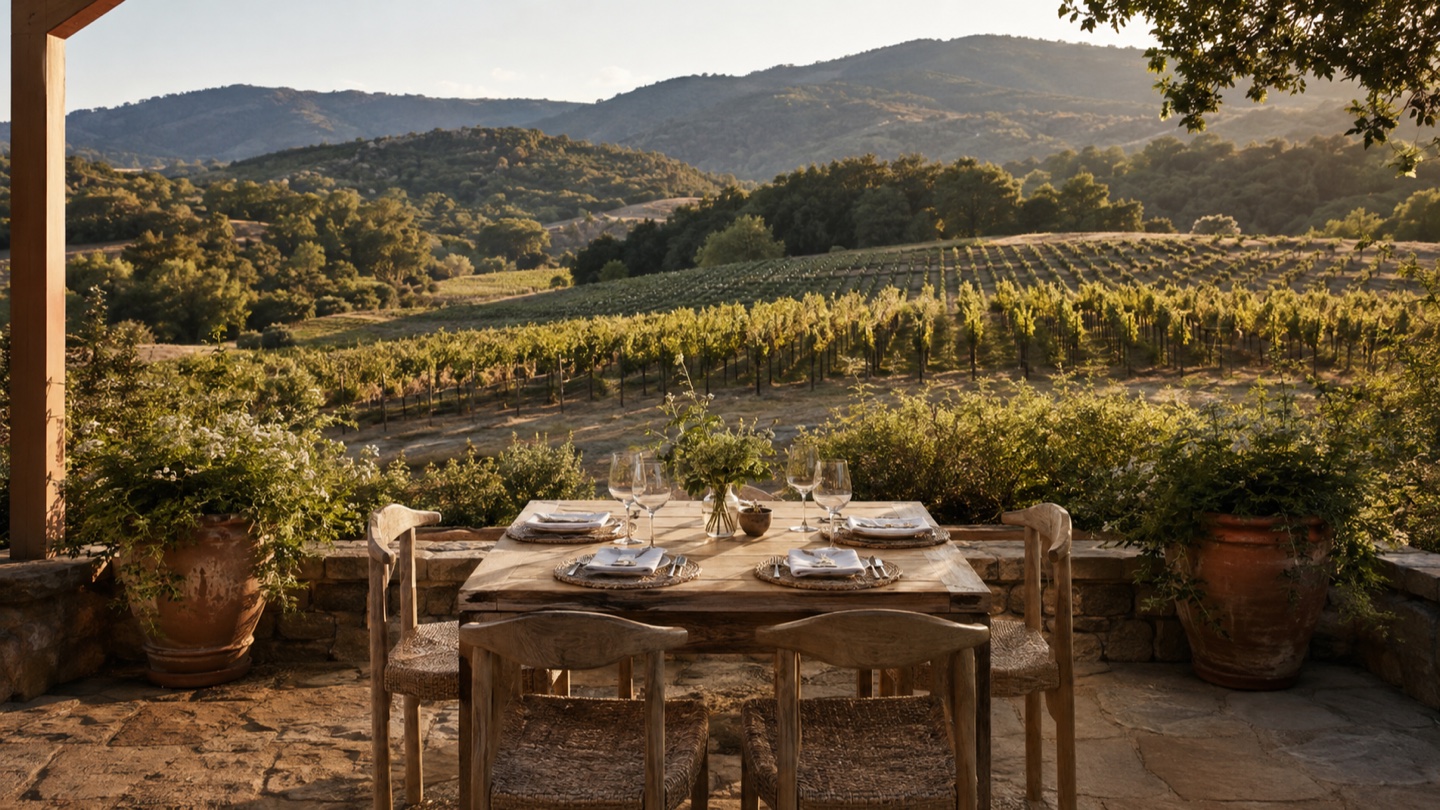
Auberge du Soleil, on the Rutherford hillside, is the romantic default for a reason: the terrace at sunset above the valley floor is the image most people are chasing. Meadowood is the estate alternative, 250 private acres above St. Helena with croquet lawns and a Relais & Chateaux pedigree; it is open and operating while the rebuild from the 2020 Glass Fire continues at the edges of the property. The Four Seasons Napa Valley in Calistoga is a strong choice for first trips, because it sits inside a working winery and crush happens on property. Each suits a different trip, and we will tell you honestly which one is yours.
Planning brief
Base selection matters because winery appointments and dining are spread along the valley. Build each day geographically, limit tasting stops, and reserve a driver before peak weekends fill.
- Best suited to: wine-focused weekends; culinary travel; anniversaries; small celebrations.
- Decisions to settle early: season and harvest; hotel position; appointment geography; driver strategy; restaurant timing.
- Arrival and routing: Commercial arrivals generally use Sonoma County, Oakland, Sacramento or San Francisco; Napa County Airport is primarily general aviation, so confirm the aircraft and transfer plan.
Tell us what you drink
Cabernet obsessive, sparkling curious, or mostly here for the food. Give us your dates and your tastes and we will come back with the rooms, drivers and two or three carefully selected tastings coordinated as one trip. Harvest dates move with the vintage, so if crush is the point, we build in margin.
Napa works particularly well as part of a milestone journey planned around food and private access. Our luxury leisure travel planning coordinates the hotel, driver, tastings, and dining.