

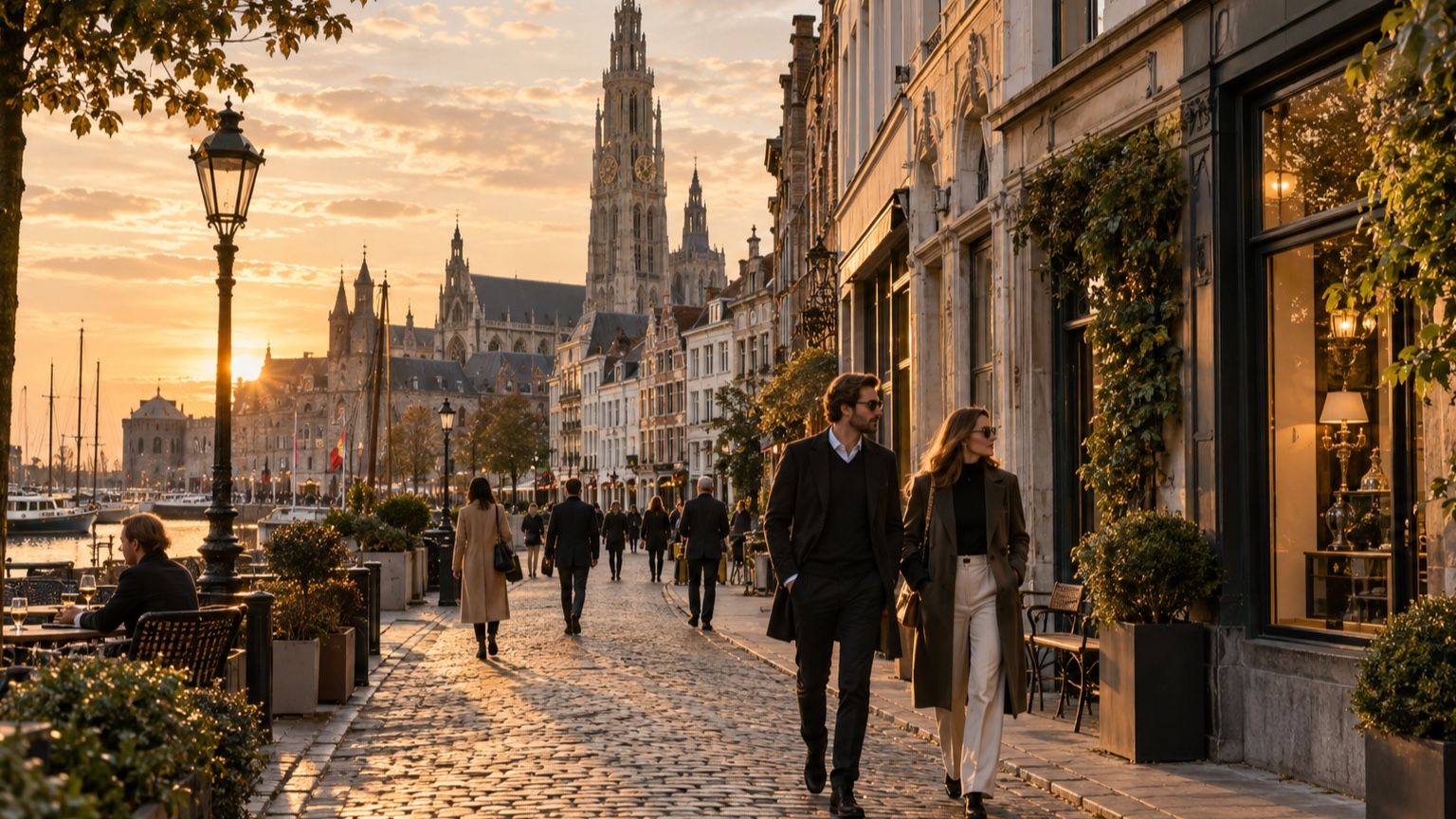

Antwerp
Antwerp Has More Than One Face
Antwerp is a port city, a fashion city, a diamond city, and a place with a serious appetite. It can feel grand around the cathedral and Central Station, then rougher and more contemporary a few streets later. That contrast is the reason to stay. Antwerp is less polished than Bruges and less ceremonious than Brussels, but it has more creative friction, and the best days allow both its history and its present tense to appear.
Plan around neighborhoods rather than a list of sights. The old center, the riverfront, Het Zuid, the fashion quarter, and Zurenborg each ask for a different pace. One thoughtful museum, a good lunch, and enough time to walk between them will tell you more than a schedule that crosses the city every hour.
Know before you go
- Arrive by: Brussels Airport has direct trains to Antwerp in about 30 minutes. Antwerp-Central is one of the city’s great arrival buildings and puts you close to the center.
- Trip length: Three nights gives the city room to show its different sides. Two nights works for a focused art, fashion, or food stay.
- Best months: May, June, September, and early October are strongest for walking and outdoor tables. Winter works for museums, shopping, and restaurants, with shorter days.
- Getting around: The center is walkable. Trams and taxis help with longer neighborhood moves, particularly when a day includes Het Zuid, the port, and Zurenborg.
- What to reserve: The museum that anchors the trip, a restaurant with a small room, and any private fashion, architecture, or food guide. Antwerp’s best shopping and dining is not always obvious from the main street.
- Dress: Antwerp rewards clothes that can move between a museum, a good lunch, and an evening bar. The city is stylish without demanding ceremony.
Let the station set the tone
Antwerp-Central is more than a transport hub. Its stone, iron, and glass make the first few minutes feel properly theatrical, then the city becomes more layered as you walk toward the old center. The route passes through streets with very different histories, which is a useful introduction to Antwerp’s habit of putting wealth, work, art, and reinvention close together.
The cathedral and Grote Markt deserve time, but do not let the historic core become the whole trip. Walk toward the river and notice how the scale changes. The Scheldt is part of Antwerp’s character, even when the city is being discussed through fashion or painting.
Build the art day around Rubens and the present
Rubens belongs here, but Antwerp’s art story is larger than a single master. The Rubenshuis, when open and relevant to the trip, makes the connection between domestic life, studio practice, and public ambition. The cathedral and the Royal Museum of Fine Arts offer different ways into the city’s collection. A local guide can keep the route from becoming a parade of names and dates.
Balance the historical material with contemporary design in Het Zuid or the fashion quarter. Antwerp is most itself when old stone and new work sit in the same afternoon.
Eat where the neighborhood has a point of view
Antwerp’s dining scene makes the city easy to return to. The center has dependable classics, while Het Zuid and the streets around the south offer a broader range of modern rooms, wine bars, and small kitchens. Ask for a sequence rather than one famous reservation. A strong lunch, a pause, and a later drink can be more satisfying than three formal meals.
For a longer Belgium route, pair Antwerp with Brussels once that guide is live, or with Amsterdam by train. The contrast is useful: Antwerp is smaller than Amsterdam and more commercially minded than Bruges, with design and food woven into everyday streets.
Planning brief
Antwerp is a strong choice when a Belgium trip needs more creative energy and fewer polished edges.
- Best suited to: art and design travelers, couples, food-focused weekends, fashion clients, and repeat visitors to Belgium.
- Settle early: the neighborhood where you want to sleep, the museum or fashion focus, and one meal that gives the city a proper sense of place.
- Useful pairing: combine with Brussels and Bruges for a compact Belgium itinerary, or continue by rail to Amsterdam.
Antwerp is better when the day has room around it
Leave space for the shop that catches your eye, the extra gallery, and the long table that turns lunch into the center of the day. Tell us whether Antwerp is about art, fashion, food, or the city itself.
Our luxury leisure travel planning can shape the hotel, museum visits, private shopping, dining, and rail connections around the version of Antwerp you actually want to experience.
How many nights should we spend in Antwerp?
Three nights gives you the historic center, one serious museum, the river, a neighborhood such as Het Zuid, and enough time for Antwerp’s restaurants and shops. Two nights works for a focused weekend, particularly if fashion, design, or food is the main reason for coming.
Is Antwerp a good alternative to Bruges?
It depends on the trip. Bruges is smaller, quieter, and built around medieval streets and canals. Antwerp has more contemporary culture, fashion, restaurants, port history, and creative energy. Choose Antwerp when you want a city with a little friction and a broader evening life.
Can we visit Antwerp as a day trip from Brussels?
Yes. Direct trains make the journey easy and Antwerp-Central is close to the city center. A day trip works for the cathedral, a museum, lunch, and a walk toward the river. Staying two or three nights is better if you want Het Zuid, Zurenborg, shopping, and the dining scene without rushing.
What should we book ahead in Antwerp?
Reserve the museum or private guide that anchors the visit, then book the restaurant that matters most. The city has many good options, but small dining rooms fill on Friday and Saturday. Fashion appointments, private shopping, and any port or architecture visit should also be set before arrival.
CONTINUE EXPLORING