

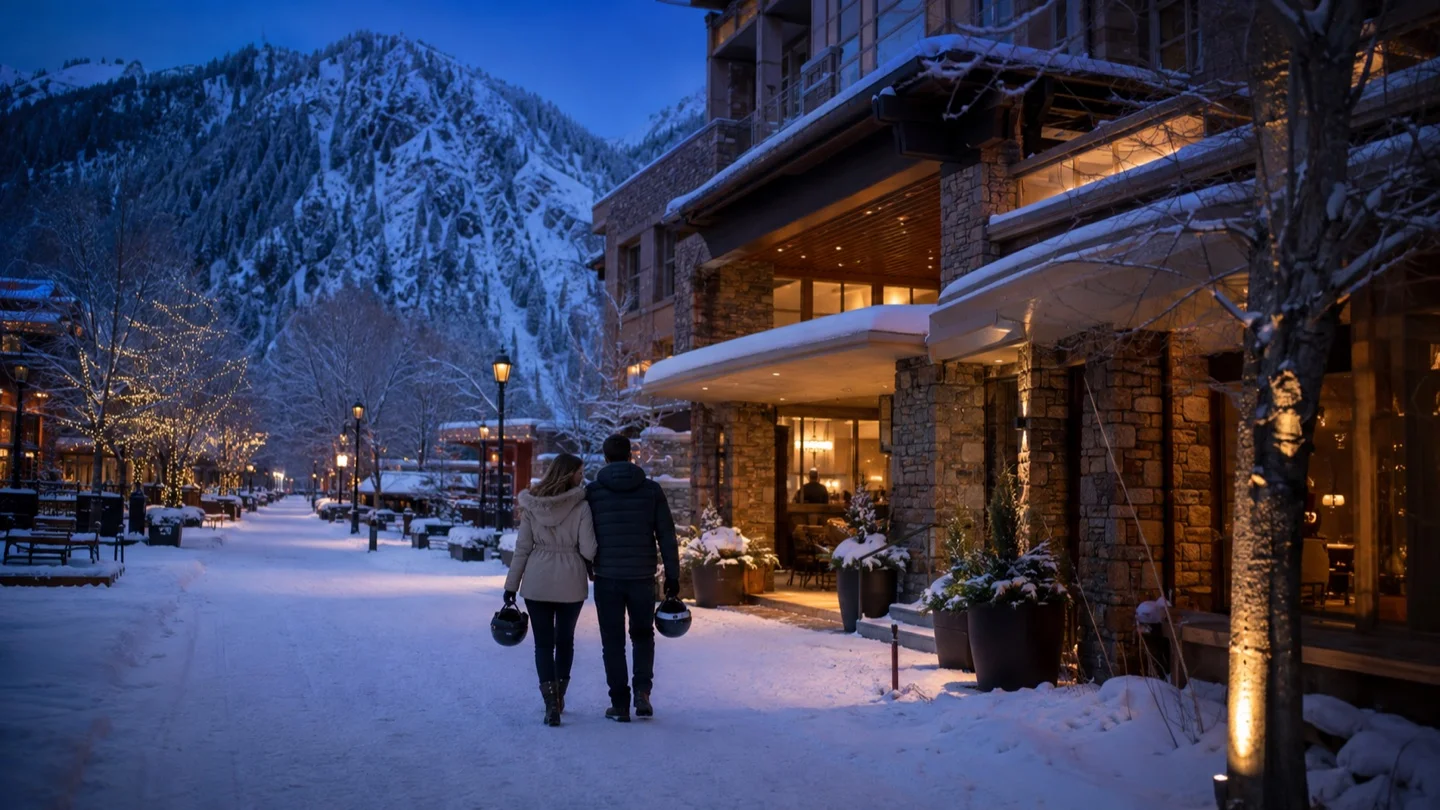

Aspen
Aspen Has Two Real Seasons, and Three Weeks Set the Price
Aspen is a small town with the restaurants, the art calendar and the room rates of a much larger one, and that mismatch is the whole planning problem. Demand is enormous, the valley is short of beds, and nothing about the place is difficult except getting the room you want in the week you want it. Two facts do most of the work. The first is that Christmas, New Year and the Presidents' Day stretch are effectively sold out long before most people start looking, on eleven and six month horizons respectively. The second is that summer here is not an off season at all. It is the town's other half, and a good deal of it is better than the skiing.
Know before you go
- Fly into ASE, three miles from downtown Aspen and six from Snowmass Village, with United, Delta and American flying nonstop from nine cities. Eagle County sits about seventy miles out and Denver about two hundred and twenty, by way of Interstate 70 and Colorado 82.
- The bus is free The airport shares a fare zone with Aspen, so the RFTA bus into town costs nothing, although only during peak commute hours. The airport itself publishes no taxi fares, so agree the price of any car before you get into it.
- Trip length Five to seven nights in winter. Christmas and New Year carry a five night minimum at many properties, so a short festive stay is not merely expensive, it is unbookable. One night fewer usually costs you a mountain, since Aspen Mountain, Highlands, Buttermilk and Snowmass are four separate hills.
- Best months January to March in winter, with average highs of 32°F / 0°C in January, 35°F / 2°C in February and 43°F / 6°C in March. July and August in summer, at 76°F / 24°C and 73°F / 23°C.
- Entry rules Domestic for a United States passport. International visitors arrive under their own nationality's requirements for the United States and then connect internally, which is the part worth building spare time around.
- Money and tipping The dollar, cards everywhere, tipping expected across restaurants, bars and mountain services.
- Getting around The town is walkable and RFTA links Aspen with Snowmass. A car is close to useless in Aspen in winter and useful only for Independence Pass and days out of the valley, so most people are better off without one.
- Book Christmas early A full eleven months is the real lead time for the festive weeks, with a five night minimum and a waitlist typically running by the previous March. Presidents' Weekend goes about six months ahead and is sold out at that point.
- The two mud seasons The mountains do not close together. For the 2026 to 2027 season Buttermilk closes on 28 March while Highlands runs to 11 April and Aspen Mountain and Snowmass to 18 April. Snowmass restaurants and shops begin closing in the first two weeks of April and most do not reopen until around 1 June, with many that stay open dark on Mondays and Tuesdays.
- The autumn gap The other quiet stretch comes before the mountains open, with Aspen Mountain and Snowmass opening 26 November 2026 and Highlands and Buttermilk on 12 December.
- Maroon Bells needs booking The scenic area is closed to inbound private vehicles between 8am and 5pm from 22 May to 18 October. A parking reservation costs 10 dollars a vehicle across 15 May to 31 October but only works before 8am or after 5pm inside that window. Otherwise it is the shuttle, at 16 dollars an adult and 10 for children under twelve and visitors of 65 and over.
Three weeks decide the price of the whole winter
Christmas and New Year is the most compressed hotel market in American skiing. The lead time is a full eleven months, there is a five night minimum at many properties, and a waitlist for December is usually running by the previous March. Presidents' Day and the week around it is the second squeeze, going about six months out and gone at that point. Those two blocks set the tone for the season, and everything either side of them is priced in their shadow. Which is why we push people towards January. Once the holiday crowd has gone home the mountain is the same mountain, the snow is at its most reliable, nobody is queueing for a table, and it is the quietest and best value stretch of a serious winter. If your dates can move at all, that is where they should move to.
Summer is not the off season, it is the other season
From June into September the town swaps skis for trails, and a good number of returning travelers now prefer it. July and August average highs of 76°F / 24°C and 73°F / 23°C, which is walking and riding weather at altitude rather than heat. The classical music festival runs through the summer and turns the town into a concert program with a mountain attached, which is a very different holiday from the winter one and priced differently too. The hiking is serious rather than scenic strolling, the Maroon Bells earn their reputation, and September brings the aspens turning gold, the most beautiful week of the Aspen year. This is not a consolation season. It is why a lot of people ended up buying houses here.
The weeks not to book, and the four mountains
Aspen has two dead stretches and both catch people out. Spring is the sharper one, because the mountains close on staggered dates: Buttermilk finishes three weeks before Aspen Mountain and Snowmass, while Snowmass restaurants and shops start closing in the first two weeks of April and mostly stay shut until around 1 June. Autumn is the mirror image, before the late November opening. On the hills themselves, one ticket covers four. Aspen Mountain rises straight out of town and has nothing at all for a beginner. Snowmass has the acreage and the range of terrain a family needs. Highlands is where strong skiers spend the day, and Buttermilk is where you learn.
Planning brief
Two seasons, three sold out weeks and a valley short of beds. Everything difficult about Aspen is a calendar difficulty rather than a hotel one.
- Best suited to: ski weeks; summer mountain and music stays; multigenerational groups; festive gatherings booked a year ahead; travelers who want a small town with serious restaurants.
- Decisions to settle early: which of the two seasons; whether the festive week is worth an eleven month commitment; which mountain the group actually skis; Maroon Bells reservations in summer; hotel position against the lifts.
- Arrival and routing: ASE at three miles from town, with Eagle County at seventy miles and Denver at two hundred and twenty as the alternatives; the ground plan settled for whichever airport you land at.
The Answer Is Usually January
A ski week, a summer of trails and concerts, and a festive gathering that wants eleven months of notice are three separate pieces of work sharing one zip code. Send the dates and say how far they can move. More often than not they should move to January, which is the same mountain in better snow with nobody queueing for a table.
Weighing Aspen against the Alps is a fair argument, and the St Moritz guide puts the other side of it. The hotel, the flights, the ground transport and the reservations that close earliest are handled together by our leisure travel planning team.
Is Aspen worth it if half the group does not ski?
More than most ski towns, and the difference is the town itself. Aspen is a real place that existed before the lifts, walkable end to end, with restaurants, galleries and shops that would hold their own in a city ten times the size. A non skier here has somewhere to go all day, and can still meet everyone for lunch on the mountain, which is reached by gondola rather than by chairlift. The version that goes wrong is a non skier left in a condominium out of the valley with a shuttle timetable and a view. Base in the town itself and most of that problem disappears.
Is Aspen worth visiting in summer?
Yes, and for a lot of travelers it is the better trip. July and August average highs of 76°F / 24°C and 73°F / 23°C, which is hiking and riding weather rather than heat. The classical music festival runs through the season and gives the town a cultural spine that the winter does not have, the trails are serious, and September brings the aspens turning gold. Summer is also far easier to book and considerably cheaper. The one thing to plan is Maroon Bells, which needs either a shuttle ticket or a parking reservation used outside the middle of the day.
Which of the four mountains should we ski?
One ticket covers all four, so this is a daily decision rather than a booking one. Aspen Mountain rises out of the town itself and has nothing for a beginner, which makes it the wrong first morning for a mixed group. Snowmass has the acreage and the range of terrain, so a family with different abilities should base its week there. Highlands is where strong skiers go and where the day gets serious. Buttermilk is where people learn, and it is also the first of the four to close in spring, finishing on 28 March in the 2026 to 2027 season.
Do we need a car in Aspen?
Usually not, and in winter it is close to a liability. The town is walkable, RFTA connects Aspen with Snowmass, and the airport shares a fare zone with Aspen so the bus into town is free during peak commute hours. A car only starts to matter for Independence Pass or a day out of the valley, and in summer it will not get you into Maroon Bells during the day anyway. Since the airport publishes no taxi fares, agree the price of any private car before you get into it rather than after.
When is the best time to visit Aspen?
January to March is the winter window, with average highs of 32°F in January and 43°F in March. July and August are the summer peak, at 76°F and 73°F. Christmas, New Year and Presidents' Day sell out long before most people start looking. Compare it with Vail or Telluride.
CONTINUE EXPLORING