

St. Moritz
St Moritz Rewards the Slow Arrival
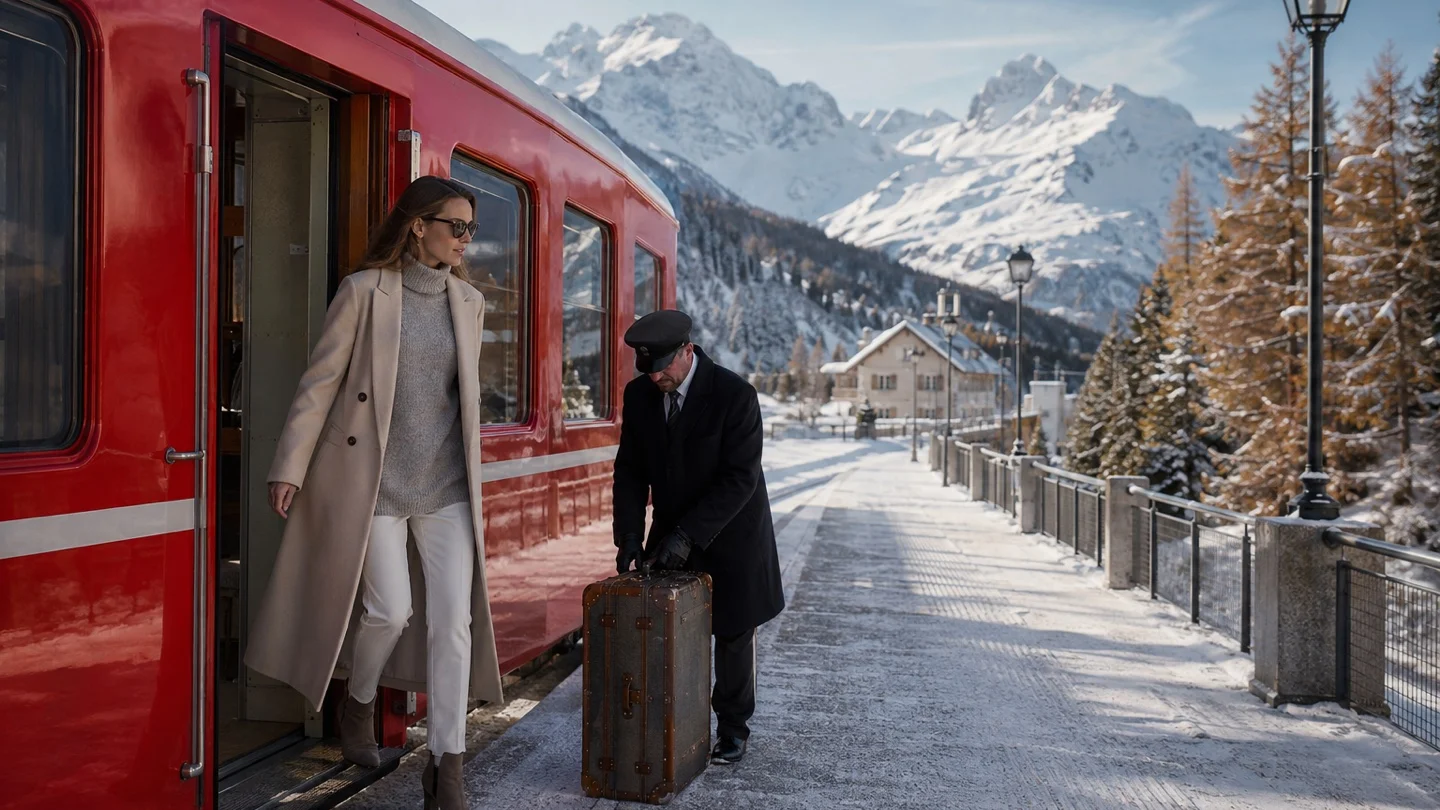
The Engadin more or less invented the Alpine winter, and it has been performing on schedule ever since. St Moritz does not do understatement and has never pretended to. The lake freezes hard enough to carry horses, grandstands and a crowd, and that frozen surface becomes the social calendar of the season. What most people get wrong is the arrival. This is a high valley reached by one of the great railways in Europe, and treating that leg as a transfer to be minimized is the single most common planning error made here. The journey in is the first act of the holiday. Book it that way and the trip starts hours earlier than it otherwise would.
Know before you go
- Getting in Zurich is the practical gateway, and the rest is done by rail into the Engadin. There is a road option and it is the lesser one. The mountain railway approach is UNESCO listed, spectacular and, arriving in daylight, worth more than the hour it may cost you.
- Altitude The village sits at roughly 1,800 meters in a high, dry, notably sunny inner Alpine valley, which runs colder and drier in winter than the northern resorts do. Give the first day a gentle shape and drink more water than feels necessary.
- Trip length Four or five nights in either season. Fewer than four and the altitude day and the travel day between them eat most of what you came for.
- The season, honestly The high resorts open around the start of December and run into April, with snow reliability improving as you go higher, and the Engadin sits high. Christmas and the February half term weeks are the tightest and the most expensive of the year. January is the quiet value window between them. Summer is the insider season, with the same hotels at gentler rates, sailing on the lake and high trails under a light that has kept painters coming for well over a century.
- The weeks that fill the resort White Turf, the horse racing run on the frozen lake, and World Cup ski racing both land in the stretch between December and February, and they take the village over completely. Decide deliberately whether you are booking into one of them or around it, and confirm the dates before anything is held.
- Between seasons Many of the grand houses close outright between winter and summer. May and November are not quiet months in the Engadin, they are shut months, and a plan that lands in either needs someone who knows which doors are actually open.
- Entry Switzerland is in Schengen but not in the EU. At the border that changes nothing, with no passport check from another Schengen country and Swiss days counting against the same 90 days in any rolling 180. No visa and no ETIAS, which is not in operation and takes no applications.
- Where the EU distinction bites Customs and VAT, not immigration. Switzerland runs its own tax free scheme validated at its own border, so an EU refund claim does not cover what you bought in St Moritz and a Swiss claim does not cover what you bought in Italy. The EU Entry/Exit System, fully operational since 10 April 2026, takes fingerprints and a facial image at your first Schengen entry and has replaced passport stamping.
- Money The Swiss franc, worth a little more than the US dollar. Add roughly a quarter to any franc figure for the dollar equivalent. The Engadin is not a place to be surprised by the bill.
- The Glacier Express ends here St Moritz is the eastern terminus rather than a stop, so a Zermatt traverse is a full eight hour travel day arriving between 16:37 and 20:55 depending on which departure you take. Do not schedule anything for that evening. The service is also dark from 11 October to 3 December, which quietly breaks a lot of autumn itineraries.
- The mandatory reservation A Glacier Express seat reservation costs 54 francs per person and no rail pass covers it, including the Swiss Travel Pass and Eurail. First and second class reservations open 93 days ahead while tickets open 180 days ahead. In peak summer the 93 day window is the binding constraint on the whole trip.
The Bernina line is the better half day, and the more dramatic ride
If you take one panoramic train from St Moritz, make it the Bernina route down to Tirano. It runs south from Chur, Davos and St Moritz through 55 tunnels and across 196 bridges, climbing to 2,253 meters at Ospizio Bernina, and it works gradients as steep as 70 per mille on adhesion alone with no rack assistance, which is precisely why the line is UNESCO listed. The Landwasser Viaduct and the Brusio Circular Viaduct are the two structures everyone photographs and both deserve it. It descends from high Alpine country to Italian palm trees in a few hours, which is a more concentrated experience than the Glacier Express delivers over eight. Reservations are mandatory. Carry a passport or identity card, because the leg into Tirano crosses into Italy and the railway asks for it regardless of Schengen. Book from a live reservation rather than a cached page, because stale fares for this route circulate widely online.
The grand hotels, told straight
Badrutt's Palace is the theater itself, towers above the lake and a lobby that functions as the village's living room, and if you want to be in the middle of the season that is where the season happens. The Kulm is the sporting choice and the quieter kind of glamour, with its own ice rink and a country club feel that suits people who would rather be doing something than being seen. The Kempinski Grand Hotel des Bains sits closest to the Signal lift and is the right answer if serious ski mornings are the point of the week. Grace La Margna, by the station, is the small contemporary counterpoint for travelers who want the Engadin without the ballroom scale. Festive and event weeks go a long way out. If your dates touch Christmas, February half term or the lake calendar, start the conversation earlier than feels reasonable.
Planning brief
Settle the week before the room, because the event calendar and the closed shoulder decide what is available at all.
- Best suited to: winter sport; the Alpine event calendar; summer mountains and lake sailing; classic grand hotels; travelers who love a railway.
- Decisions to settle early: season; whether an event week is the point or the problem; rail or road approach; hotel scale; ski or summer priorities.
- Arrival and routing: Zurich then rail into the Engadin; the Glacier Express arrives late into St Moritz and is dark from 11 October to 3 December; Bernina reservations are mandatory and need a passport.
Begin the trip on the train
Whether the point is the skiing, the lake calendar or the rooms themselves decides which week you want, and the right house has to be secured before the season sells through. Then we arrange the approach so the holiday starts on the railway rather than at a front desk, which in this valley is the whole difference between arriving and getting there.
Lake Como is a scenic drive south over the Maloja Pass, and the change from alpine air to lakeside gardens is part of the pleasure.
For a different read on the same country, compare the villages of the Swiss Alps, which suit a very different traveler. Our leisure travel planning handles the hotel, the rail approach, the reservations and the event weeks together.
Is Badrutt's Palace or the Kulm the right house for a first visit?
Badrutt's if you want to be inside the season, the Kulm if you would rather be near it. The Palace lobby functions as the village's living room through the winter weeks, which is either the reason to book it or the reason not to, and the position above the lake is the best in St Moritz. The Kulm is quieter, sportier and has its own ice rink and a country club temperament, and it suits people who intend to be out on the mountain rather than on display. For a first winter visit with the event calendar in mind, take the Palace. For a summer week or a family, take the Kulm.
Is the Bernina Express better than the Glacier Express?
Per hour, yes. The Bernina route runs south to Tirano through 55 tunnels and over 196 bridges, tops out at 2,253 meters at Ospizio Bernina and works gradients up to 70 per mille without any rack assistance, which is why it is UNESCO listed. It takes you from high Alpine country to Italian palm trees in a few hours and can be done as a day out from St Moritz. The Glacier Express is the longer, gentler classic and a whole travel day. Reservations are mandatory on both, and the Bernina leg into Italy needs a passport or identity card.
Is St Moritz worth visiting in summer?
It is the insider season and, for anyone who does not ski, plainly the better one. The same grand houses charge gentler rates, the lake is used for sailing rather than racing, and the high trails open under the particular clear light of a dry inner Alpine valley at 1,800 meters. It is also far easier to get a table and a room. The trade is that the social calendar which defines a St Moritz winter is simply absent, so if the frozen lake and the event weeks are what drew you here, summer will feel like a different resort wearing the same name.
How far ahead do you need to book St Moritz?
Further than most Alpine resorts, because the demand is concentrated into a few named weeks. Christmas, the February half term period and the lake event weeks including White Turf and the World Cup racing take the village over, and the best rooms in the best houses go a long way out. January sits between the peaks and is both quieter and better value, and it is the window we steer most travelers towards. Summer needs less lead time but the good rooms still move early. If a specific hotel is the reason for the trip, treat the room and the week as one decision.
How many nights do you need in St. Moritz?
Four or five nights works in either season. Fewer than four and the altitude day and the travel day eat most of what you came for. Arrive by rail from Zurich in daylight, because the journey in is the first act of the holiday. January is the quiet value window in winter. Compare it with Zermatt or the wider Swiss Alps.
CONTINUE EXPLORING