


Barcelona
The Grid Explains Almost Everything
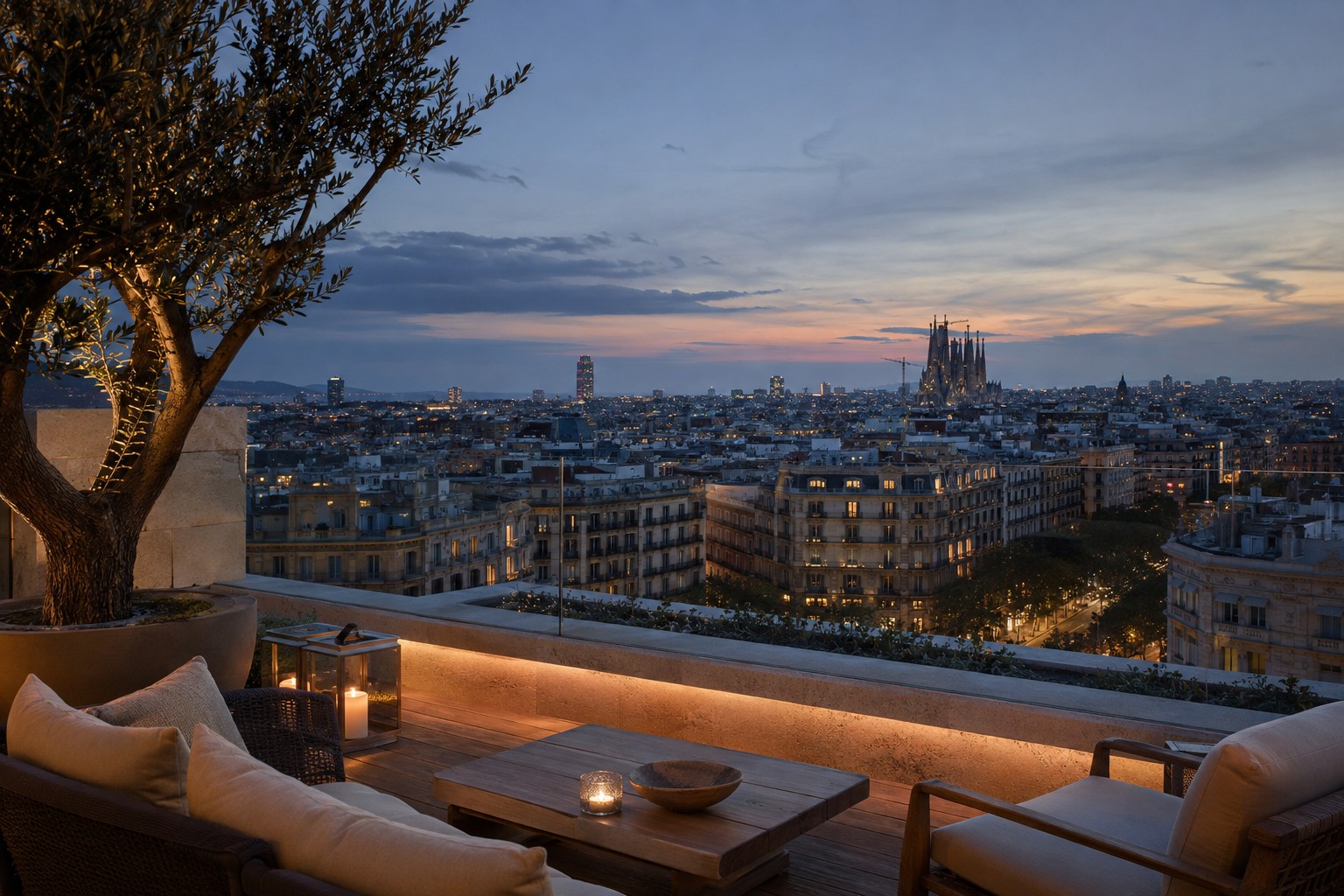
In 1859 Ildefons Cerda laid out an extension to Barcelona on a strict grid and cut the corner off every block, creating the octagonal intersections you can see from any rooftop in the Eixample. He meant it as public health engineering: light, air and sight lines for a city that had been strangled inside its medieval walls. What it produced instead is the most legible great city in southern Europe. Once you understand that the old city is the tangle below Placa de Catalunya and everything above it is the grid, you can navigate Barcelona for a week without a map, and most of the frustration people report here disappears.
The planning decision: which side of Placa de Catalunya
This is the choice that shapes the trip. The Eixample, above the square, gives you wide pavements, the Modernista facades, the best hotels, quiet nights and a ten minute walk to everything. The Gothic Quarter and El Born, below it, give you atmosphere, narrow lanes, the best small restaurants and genuine noise until three in the morning. Barceloneta puts you on the sand and nowhere near the architecture. Gracia, further up, is the neighbourhood locals defend and visitors rarely reach. For a first trip the Eixample is almost always the right answer, and the Right Eixample around Passeig de Gracia is the calmest part of it.
Seasons, and the two weeks that break the pricing
May, June, September and early October are the months. The weather is warm without the August humidity, and the city is functioning normally. July and August are hot, and a meaningful share of the good restaurants close for holidays. Two dates distort everything: Mobile World Congress, usually late February or early March, when hotel rates across the city rise sharply and availability effectively vanishes, and La Merce in late September, which is the city festival and worth planning into rather than around. Timed entry to the Sagrada Familia, Park Guell and Casa Batllo is not optional, and the good slots for the Sagrada Familia towers go weeks ahead.
Where to base, and getting in
El Prat airport is around thirty minutes from the centre by car and has excellent long haul service. The high speed train reaches Madrid in about two and a half hours from Sants, which makes a two city Spanish trip genuinely easy. Once here the metro is fast and clean, and the city is walkable in a way Madrid is not. One piece of honest advice that guidebooks soften: pickpocketing on La Rambla, in the metro and around the Sagrada Familia is organised, persistent and aimed at visitors. It is not dangerous. It is simply constant, and it is the single most common thing that spoils a Barcelona trip.
Stay strategy
Mandarin Oriental Barcelona sits on Passeig de Gracia in a converted bank, with the best service in the city and a courtyard that removes the street noise entirely. Hotel Arts is the tower on the beach, a Ritz-Carlton property, and the right answer for families who want a pool and the sand. The Majestic is the grand old Catalan address on the same avenue. Cotton House and Almanac cover the design end of the Eixample well. El Palauet in Gracia is all suites and suits longer stays. For families and groups, apartment rentals in the Right Eixample are frequently better than hotel rooms, and the inventory is good.
When to begin
Four to five months for May, June, September and October. Longer if your dates touch the congress weeks, when even mediocre hotels sell out. Restaurant reservations are the real constraint at the top end, and the tables worth having are released one to two months ahead and go the same day. Private access to the Palau de la Musica Catalana and after hours visits at the major Gaudi sites are arranged well in advance and the terms change, so they should be confirmed for your dates.
Four experiences worth building the days around
- The Sagrada Familia at opening with a guide who can explain the structural logic, then the tower lift for the view down the nave.
- A concert at the Palau de la Musica Catalana, which is a better building than any museum in the city and still works as a concert hall.
- A morning of Catalan cooking starting at the Santa Caterina market rather than the Boqueria, which has become a photograph rather than a market.
- A day in Priorat or Penedes for wine, ninety minutes out, which almost no visitor does and which changes what you think Spanish wine is.
Who this trip suits
Barcelona suits architecture and design travellers more than any other city in Spain. It suits families, because the beach and the parks absorb children in a way Madrid cannot. It suits food travellers at every price level. And it works as a three or four night city leg before Mallorca or Ibiza, both a short hop away.
When another plan may fit better
If you want classical Spain, the Prado and a formal city, Madrid is the trip. If you want Andalucian atmosphere, Seville has it and Barcelona does not. And if crowds are what ruin a city for you, understand that this is one of the most visited places in Europe and plan for early mornings rather than hoping for quiet.
Plan it with one accountable advisor
Tell us your month and how many nights the city gets, and we will place you in the right neighbourhood, hold the timed tickets before they go and get the restaurant tables that actually matter. Our luxury leisure travel planning builds the full Spanish route including the rail legs.
How many days do you need in Barcelona?
Three full days covers the city properly without rushing. Four gives you a day out to the coast or the wine country at Penedes. Two is enough only if you accept you will see the headlines and nothing else.
Which neighbourhood should you stay in?
The Eixample for most people, because it is central, calm at night and where the good hotels are. The Gothic Quarter is atmospheric and noisy. El Born is the best compromise. The beachfront at Barceloneta is convenient in summer and a long way from the rest of the city in spirit.
Do you need to book the Sagrada Familia in advance?
Yes, and further ahead than people expect. Timed entry sells out weeks in advance in high season, and the tower access sells out first. The same is true of Park Guell and the Casa Batllo. Turning up on the day is not a plan here.
When is the best month to visit Barcelona?
May, June, September and October. August is hot, humid and the month when many of the best local restaurants close. Winter is mild, quiet and genuinely underrated for a city break.
Continue Exploring