


Madrid
Madrid Runs on a Later Clock Than You Do
Madrid is the European capital Spaniards largely kept for themselves while everyone else flew to Barcelona, and it shows in how the city is organized. Three of the great museums of Europe stand within a walk of one another along a single boulevard. The kitchens fill long after northern Europe has gone to bed. The middle of the afternoon belongs to lunch and to nothing else. None of that is decorative. It changes the arithmetic of a day here, and the travelers who leave disappointed are almost always the ones who ran a northern European schedule against a Spanish one and concluded the city was closed. It was not closed. It was two hours behind them all week.
Know before you go
- Fly into Madrid Barajas, code MAD. The official taxi fare is a flat 33 euro anywhere inside the M30 ring road, covering up to four passengers with no luggage or night surcharge, and takes twenty to thirty minutes. The Airport Express bus is 5 euro and twenty five to forty minutes to Atocha or Cibeles. The metro is 4.50 to 6.00 euro including the airport supplement, thirty to forty minutes, usually with a connection.
- Trip length three nights. Two loses the day trip, and Toledo at thirty four minutes from Atocha is the strongest one in Spain.
- Best months May, then mid September to mid October. May averages a high of 24C, September 28C and October 21C. January, at 11C, is the coldest month.
- The summer figure July averages a high of 33C and August 33C, and 40C is reached regularly. The air is dry enough that it is more tolerable than a coastal city at the same reading, but it is genuine heat and it dictates the shape of the day.
- August closures, with numbers roughly a third of the city's bars and restaurants close for at least part of August, but only around ten percent in the visitor heavy center. Residential Chamberi and Salamanca empty out. Malasana, Chueca and La Latina stay busy.
- Entry no visa for a tourist stay, ninety days in any hundred and eighty across the Schengen area, and a passport valid three months beyond departure at minimum, six recommended. The Entry Exit System has been fully operational since 10 April 2026 and takes a facial image and fingerprints at the first crossing instead of stamping the passport. ETIAS is not in operation and nothing is being collected.
- Money the euro, trading a little above the dollar. Cards are near universal, cash is still useful in the older tabernas, and tipping is light.
- The Prado trap free admission runs Monday to Saturday from 18:00 to 20:00 and on Sundays and holidays from 17:00 to 19:00, but the queue forms forty five to ninety minutes before the window opens, which eats most of the two hours. The museum's own ticket is 15 euro and entry now runs in fifteen minute sequences.
- Buy direct the reseller version of that ticket at 18 euro is the identical timed slot, and there is no genuine fast track product above it. The three euro premium buys free cancellation up to a day ahead and nothing else. Prado hours are 10:00 to 20:00 Monday to Saturday and 10:00 to 19:00 on Sundays and holidays.
- Booking windows the Prado wants twenty four to forty eight hours of notice for weekends and for May to September; most weekdays a walk up still works. On rail, Iryo opens seats about ninety days ahead and Renfe around sixty.
- Rail out of Atocha Toledo is thirty four minutes away with roughly hourly departures, and Seville Santa Justa is two and a half hours nonstop on AVE with fifteen to twenty high speed departures a day, plus Iryo and Ouigo on the same route.
The late clock is the trip, not a quirk of it
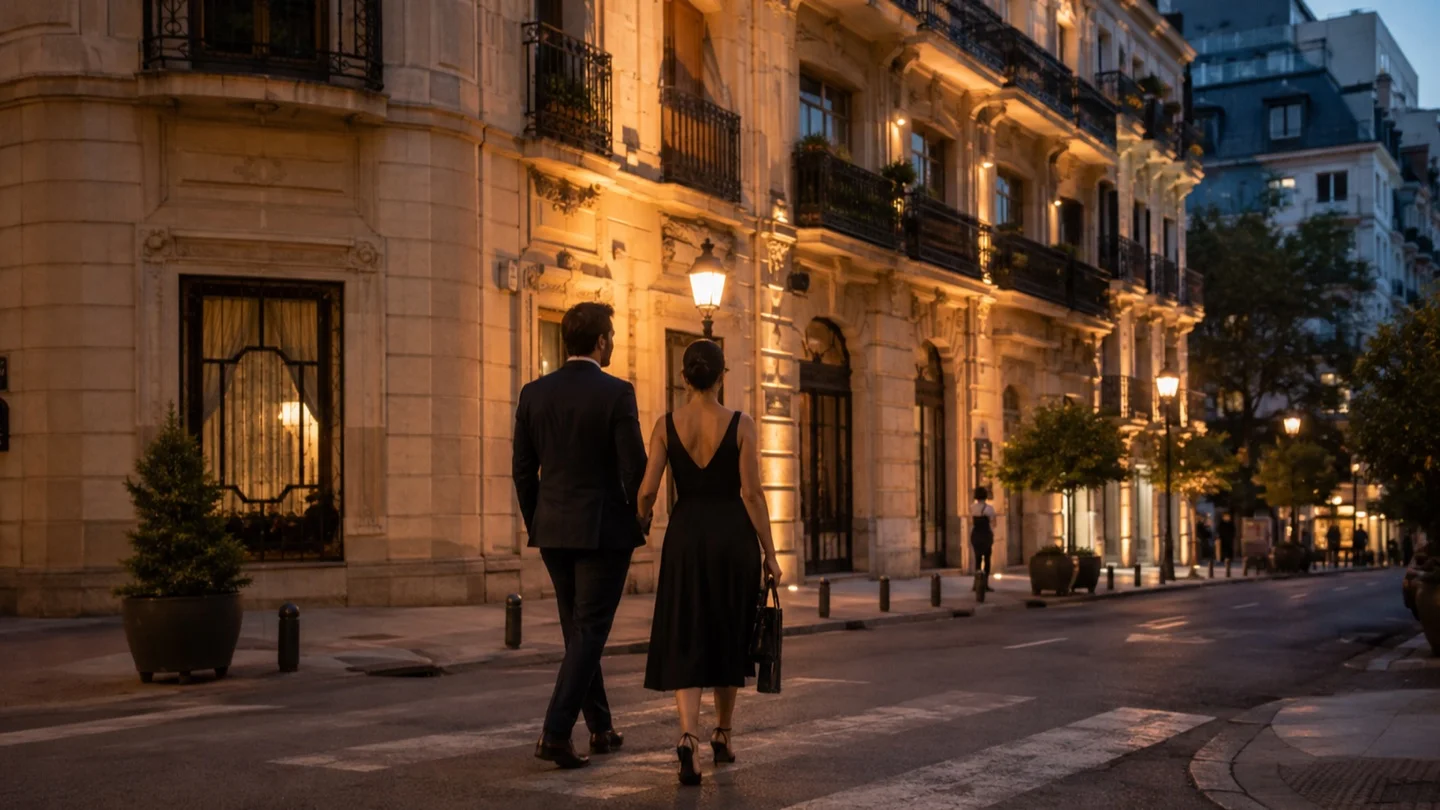
Plan a Madrid day in three parts rather than two. Mornings belong to the museums, which open at ten and are quietest in the first hour. The middle of the afternoon is lunch, and lunch here is the substantial meal of the day, taken slowly and finished long after a northern European would have gone back to work. Then comes the gap visitors mistake for the city shutting down, when the sensible move is to go back to the hotel rather than keep walking. The evening starts late and runs long, first an aimless walk and a drink standing up, then dinner when the kitchens are busy. Compress that into a northern working day and you will spend the trip arriving an hour before anywhere is any good.
Three museums on one boulevard, taken two at a time
The Prado, the Thyssen Bornemisza and the Reina Sofia stand along the same avenue within an easy walk of each other, which tempts people into attempting all three in a day. Do not. Two is the honest maximum and one is often better. The Prado is a painting collection of the first rank and deserves a full morning on its own; go on a weekday with a booked slot and start at the far end, walking back toward Velazquez rather than queuing with everyone else. The Reina Sofia holds Guernica and works best late in the day. The Thyssen fills the gaps and is the one to sacrifice if something must go. Private guides and early access are worth it precisely because the first hour is the quiet one.
Where to sleep, and what each district gives you
Staying beside the art triangle puts you a short walk from all three museums, in the most formal part of the city. Salamanca, north of it, is residential, quiet and where the good shopping is, and it suits travelers who want calm at night. Malasana, Chueca and La Latina are where the city eats and drinks, which is a benefit and a noise cost equally. Of the hotels, the Mandarin Oriental Ritz is the grand address beside the Prado, rebuilt from top to bottom before it reopened. Four Seasons Madrid sits in the Centro Canalejas complex steps from Puerta del Sol, the choice for a rooftop, a serious spa and proximity to the noise. Rosewood Villa Magna up in Salamanca is the residential option, quiet and deliberately unshowy.
Planning brief
Madrid rewards travelers who move their own clock rather than fighting the city's. Set the base near the art triangle or in Salamanca, protect the afternoon, and build museum slots and dinner around one daily rhythm.
- Best suited to: art travelers; Spanish gastronomy at both ends of the price range; city weekends; rail based Spanish itineraries.
- Decisions to settle early: month and heat tolerance; district; Prado slot and day of week; whether Toledo is a day or a night; the onward rail leg south or east.
- Arrival and routing: MAD with a flat fare taxi, Airport Express bus or metro; Atocha for Toledo in thirty four minutes and Seville in two and a half hours; Barcelona about three hours by AVE.
Is It the Paintings, the Table or the Football?
That answer and the month settle almost everything else, from which side of the Paseo del Prado you sleep on to what time the table is held. Say which shape you want and the hotel, the guide and a schedule set to Spanish hours rather than yours come back together.
Barcelona is about two and a half hours by high speed train, which makes a two city Spain trip simple. For a design led place to stay, read our VP Plaza España review.
Sequence, hotels and rail connections go into one plan through our luxury leisure travel planning, and Madrid runs cleanly into Seville two and a half hours south by high speed train.
From the journal
More on Madrid: Inside VP Plaza España Design: Art, Service and a Tapas Dinner to Remember.
Is Madrid or Barcelona better for a first trip to Spain?
Madrid, if you care about painting and about eating the way Spaniards actually eat. Barcelona, if you care about architecture and want a beach attached to the city. Madrid is the more Spanish of the two and the less rehearsed, its three great museums stand within a walk of each other, and it costs less for the equivalent room. Barcelona is easier to photograph and harder to move around in high season. The honest answer for most first trips is both, connected by the high speed train, which takes about three hours between two central stations and removes the argument entirely.
Can I see all three big museums in one day?
You can, and you should not. Two is the sensible maximum and one done properly often beats two done at pace. Give the Prado a whole morning with a booked slot, because it is a collection of the first rank and an hour in it is a waste of the ticket. Take the Reina Sofia late in the day for Guernica. Treat the Thyssen Bornemisza as the flexible one to drop. The three sit along the same boulevard within an easy walk, which makes the temptation strong, but painting fatigue is real and sets in faster than anyone expects.
Is Toledo worth a night, or is a day enough?
A day is enough for most people, and the train makes it easy: thirty four minutes from Madrid Puerta de Atocha with roughly hourly departures. Go early, take the cathedral and the Greco paintings before the coaches arrive, eat lunch properly and come back in the evening. The argument for a night is that Toledo empties out after the day visitors leave and the walled town at dusk is a different place entirely. If you are giving Spain a week or more and want one night outside a city, that is a good use of it. On a three night Madrid trip, keep it as a day.
Do I have to eat dinner at Spanish hours?
Effectively, yes, if you want the city rather than a tourist version of it. Kitchens fill late, and a table booked early puts you in an empty room with the staff still setting up. The workable adjustment is not to force yourself through a late dinner on an empty stomach but to move lunch to the middle of the afternoon and make it the main meal, as locals do, then take the gap afterwards as rest rather than sightseeing. Come out again in the evening and dinner at a properly Spanish hour stops feeling like an endurance test by the second night.
How many days do you need in Madrid?
Three nights is right. Two loses the day trip, and Toledo, thirty four minutes from Atocha, is the strongest one in Spain. Visit in May or from mid September to mid October, since July and August average highs of 33°C. Pair it with Seville or Barcelona.
CONTINUE EXPLORING