


Cape Town
Cape Town Runs on the Weather, Not on Your Itinerary
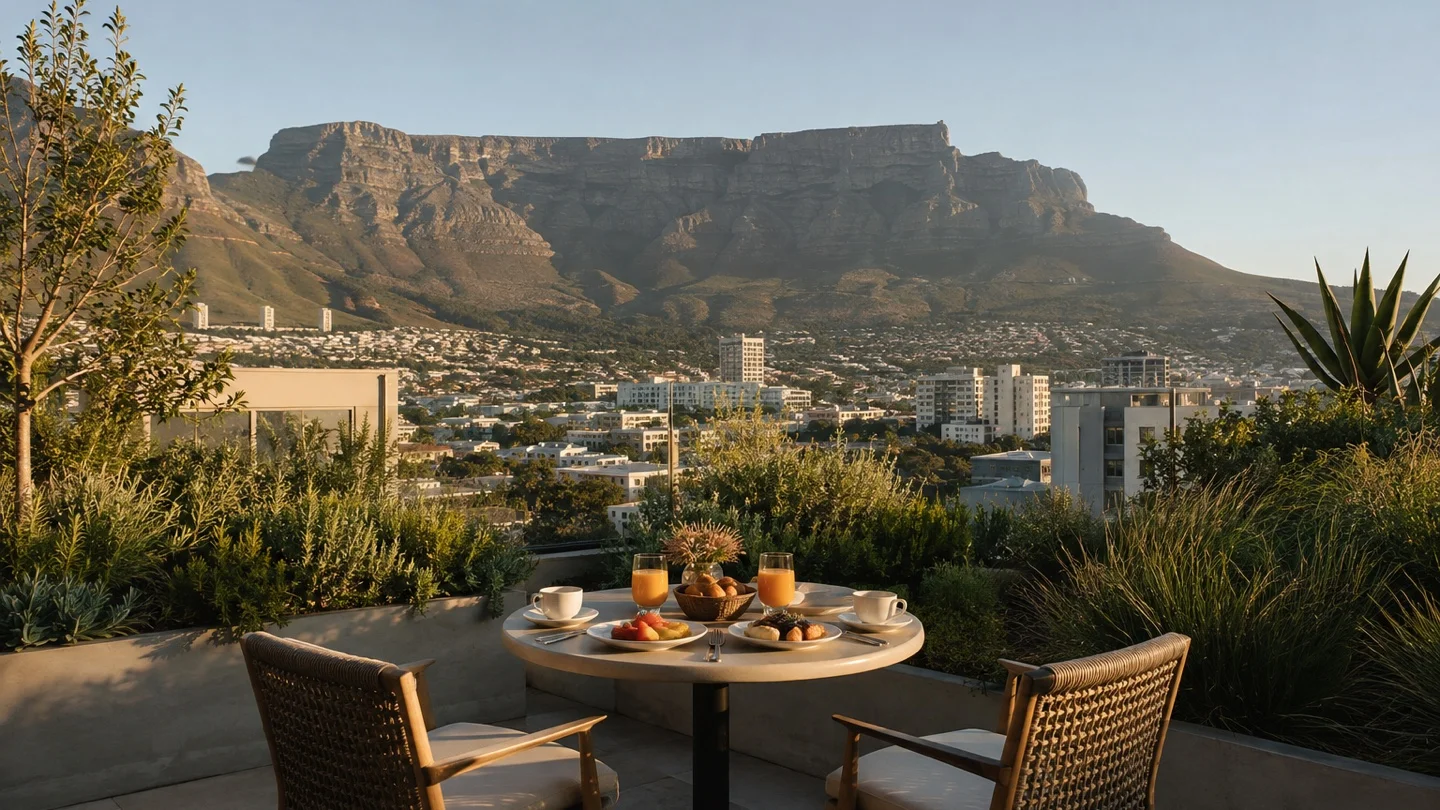
Cape Town is a city with a mountain in the middle of it and a different ocean on each side, and the consequence of that geography is that the weather changes faster and matters more here than in almost any other city break. The cableway shuts when the wind gets up. The Robben Island sailings depend on the sea. The beach that was perfect yesterday is unusable today because the southeaster has swung round. People who arrive with a fixed plan for each day lose two of the things they came for. People who arrive with a list and no fixed order get all of them. Book the hotel and the tables firmly, then leave the days loose on purpose.
Know before you go
- Fly into Cape Town International, code CPT, which sits on the flats east of the city and is closer in than most airports serving a city this size. Long haul routings either run straight here or connect through Johannesburg, code JNB.
- Trip length four to five nights is the floor. At three, a single gray and windy day takes the mountain or the island off your list for good.
- The seasons invert summer runs November to March and it is the dry half of the year, because the Cape has a Mediterranean pattern with its rain in winter. February and March are the best of it, warm and calmer than the December peak. June to August is green and cheap, with clear days between the fronts.
- Entry ninety days without a visa on a United States passport. The rule that catches people is the pages. Two of them, side by side, entirely blank and headed for visas, and endorsement pages do not count. Validity has to run thirty days past the day you fly out, and the airline checks all of this at the gate before Home Affairs ever sees it.
- Children's paperwork a child on a visa exempt passport needs nothing beyond that passport. What still has to be prepared is the consent letter, dated inside the previous six months, and it is asked for when one parent flies without the other, when the accompanying adult is not a parent at all, or when a child travels alone. Home Affairs publishes the wording it wants used.
- Money the currency is the rand, written ZAR or R. Cards work almost everywhere. Carry cash for tips and for the guards who watch parked cars, and add about a tenth of the bill in a restaurant.
- Getting around take a car or a driver. The best of Cape Town is the peninsula, Chapman's Peak, Cape Point, the penguins at Boulders, and none of it is reachable on public transport. If the week involves serious eating and drinking, take the driver.
- The cableway rule Table Mountain's cableway closes in high wind and does so often. First cabin up is 08:30, last up 18:00, last down 19:00. Standard online tickets are valid for seven days from purchase rather than for a fixed date, so buy them when you land and use them on the first clear morning. Fast Track tickets book a timeslot instead.
- Robben Island ferries leave the Nelson Mandela Gateway at the Victoria and Alfred Waterfront, four sailings daily at 09:00, 11:00, 13:00 and 15:00, about three and a half hours all in and guided throughout. Book it early in the stay, because the crossing depends on the sea.
- The southeaster the summer wind locals call the Cape Doctor blows hard from roughly November into February, and it decides which beach works on any given day. Clifton and Camps Bay on the Atlantic side, or across to Muizenberg and False Bay when the wind is wrong.
- Malaria none. The Western Cape carries no risk, so Cape Town and the Winelands need no tablets. That changes only if you add the Kruger lowveld to the same trip.
The Cape's rain falls in winter and the lowveld's falls in summer
Almost everyone who comes here wants a city and a safari, and the two calendars pull against each other. The Cape is Mediterranean: dry summers, wet winters, at its best November to March. The Kruger lowveld is the mirror image, with its rain in the summer months and its game viewing at its best in the dry southern winter from about May to September, when the bush thins out and the animals concentrate on whatever water is left. Book December for the beaches and you get a green season safari, lush and full of newborn animals and harder to see into. Book July for the game and you get Cape Town in the rain. The reconciliation is the shoulder, April into May or September into October, when the Cape is still fine and the bush has either dried out or not yet greened up. The other honest answer is to pick a side deliberately.
Where you sleep decides which Cape Town you get
The Atlantic Seaboard, meaning Bantry Bay, Clifton and Camps Bay, gives you sea, sunsets and the good beaches, and it suits a holiday rather than a sightseeing week. The City Bowl under the mountain puts you within walking reach of the restaurants, the galleries and Kloof Street, which is the right base for a first visit that is mostly about the city itself. The Waterfront is the easy option, with the island ferry, the Zeitz museum and a great deal of shopping on the doorstep, and it is the sensible base for families. Constantia, up the mountain's eastern flank, is green and quiet and full of old wine estates, and it is where to stay if you cannot spare separate nights for the Winelands. Pick one and stay put. Moving between bases inside a week costs half a day and buys nothing.
Take the mountain first and give the peninsula a whole day
The single most useful thing anyone can tell you about Cape Town is to go up Table Mountain on the first clear morning you get, not on the day you penciled in. The weather does not negotiate, and the seven day ticket exists precisely so you can wait for it. The peninsula deserves a full day rather than a rushed afternoon: down the Atlantic side over Chapman's Peak, out to Cape Point, back through Simon's Town and the penguins at Boulders, then Kirstenbosch if there is light left. The best restaurant tables book out weeks ahead, so book them when you confirm the hotel. What to skip: any plan that puts the peninsula and the Winelands on the same day.
Planning brief
Cape Town rewards firm bookings and a loose order. Fix the hotel, the tables and the island crossing, then let the sky decide the sequence of everything else.
- Best suited to: first visits to Africa; food and wine travelers; families; couples; anyone attaching a safari.
- Decisions to settle early: the month, since it sets the safari season too; one base rather than three; car or driver; how many Winelands nights.
- Arrival and routing: Cape Town International, code CPT, direct or via Johannesburg; two consecutive blank passport pages checked before you fly; the city, the Winelands and the safari booked as one route rather than three.
Book Firmly, Then Let the Sky Choose
Send us a month and one sentence describing your idea of a good afternoon here, whether that is a summit, a tasting room or a cold Atlantic beach, and we will tell you what that month honestly delivers. This is a city that is easy to enjoy and easy to book slightly wrong, and the difference is settled long before you land.
A safari usually rides on the back of these trips, so the Kruger guide is worth reading alongside this one before the dates are fixed. One person holds the city, the wine country, the internal flights and the lodges as a single journey, which is what our luxury leisure travel planning is for.
From the journal
More on Cape Town: Cape Town and Safari: The Right Route.
Should we buy the standard cableway ticket or the Fast Track one?
Standard, in almost every case, and the reason is the seven day validity rather than the price. A standard ticket is good for a week from purchase and ties you to no particular date, which is exactly what you want in a city where the cableway closes on wind and the good morning arrives without notice. Fast Track buys a timeslot, which is only worth having if you are down to a single feasible day and are willing to gamble it on the weather being kind. Buy standard when you land, watch the mountain each morning, and go the first time it is clear and still.
Should I stay in Cape Town and day trip to the Winelands, or stay out there?
Stay out there for two nights if you care about wine or food, and day trip if you do not. The drive is short enough that a day trip works logistically, but a day trip means one of you is driving, which removes half the point. Two nights in Stellenbosch or Franschhoek turns a tasting excursion into a genuinely different holiday with long lunches and no clock. If you cannot spare the nights, stay in Constantia inside Cape Town instead, which is the oldest wine growing area in the country and a good substitute.
Do I need to hire a car?
You need a car or a driver, and which one depends on the trip. The city itself is manageable without either if you stay in the City Bowl or at the Waterfront, but the peninsula loop is the best day in Cape Town and it is a driving day. Hire a car if you want the freedom and the group is happy to nominate a driver each evening. Take a private driver if the week involves wine estates or long dinners, because the two do not combine and a driver is cheaper here than the equivalent almost anywhere in Europe.
When is Cape Town cheapest, and is it a false economy?
June to August, the Cape winter, and it is not a false economy so long as you know what you are buying. The rain arrives in fronts with clear bright days in between, the mountain is green, the city is empty of the summer crowd and the hotels are at their softest rates of the year. It is genuinely good if your trip is about food, wine, galleries and scenery. It is the wrong choice if you came for beaches, because the Atlantic is cold in any month and the summer wind is what makes the coast work.
How many days do you need in Cape Town?
Four to five nights is the floor. At three, a single gray and windy day can take the mountain or the island off your list for good. February and March are the best months, warm and calmer than the December peak. Read our Cape Town and safari route guide or add the Winelands.
CONTINUE EXPLORING