

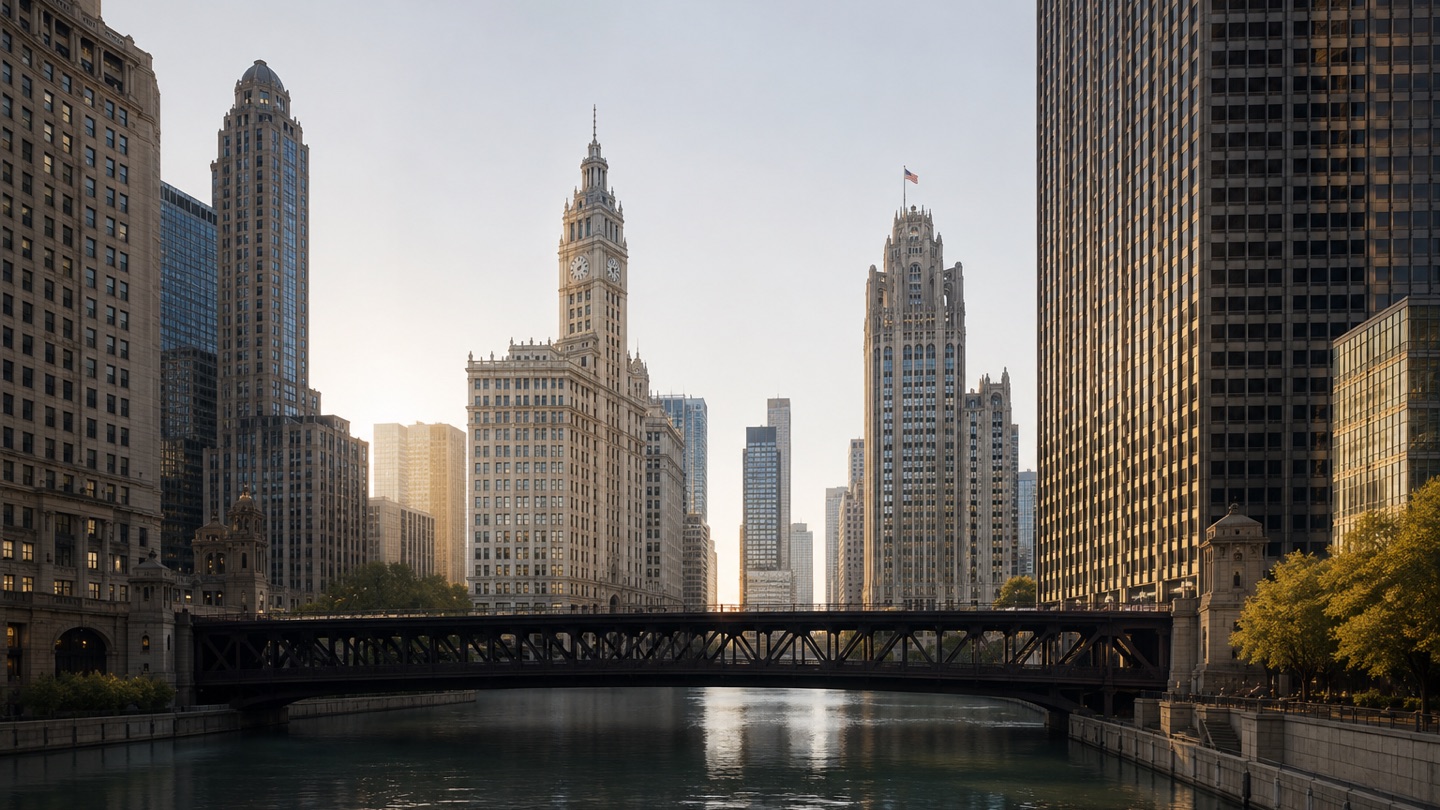

Chicago
A City That Rewards Looking Up
Chicago is the most architecturally serious city in the United States, and unlike most claims of that kind, this one is measurable. The modern skyscraper was worked out here after the fire of 1871, and the result is a downtown where a century and a half of American ambition stands in a row along a river and a lakefront. Add a dining scene that has quietly become one of the country's best, a summer of festivals on the water, and an art museum of genuine international rank, and Chicago becomes a city that punishes the two night visit. Give it four.
The planning decision: how much winter are you willing to accept
Everything in a Chicago itinerary follows from the season you choose, more than in almost any other American city. Summer Chicago and winter Chicago are different products, and both are legitimate. Summer is the lakefront, the boat, the rooftops, the festivals and long light until nearly nine. Winter is the museums, the Lyric Opera and the Chicago Symphony, the steakhouses, the hotel value and a wind off the lake that is not a joke. Neither is wrong. What does not work is booking a summer itinerary for February and being disappointed by the city rather than by the plan.
The short brilliant summer and the useful winter
June through September is the clear window, with July and August the warmest and busiest and September often the finest month of all, still warm and noticeably calmer. Late May and early October are pleasant gambles. The winter runs cold from December through March, with lake effect wind that makes the reported temperature optimistic, and it is when the cultural season and the hotel rates both favor you. Chicago also runs on a heavy convention calendar at McCormick Place, and a single large show can move downtown rates sharply, so we check your dates against it before booking anything.
Where to base, and how the geography works
The Gold Coast and Streeterville sit north of the river near the Magnificent Mile, the lake and the best walking, and this is where most first visits should stay. The Loop puts you among the architecture and the theaters and empties out somewhat in the evening. The West Loop is where the restaurant scene actually lives now and suits a return visit. River North sits between them with the gallery district. Both airports work: O'Hare handles international and most long haul, Midway is closer to the Loop and often easier for domestic. Traffic between O'Hare and downtown is genuinely unpredictable, so we build a margin into departure days rather than hoping.
Rooms where the view is part of the booking
The Peninsula Chicago and Four Seasons Hotel Chicago both sit off the Magnificent Mile and are the safe, excellent choices for a first visit or for families. The Langham Chicago occupies a Mies van der Rohe building on the river and is the choice for anyone who came for the architecture. Waldorf Astoria Chicago is quieter and more residential in the Gold Coast. The St. Regis Chicago is the newest and most dramatic of the group on the riverfront. Views matter more here than in most cities, so the room category and the direction it faces are worth discussing before we book.
When to begin
Three months is usually sufficient. Summer weekends, a major convention overlap and the September window want four to six. The city's most sought after tasting counters release tables on their own schedules, often a month or two out and often at a fixed hour, so we plan the dining calendar separately from the hotel and work it as reservations open rather than waiting.
Four experiences worth building the days around
- The architecture cruise on the Chicago River, taken on the first afternoon so the rest of the city makes sense, and taken privately if you would rather not share the deck.
- The Art Institute of Chicago given a proper half day with a guide, rather than an hour squeezed between other plans.
- An evening in the West Loop or Fulton Market, with the table booked well ahead and the driver arranged, because this is where the city eats.
- Sunrise or early evening on the Lakefront Trail by bike or on foot, which is the view of Chicago that residents actually keep.
Who this trip suits
Chicago suits design and architecture travelers above all, and it suits serious eaters. It suits families in summer, when the lakefront, the museums and the river give everyone something. It suits executives and group travel, because the convention infrastructure, the hotel supply and the flight connections are all strong. And it suits anyone who has done New York and wants a large American city that feels less crowded and more livable.
When another plan may fit better
If your window is January through March and you want to be outdoors, this is the wrong city and we will say so. If you want ocean, warmth or resort pacing, look to Miami. And if you want the density of theater and museums that only a much larger city sustains, New York remains the benchmark.
Plan it with one accountable advisor
Tell us your month and whether this is architecture, dining, family or business, and we will set the base, the room orientation, the guide and the restaurant calendar in the right order. Our luxury leisure travel planning handles the sequencing, and our group travel planning covers conventions, offsites and multi family trips when the party grows.
Continue Exploring