

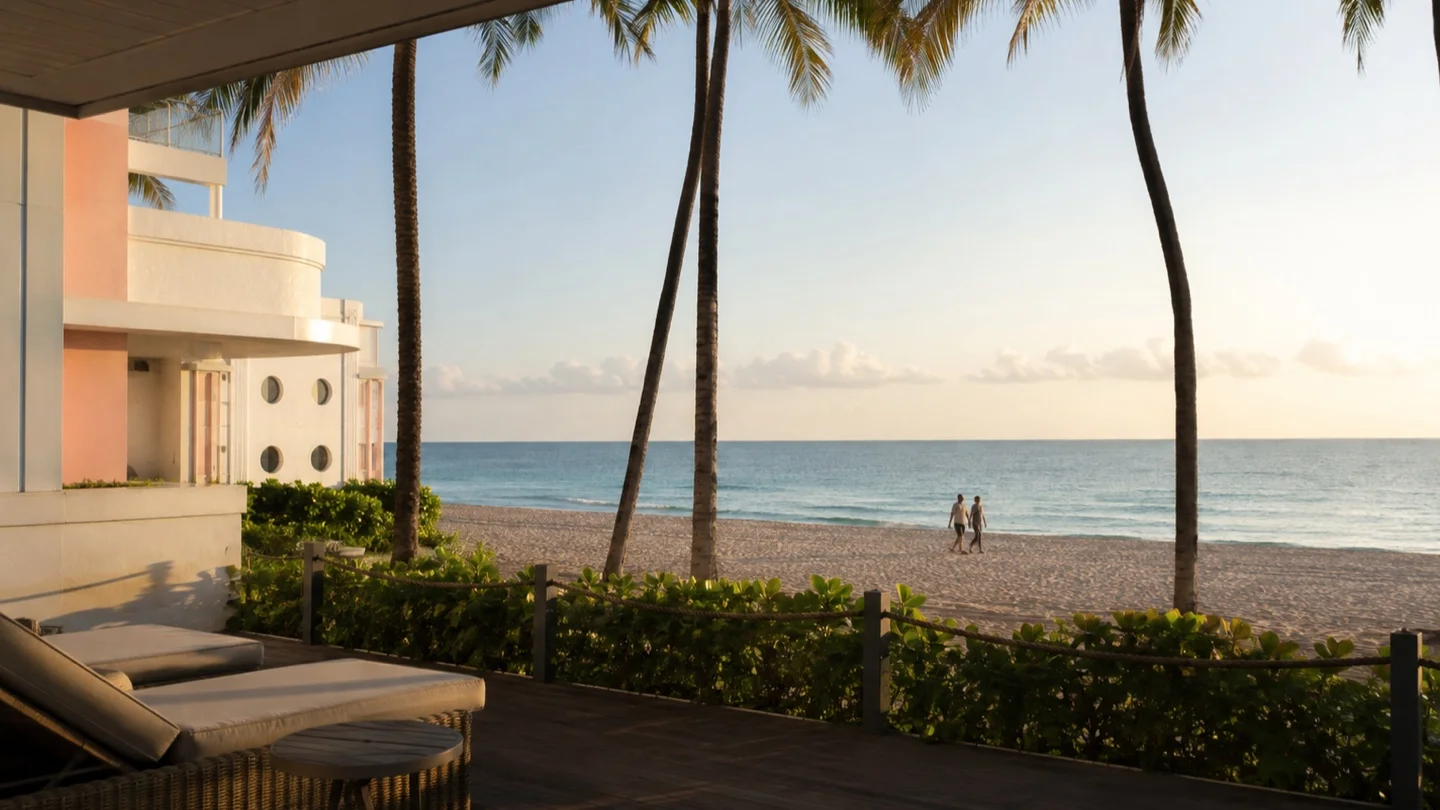

Miami
Miami Is a Calendar, Not a Climate
The temperature in Miami barely moves. December averages a high of 78°F and April 84°F, and the ocean stays warm enough to swim in before breakfast for half the year. What changes is the city around it. One week in early December turns the beach hotels into an art fair and puts rates at two and three times their January level. A stretch in late summer combines the hottest weather of the year with the busiest part of the Atlantic storm calendar. Almost everything that goes wrong with a Miami trip is a date problem rather than a place problem, and dates are the cheapest thing in the world to fix in advance.
Know before you go
- Fly into MIA, roughly 12 miles from South Beach and 20 to 30 minutes depending on traffic. Private car services quote flat rates of about 209 dollars for a business sedan up to 259 for the first class tier, tolls and fees included.
- Taxis are metered MIA publishes no zone flat rate, so there is no fixed number to expect. The meter runs 2.95 dollars for the first sixth of a mile, then 85 cents per sixth to one mile and 55 cents per sixth after that, on top of a 2 dollar airport origination fee and a 15 dollar minimum, with a 30 percent surcharge for an SUV or van.
- Trip length Three to four nights. Cut one and you lose either the day out to the Everglades or the Keys, or the second neighborhood, and the Design District and Coconut Grove are usually the ones that go.
- Best months December through April. Average highs run 78°F / 26°C in December, 76°F / 25°C in January, 78°F / 26°C in February, 81°F / 27°C in March and 84°F / 29°C in April.
- The hot months July and August both average a high of 91°F / 33°C, and September is barely off it at 89°F / 32°C. This is the stretch where the pool matters more than the plan.
- Storm season The Atlantic hurricane season runs 1 June to 30 November, with the statistical peak on 10 September and the bulk of activity between mid August and mid October. Early June and late November sit at the quiet tails of it.
- Entry rules Domestic for a United States passport. International visitors arrive under whatever their own nationality requires for the United States, worth confirming early because Miami is a common first point of entry.
- Money and tipping The dollar, cards everywhere, tipping expected in restaurants, bars and taxis and not built into the bill.
- Getting around The Miami Beach Trolley is free, runs 8am to 11pm seven days a week at roughly twenty minute intervals, and covers four loops taking in South Beach, Middle Beach, Collins Express and North Beach. It removes most reasons to move a car on the beach side. A car earns its keep only for the Everglades, the Keys and the spread out mainland neighborhoods.
- Art Basel week Art Basel Miami Beach 2026 opens with a VIP preview on 2 and 3 December and public days from 4 to 6 December at the Miami Beach Convention Center. Hotel rates run at two to three times normal and rooms are gone by October, so book at least six months ahead or take another week.
The first week of December is a different city
Art Basel Miami Beach is the most consequential week on the calendar for anyone booking a hotel. In 2026 the VIP preview falls on 2 and 3 December with public days from 4 to 6 December, and the effect on the beach hotels is not subtle: rates at two to three times their normal level, and inventory gone by October. If the fair is why you are coming, book at least six months out and treat the room rate as part of the ticket price. If it is not, move two weeks either side and you get the same weather, the same restaurants and the same water for a fraction of the room. The number of people who book that week by accident, then wonder why Miami was so expensive, is remarkable.
The season runs December to April, and summer is a real trade
December through April is the answer for most trips, with average highs from 76°F / 25°C to 84°F / 29°C and the humidity at its most tolerable. Summer is the other half of the argument. July and August average 91°F / 33°C and September 89°F / 32°C, while the Atlantic hurricane season runs 1 June to 30 November with its statistical peak on 10 September and most activity between mid August and mid October. Lay those two calendars on top of each other and late August into early October is the least appealing stretch of the year on both counts. Early June and the back end of November sit at the tails, warm and quiet and priced accordingly. For a pool led trip with movable dates, that is where the value in the Miami year actually is.
Where you base yourself decides the trip
South Beach, the Surfside and Bal Harbour stretch, and Brickell are three different holidays. South Beach is the scene, dinner at eleven, the shortest walk to everything you have seen photographed, and the place where parking becomes the constraint, which is precisely what the free trolley exists to solve. Surfside and Bal Harbour, twenty minutes north, are where the sand goes quiet and the pace drops to resort speed, with the best shopping in the city across the road. Brickell and downtown put you among the towers, right for a working trip or the night before sailing from PortMiami. Settle this before you settle the hotel, because a room that is perfect in one of them is the wrong trip entirely in another.
Planning brief
Miami planning starts with the week and the base. Both are cheap to change now and expensive to change later.
- Best suited to: winter sun; beach and dining weekends; art and design weeks; families who want a pool and a short flight; stays either side of a sailing.
- Decisions to settle early: the week, especially anything near early December; South Beach against Surfside or Bal Harbour; whether a car is needed at all; boat days; restaurant reservations.
- Arrival and routing: MIA, roughly 12 miles and 20 to 30 minutes from South Beach; a private flat rate car or the meter, since the airport publishes no zone fare.
Move the week by two weeks and watch what happens to the price
It is the whole trick here, and it works in both directions. A couple after the scene, a family after quiet sand and a group building a weekend around a boat all want different weeks as well as different hotels. Send the range you could move within rather than a fixed date, and we will tell you which week to take and which side of the causeway to sleep on.
Key West is about three and a half hours down the Overseas Highway, and the Bahamas are a short flight for a quick island escape. Two Miami Beach hotels are worth watching: the reopened Delano and Rosewood The Raleigh.
Pairing warm water with somewhere quieter usually means a second leg south, which our St Barths guide covers. The hotel, the transfer, the boat and the tables are handled together by our leisure travel planning.
From the journal
More on Miami: Rosewood The Raleigh Miami Beach: What Is Taking Shape and American Airlines Becomes Inter Miami CF’s First Official Airline Partner.
The Everglades or the Keys, if I only have one day out?
The Everglades, and it is not close. It is much nearer, so the day is three or four hours rather than the whole of one, and an airboat or a small skiff on saw grass and black water is the single most unlike Miami thing within reach of the city. The Keys are a beautiful drive and a poor day trip, because the road is slow, the good part starts a long way down it and you spend the best light coming home. If the Keys are what you want, sleep in them for two nights at the end of the trip and treat them as a separate holiday.
Do I need to hire a car in Miami?
Not if you are staying on the beach. The Miami Beach Trolley is free, runs 8am to 11pm every day at roughly twenty minute intervals across four loops, and covers South Beach through to North Beach, which removes most reasons to move a car at all. Parking is the real constraint on the beach side and a hire car turns into a daily cost and a daily problem. Where a car does earn its keep is the Everglades, the Keys and the more spread out mainland neighborhoods, so hire one for those days rather than for the week.
Is Miami worth visiting in summer?
It can be, with open eyes. July and August average highs of 91°F / 33°C and September 89°F / 32°C, and the Atlantic hurricane season runs 1 June to 30 November with its statistical peak on 10 September and most activity from mid August to mid October. Late August into early October is therefore the least appealing window on both counts. Early June and the second half of November are the interesting ones: warm water, thinner crowds and much softer rates. If your dates can move, those tails are the best value in the Miami year.
South Beach or further north?
South Beach if the scene is the point, north if the sand is. South Beach gives you the restaurants, the late dinners and the shortest walk to everything, at the cost of noise and parking. Surfside and Bal Harbour, twenty minutes up the road, are quieter, more residential and closer to resort speed, with the best shopping in the city across the street, which is why they suit families and longer stays. Brickell and downtown are for working trips or the night before a sailing. Pick this before the hotel, not after.
When is the best time to visit Miami?
December through April is the best window, with highs from 76°F to 84°F. Watch the calendar as much as the weather, since one week in early December turns the beach hotels into an art fair and pushes rates to two or three times January levels. Hurricane season runs June 1 to November 30. Add Key West or Palm Beach.
CONTINUE EXPLORING