


Copenhagen
A Small Capital With Outsized Influence
Copenhagen punches far above its size. Denmark's capital has under a million people in the city proper, and yet it has reshaped how the world eats, how the world designs furniture and how the world thinks about building cities for humans rather than for cars. The Nordic kitchen revolution started here and has now matured into something quieter and more interesting than its early publicity. The design tradition, from Wegner and Jacobsen through to the current studios, is a living industry rather than a museum piece. And the city itself, low, cycled, waterfront and green, is simply pleasant to be in, which is not a small thing.
The planning decision: food, design, or family
These three trips overlap but they book differently. A dining trip is planned backward from restaurant reservations, because the tables that draw people here open on fixed schedules months ahead and everything else arranges around them. A design trip is a series of showrooms, workshops, the Designmuseum Danmark and probably a day out to Louisiana Museum of Modern Art up the coast. A family trip runs on Tivoli, the harbour baths, the bikes and the canals, and it is one of the easiest European cities to do with children. Tell us which of the three you are really planning and the shape of the week follows.
Long light, short days, and the months between
June through August is the obvious window, and the northern summer light here is remarkable, with usable evening light past ten in midsummer and the city living entirely outdoors, swimming in the harbour and eating on the water. May and September are the shoulder months and both are excellent, mild and much less busy. October through March is dark, and honest about it, with short days and a lot of gray. The Danes answer this with hygge and it is not a marketing invention: the city becomes candlelit, indoor and social, the restaurants are easier to get into, and the Tivoli Christmas season through November and December is genuinely charming. Winter here is a legitimate trip if you go for the reasons winter offers.
Where to base, and how to reach Sweden
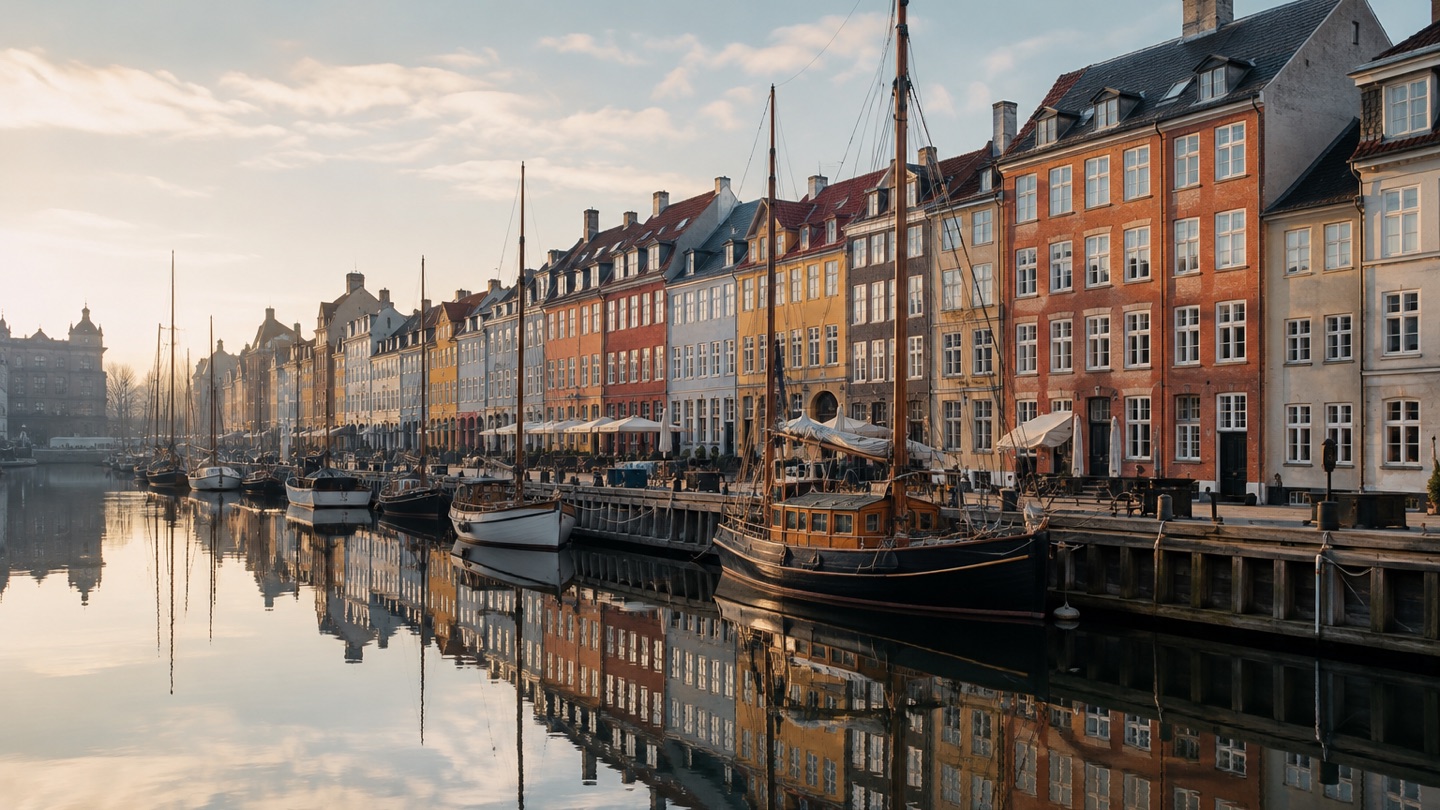
Indre By, the old center, puts you within walking distance of almost everything. Nyhavn and the harbour front are the postcard and pleasant, if busy. Vesterbro, the former meatpacking district, is where much of the food and nightlife sits. Frederiksberg and Østerbro are residential, green and calmer, and both suit families. Copenhagen Airport is fifteen minutes from the center by metro, which is among the easiest arrivals in Europe. And the Øresund bridge puts Malmö in Sweden roughly forty minutes away by train, which means a Swedish day or a two country itinerary is genuinely straightforward from here.
Where to stay in a city with limited grand hotels
Hotel d'Angleterre on Kongens Nytorv is the historic grande dame and the most formal choice in the city. Nimb Hotel sits inside Tivoli Gardens itself, which is either wonderful or too close to the fairground depending on your temperament. Villa Copenhagen occupies the old central post office with a rooftop pool. Sanders is small, warmly designed and the most Danish feeling of the group. Copenhagen has fewer large luxury properties than comparable capitals, so the good rooms are a genuinely limited inventory and book earlier than the city's size would suggest.
When to begin
Four months for summer, three for the shoulder months. The restaurants are the binding constraint and not the hotels: the most sought after tables release seats on published schedules, often two to three months ahead and often at a fixed hour on a fixed day, and they are gone within minutes. If a particular kitchen is the reason for the trip, we work that release window first and set the dates around what we get.
Four experiences worth building the days around
- A dining sequence that pairs one ambitious tasting menu with the neighborhood bistros and bakeries that came out of the same movement, which is where the city is most enjoyable now.
- Louisiana Museum of Modern Art, about forty minutes up the coast, where the building, the sculpture park and the sea are as much of the point as the collection.
- A design day through the showrooms, the Designmuseum and a workshop visit, arranged so you see how things are made rather than only how they are sold.
- A harbour day by boat or by swimming, using the public baths in summer, which is how residents actually use their own city.
Who this trip suits
Copenhagen suits food travelers, design collectors and architects. It suits families exceptionally well, because the city is safe, flat, cyclable and genuinely welcoming to children. It suits couples wanting a calm, well ordered European long weekend. And it suits anyone building a Scandinavian itinerary, since Stockholm, Oslo and the Swedish coast all connect easily.
When another plan may fit better
If you want grandeur, palaces and an imperial scale of architecture, Vienna or Prague will satisfy more. If you want warmth and long outdoor evenings without gambling on the weather, look to the Mediterranean. And travelers who find short winter days difficult should not book November through February here without knowing what they are choosing.
Plan it with one accountable advisor
Tell us whether the table, the design or the family is driving this, and we will work the reservation windows first and build the hotel, the boat and the day trips around what we secure. Our luxury leisure travel planning handles the Scandinavian sequence when Sweden or Norway follow.
Continue Exploring