

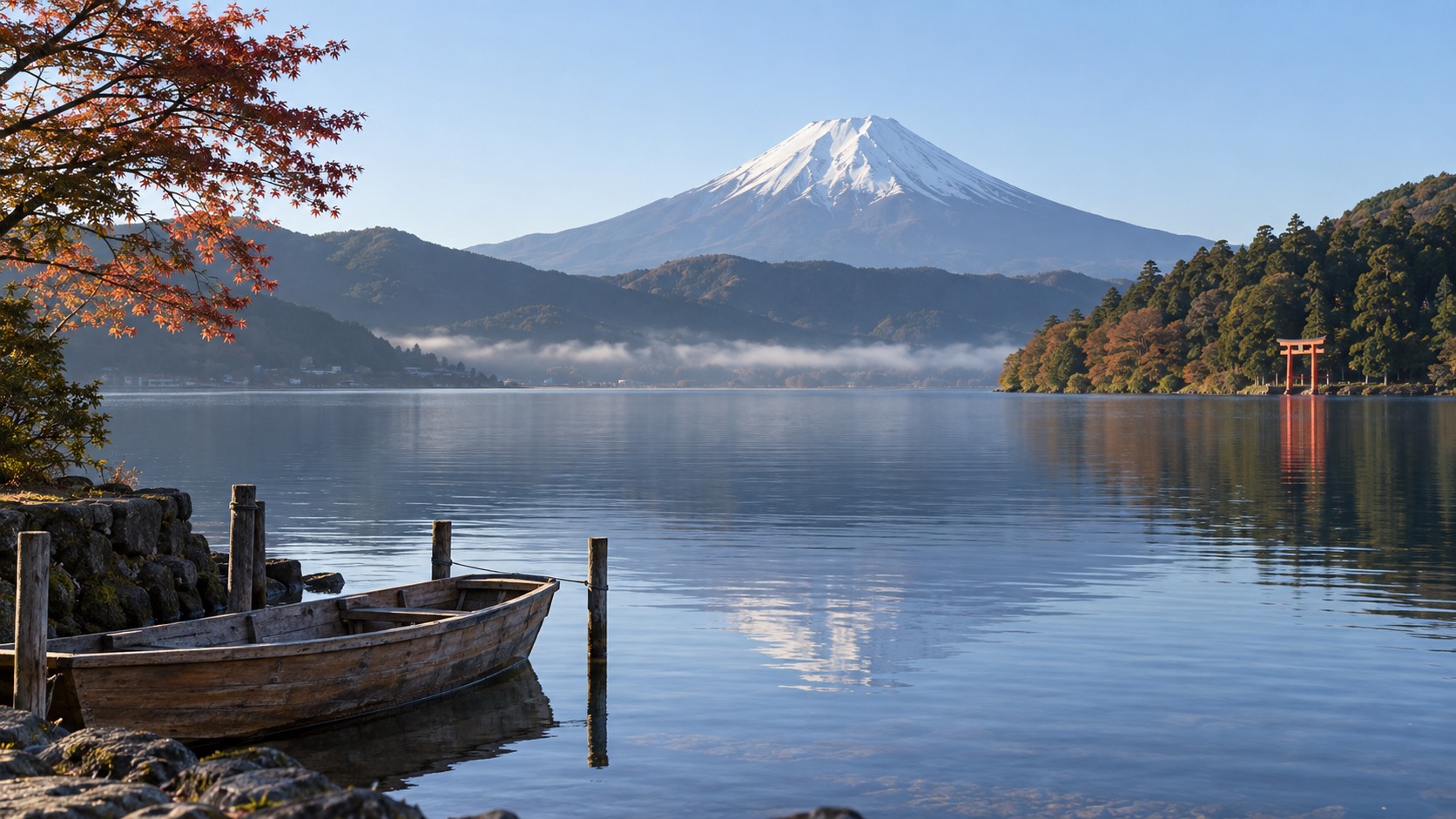

Hakone
Hakone, The Right Pause Between Cities
Hakone is at its best when it is treated as a change of rhythm rather than a box checked on the way to Kyoto. Hot springs, mountain air, lake views, art museums, and the possibility of seeing Mount Fuji make it a useful two night pause after Tokyo.
The weather is part of the experience. Build the stay around the room, the bath, and a flexible day rather than promising every view in advance.
Know before you go
- Fly into: Tokyo, followed by rail to Odawara or the Romancecar from Shinjuku. The last part of the route is local rail, cable car, bus, or hotel transfer.
- Trip length: Two nights for a proper ryokan stay. Add a third when the group wants more museums, walking, or time around Lake Ashi.
- Best months: Spring and autumn are clear and popular. Winter can bring the best Fuji visibility. Summer is greener but more humid and often cloudier.
- Getting around: The mountain transport network is useful but slow. A private car is worthwhile for families, luggage, or a day built around several museums.
- Money: Japan uses the yen. Keep cash for small transport purchases and traditional inns, even though larger hotels and restaurants accept cards.
- What to reserve: The ryokan, private bath if needed, dinner, luggage forwarding, and any museum or guide appointment.
Choose the right kind of Japanese inn
A Hakone ryokan is not simply a hotel with a bath. The room, the meal, the service, and the bathing ritual are part of one experience. Some properties feel formal and quiet, others are more contemporary, and some are better for families than couples. The right choice matters more than the number of attractions completed.
Let the bath set the pace
Arrive before dinner, settle into the room, and use the onsen before trying to see the whole valley. Hakone rewards a slower morning and an evening with nowhere else to be. If a private bath matters, say so at the time of booking, since the best rooms and times are limited.
Plan one museum day
The Open Air Museum is the essential visit, with sculpture, mountain space, and enough room to make the art feel connected to the landscape. The smaller museums each have their own character. Choose one or two, not all of them, and leave the afternoon for the hotel or lake.
Mount Fuji is a possibility, not a promise
Clear winter mornings offer the strongest chance of a view, but even then the mountain makes its own decisions. Lake Ashi and the ropeway are worthwhile without it. A thoughtful itinerary keeps the lake, the museums, and the bath as the main event, with Fuji as the gift when the clouds lift.
Make the transfer work
Hakone fits naturally after Tokyo and before Kyoto, but luggage and transport need a little thought. Send larger bags ahead, keep one small case for the ryokan, and confirm the last connection before arrival. It is also an easy complement to Kanazawa on a slower Japanese route.
Planning brief
Hakone suits travellers who want a polished Japanese pause, a good bath, art in the landscape, and a break from city movement.
- Best suited to: couples, families, first time visitors, art travellers, and anyone who wants the ryokan experience without committing to a remote mountain trip.
- Settle early: ryokan style, room type, dinner, bathing preferences, luggage forwarding, and the transport plan from Tokyo.
- Useful pairing: Tokyo, Kyoto, Kanazawa, or a wider route through the Japanese Alps.
Two nights is enough when they are properly used
Hakone is not improved by rushing through every attraction. Give the inn, the bath, and one clear day the attention they deserve, and the pause will do its work.
Our luxury leisure travel planning can arrange the right ryokan, transfers, luggage movement, museum visits, and the wider Japan route.
How many nights do you need in Hakone?
Two nights is right for most first visits because it gives the ryokan experience a full evening and morning. Add a third night when the group wants several museums, longer walks, or a slower break between Tokyo and Kyoto.
Is Hakone worth visiting if Mount Fuji is hidden?
Yes. The hot springs, the lake, the museums, and the mountain setting still make a strong stay. Fuji is weather dependent, so it should be treated as an advantage when it appears rather than the only reason to go.
Should we stay in a ryokan or a modern hotel?
A ryokan is the reason to choose Hakone, but it is not right for every traveller. Traditional rooms, futons, timed meals, and shared bathing require a little openness. A modern hotel is easier for families or anyone who wants more familiar service and room design.
What is the easiest way to get around Hakone?
The local trains, buses, ropeway, and lake boats form a useful network, but the mountain makes every connection slower than the map suggests. A private car helps when the itinerary includes several museums, children, luggage, or a tight onward connection.
CONTINUE EXPLORING