


Kanazawa
Kanazawa, Japan’s Most Complete Short Break
Kanazawa is the Japan stop for travellers who want craft, gardens, seafood, old merchant quarters, and a city that can be understood on foot. It has Kyoto’s cultural depth without Kyoto’s scale.
Two or three nights is enough for a first visit. Add a night when the trip includes a proper craft appointment, a cooking experience, or a wider Hokuriku route.
Know before you go
- Fly into: Tokyo, followed by the Hokuriku Shinkansen to Kanazawa. Komatsu Airport is closer and has domestic connections from several Japanese cities.
- Trip length: Two nights for the core city, three for craft, food, and a slower pace.
- Best months: Spring and autumn are the easiest windows. Winter brings snow and excellent seafood. Summer is warm and more humid.
- Getting around: The central districts are walkable, with buses and short taxis for the gaps. A private car is useful for a wider prefectural route.
- Money: Japan uses the yen. Cards are widely accepted in hotels and restaurants, but keep cash for smaller shops, markets, and local transport.
- What to reserve: A guide, a tea or craft appointment, restaurants, and any museum or garden experience that has timed entry.
Start with the garden
Kenrokuen is famous, but the point is not to rush through it for a photograph. Go early, notice how water, stone, bridges, and borrowed landscape are handled, then continue into the castle grounds and the city beyond. The morning gives Kanazawa a calmness that disappears later in the day.
Craft is part of the living city
Gold leaf, lacquer, ceramics, textiles, and confectionery are not museum subjects here. The strongest visits put you in front of a maker or a working collection and let the conversation go where it goes. Book the right introduction in advance, particularly when the group wants to see a studio rather than buy a finished object.
Three old districts, three different moods
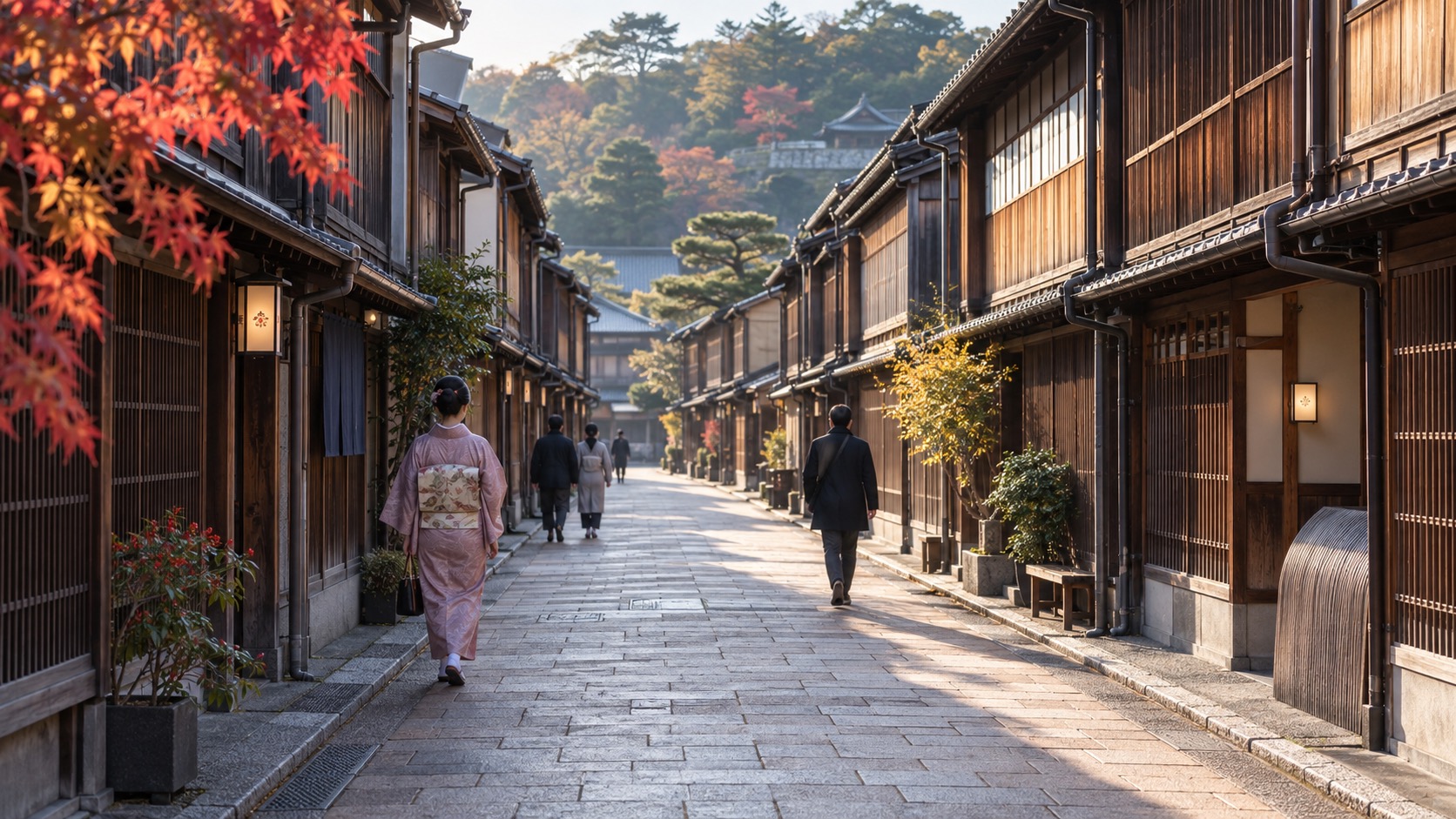
Higashi Chaya is the most recognisable, with wooden teahouses and a strong sense of ceremony. Nishi Chaya is smaller and quieter. The samurai district around Nagamachi is more domestic, with walls, lanes, and old residences that reward a guide who can read the details. Treat them as separate chapters, not as three stops to tick off before lunch.
Eat the coast and the seasons
Kanazawa’s seafood is the obvious draw, but the wider food culture is more interesting than a sushi list. Kaga cuisine uses local produce, river fish, mountain vegetables, and careful preservation. Market breakfast is useful, while dinner belongs at a small restaurant where the menu follows the day. The city is a good place to ask what is in season and let the answer decide.
Use Kanazawa as a hinge
Kanazawa works between Tokyo and Kyoto, but it also opens the Noto Peninsula, Toyama, Takayama, and the Japanese Alps. For a first route, combine it with Tokyo and Kyoto. For a second visit, give it more room and travel north slowly.
Planning brief
Kanazawa suits travellers who want cultural depth, good food, a manageable city, and a Japan itinerary with more texture than the standard first route.
- Best suited to: craft and design travellers, food lovers, couples, repeat visitors to Japan, and anyone who prefers a city that can be walked.
- Settle early: rail connection, hotel location, craft introductions, guide support, and the restaurants that anchor the evenings.
- Useful pairing: Tokyo, Kyoto, Takayama, the Japanese Alps, or a slower Hokuriku route.
Let the city stay small
Kanazawa does not need to be overplanned. Give the garden, the old districts, the food, and one serious craft encounter enough time, and the city will do the rest.
Our luxury leisure travel planning can build Kanazawa into a wider Japan journey with the right guides, hotels, rail connections, and reservations.
Is Kanazawa worth adding to a first trip to Japan?
Yes, when the itinerary has at least two nights to give it. Kanazawa offers gardens, craft, old districts, seafood, and cultural context in a city that is easier to absorb than Kyoto. It is a particularly good addition for travellers who prefer detail to scale.
How do you get to Kanazawa?
The usual route is the Hokuriku Shinkansen from Tokyo. Komatsu Airport is another option for domestic connections. The best choice depends on the wider route, since Kanazawa can sit neatly between Tokyo and Kyoto or become the beginning of a northern journey.
What should we reserve in advance?
Reserve the hotel, the restaurants that matter, and any craft or tea appointment. A private guide is useful for the old districts and the garden, while the market and much of the city can be enjoyed independently once the layout makes sense.
When is the best time to visit Kanazawa?
Spring and autumn are the easiest seasons for walking. Winter has its own appeal, with snow on the garden and excellent seafood, but the weather needs to be part of the plan. Summer is warm, humid, and greener than many first time visitors expect.
CONTINUE EXPLORING